Wednesday, 26 November, 2025
“In Saudi Arabia, the door is open”
How a leading global law firm and a renowned energy expert view Saudi Arabia’s transformation
Shahad Alsubaie - Inside Saudi
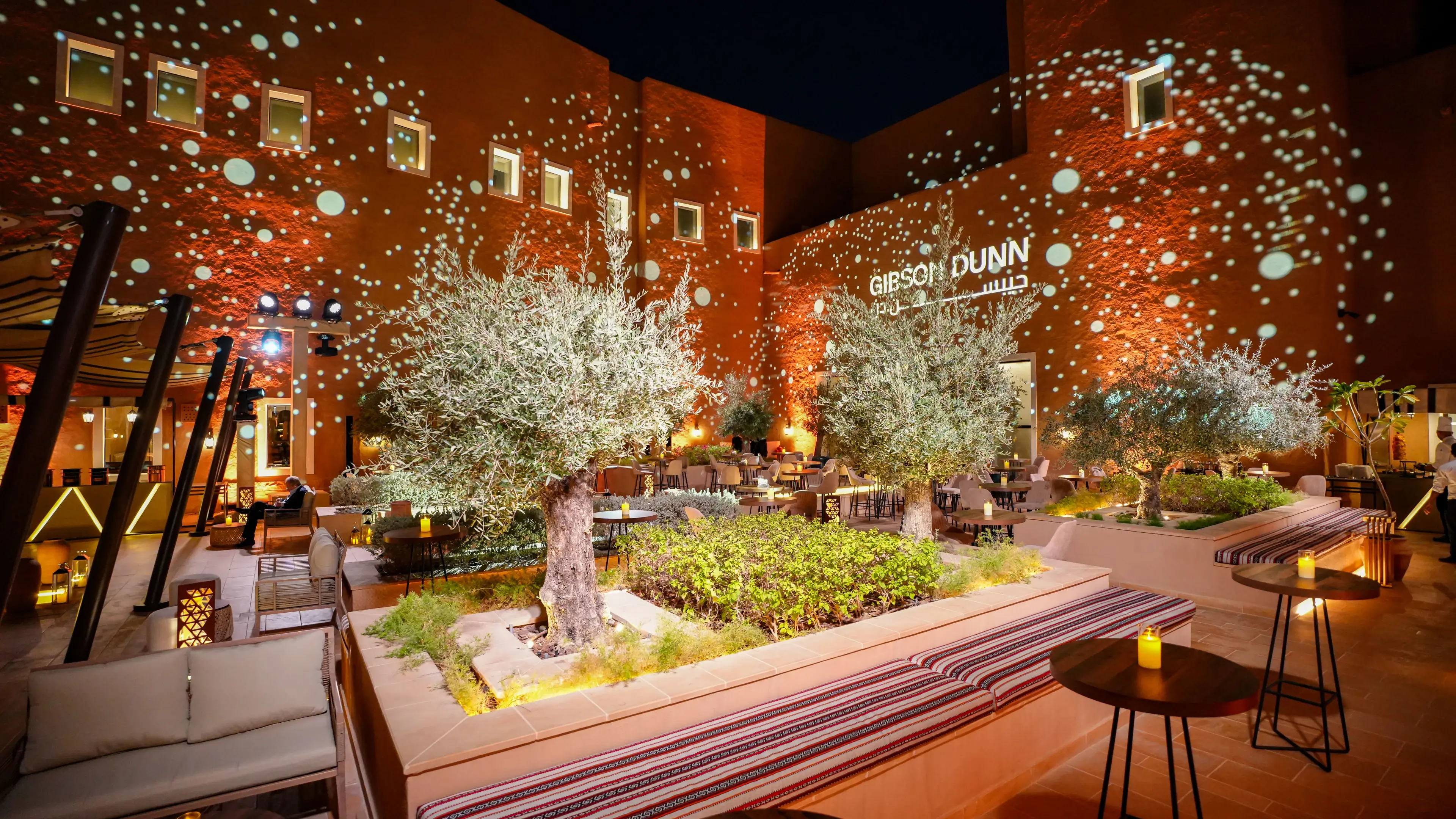
The courtyard of Diriyah’s iconic Bab Samhan Hotel, part of the Marriott Luxury Collection, during the evening of Gibson Dunn's recent high-level gathering
Leading global law firm Gibson Dunn recently celebrated its growth in Saudi Arabia (KSA) and success on behalf of clients across the Middle East with an exclusive high-level gathering of investors, government officials, banking and finance experts and the firm’s practitioners at the iconic Bab Samhan Hotel, located at the heart of the world-renowned Diriyah masterplan.
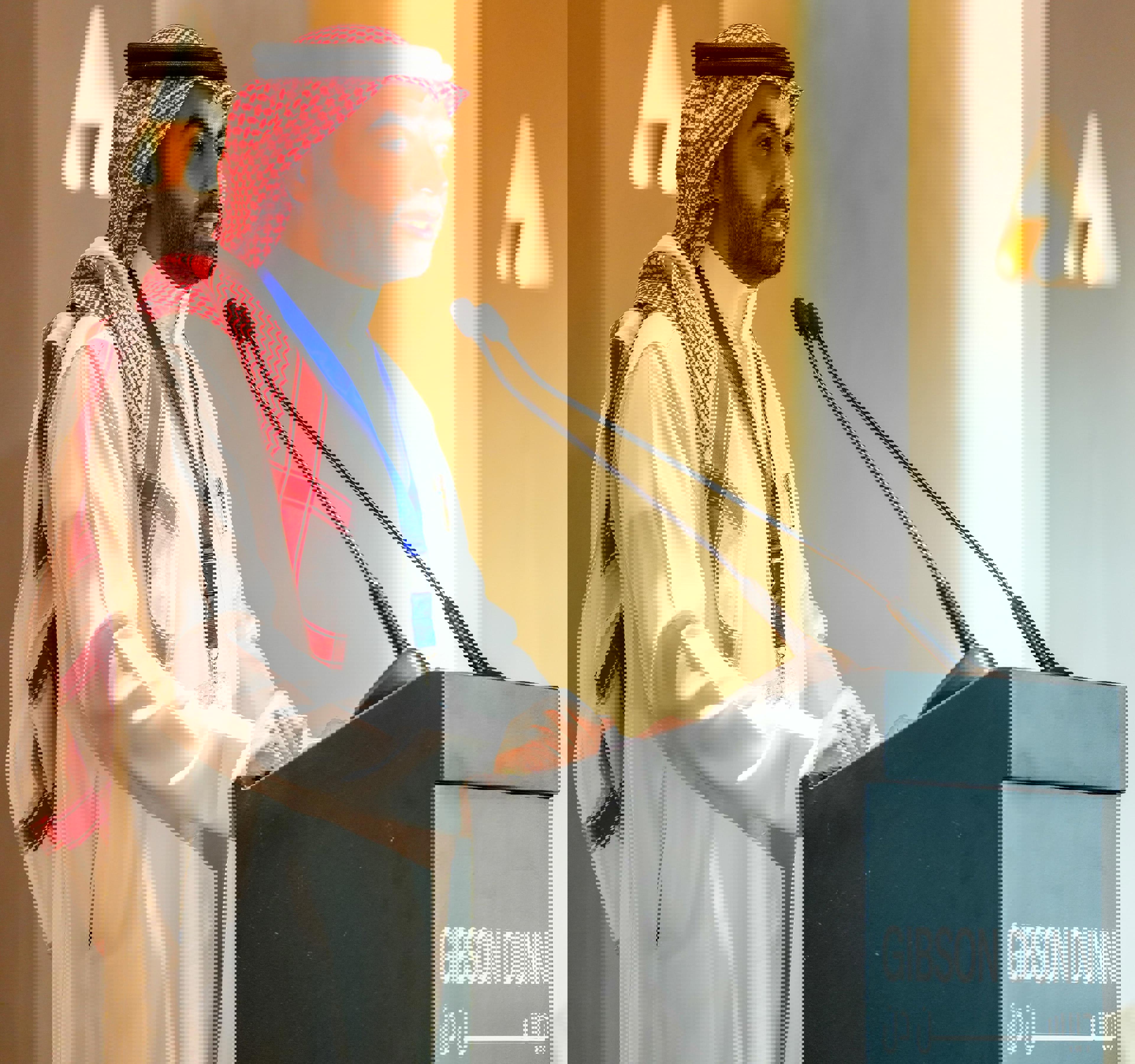
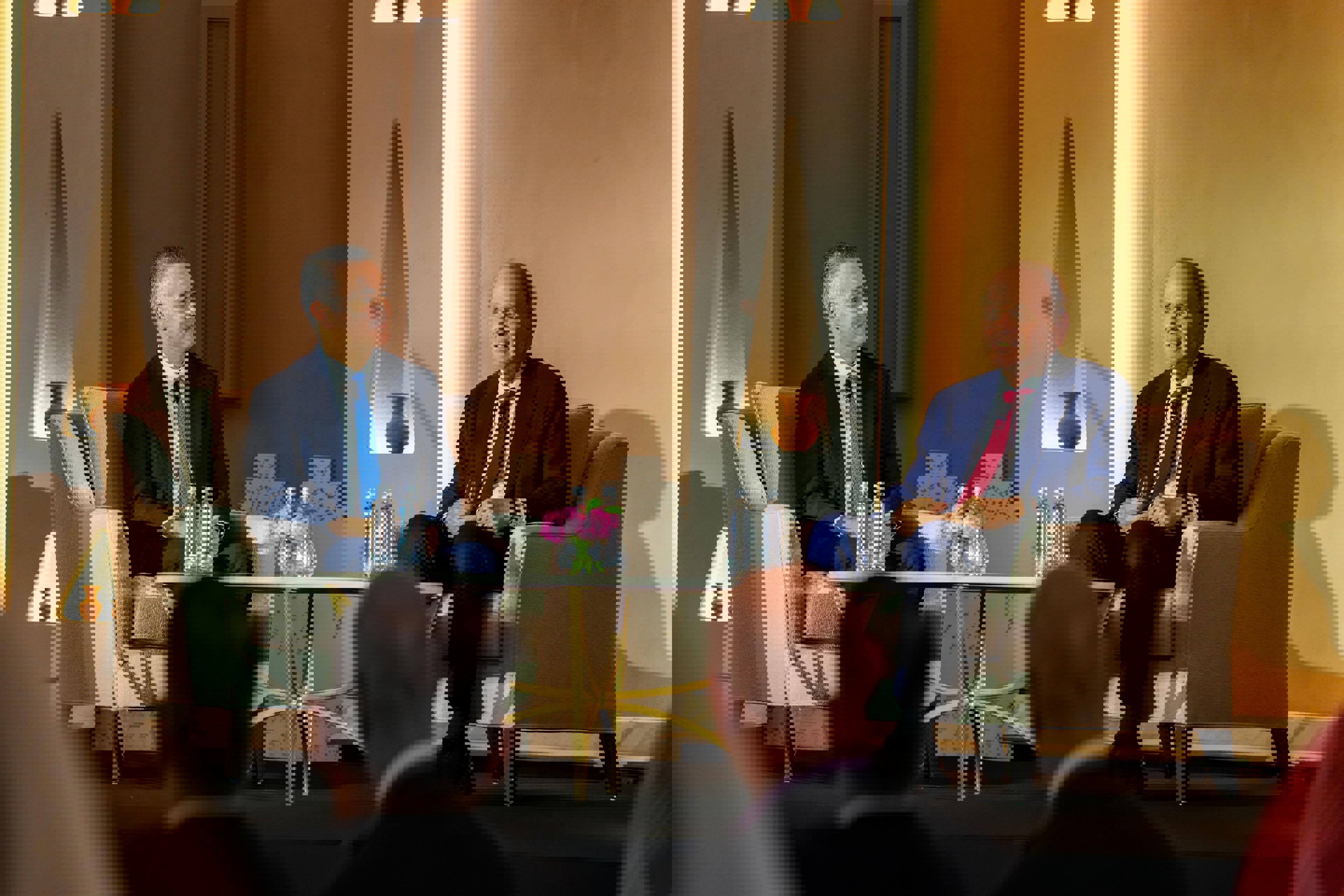
Coinciding with this year’s Future Investment Initiative Conference (FII9), the event, titled “Shifting Sands: Energy, Investments, and the Kingdom’s Global Role”, featured an engaging fireside chat between Daniel Yergin, Vice Chairman of S&P Global and a world-leading energy historian, and Marwan Elaraby, Partner in Charge of Gibson Dunn’s Dubai office.
Gibson Dunn Chair & Managing Partner, Barbara Becker, and Megren Al-Shaalan, Partner in Charge of the Riyadh office, hosted the event.
As set out in a recent article in Foreign Affairs co-authored with Lazard’s CEO and Chairman, Peter Orszag, and S&P Global’s Chief Energy Strategist, Atul Arya, Mr Yergin believes that what has been unfolding globally has not been and will not be the energy transition that many envisioned.
Rather, it has been an “energy addition” and will be “multidimensional – unfolding differently in different parts of the world, at different rates, with different mixes of fuels and technologies, subject to competing priorities and shaped by governments and companies establishing their own paths," Messrs Yergin, Orszag and Arya write.
In his opening day session at FII9, KSA’s Energy Minister, HRH Prince Abdulaziz bin Salman, talked about the Kingdom’s endowment not in terms of oil, but low-cost electricity powered by renewables, which Mr Yergin in an interview with MBC stated confers KSA “a great advantage” as electricity supply is the greatest constraint on technological advancement as expressed by the “quadruple piling on” of electric vehicles, manufacturing, crypto and now AI data centres.
Gibson Dunn has a strong track record of advising on Saudi power projects. During FII9, ACWA Power, the Kingdom’s largest private sector power generation, renewable energy and water entity, which is listed on the Saudi Exchange (Tadawul), announced over $10B of landmark agreements, including – in partnership with Water and Electricity Holding Company (Badeel) and Saudi Aramco – $6B in financing agreements under the National Renewable Energy Program for five utility-scale solar projects with a cumulative capacity of 12,000 MW.
The projects are envisioned to help KSA achieve its target of generating half its electricity from renewables by 2030, and Gibson Dunn advised the initial mandated lead arrangers, senior and equity bridge lenders, agency banks, and hedge providers.
In addition, the firm has recently advised ACWA Power, Saudi Electricity Company (SEC) and Korea Electric Power Corporation, as the sponsors, on the financing of two combined-cycle gas turbine independent power projects in KSA. These represent approximately $4B in total investment and are aligned with the Ministry of Energy’s target of maximising local power supply and achieving net-zero by 2060.
According to Gibson Dunn, in addition to advising on projects contributing to Vision 2030, its team in Riyadh is well known for “handling sophisticated legislative drafting and public policy formulation projects”, combining market-leading expertise with Mr Al-Shaalan’s experience previously as Senior Legal Advisor and Secretary General of the National Committee for Law Development at the Royal Court, and currently as Chairman of the Regulations Committee at the Royal Commission for AlUla.
“We see our role as acting as a bridge between the evolving legal system and international best practices,” says Mr Elaraby. “I think you will continue to see innovations in terms of structuring and documenting deals.”
“We are extremely proud to support Vision 2030 and believe our presence in Riyadh allows us to (first) assist with regulatory reform projects to attract long-term investors, (second) advise Saudi-based clients with establishing and growing new industries in the Kingdom; and (third) advise non-Saudi clients investing in the Saudi market.”
When asked about the legal and governance considerations that are most crucial to international investors, Mr Elaraby responded: “In our experience, regulations that promote transparency, flexibility and predictability. The Kingdom has been accelerating on the delivery of these.
“International investors also want attractive economics and an ability to monetise their investments. The Kingdom’s vast market, its macro-economic (and currency) stability and its deep capital markets facilitate all of the foregoing.”
Mr Yergin would likely agree with this sentiment. During FII9, he highlighted the joined-up nature of Saudi Arabia’s development.
“In Saudi Arabia, you have a coordination between the government and the private sector, focused on economic development, focused on the future,” the Pulitzer Prize-winning author told MBC.
“I think people see Saudi Arabia as a growth economy. They see it as a dynamic economy, and they see it as a country that encourages foreign investment as well as domestic investment, which enables returns to be made,” he continued. “While doors close elsewhere, in Saudi Arabia, the door is open.”