Thursday, 09 April, 2026
Crisis management in Saudi Arabia
The Saudi approach to national resilience
Rahaf H.Q., Digital Editor at Inside Saudi

In energy-driven economies, resilience is not measured in theory or by simulations, but in the ability of systems to continue operating under real-life pressure.
That distinction is now being tested in real time. Saudi Arabia has supported the flow of exports and the stability of supply chains, not only domestically but across the wider region.
This capability did not emerge overnight. It reflects long-term investments in infrastructure, including the development of the East–West Pipeline in the early 1980s as an alternative route to move crude to the Red Sea and bypass traditional export bottlenecks.
Deployment in Real Time
In response to evolving regional conditions, Saudi Aramco redirected crude shipments from eastern Gulf ports to Yanbu on the Red Sea via the East–West Pipeline, ensuring continuity of exports.
The 1,200km pipeline, which can move up to 7 million barrels per day (bpd), has been a critical enabler in making this shift possible. For reference, Saudi Arabia supplied a little over 10 million bpd to the market in the month leading up to the conflict.
Crude oil exports from Yanbu have reportedly now reached 5 million bpd, and the Kingdom is also exporting between 700,000 to 900,000 bpd of oil products. At the same time, Bahri, Saudi Arabia’s national shipping carrier, has expanded operations across Red Sea ports, including chartering additional tankers, maintaining export capacity and access to global markets.
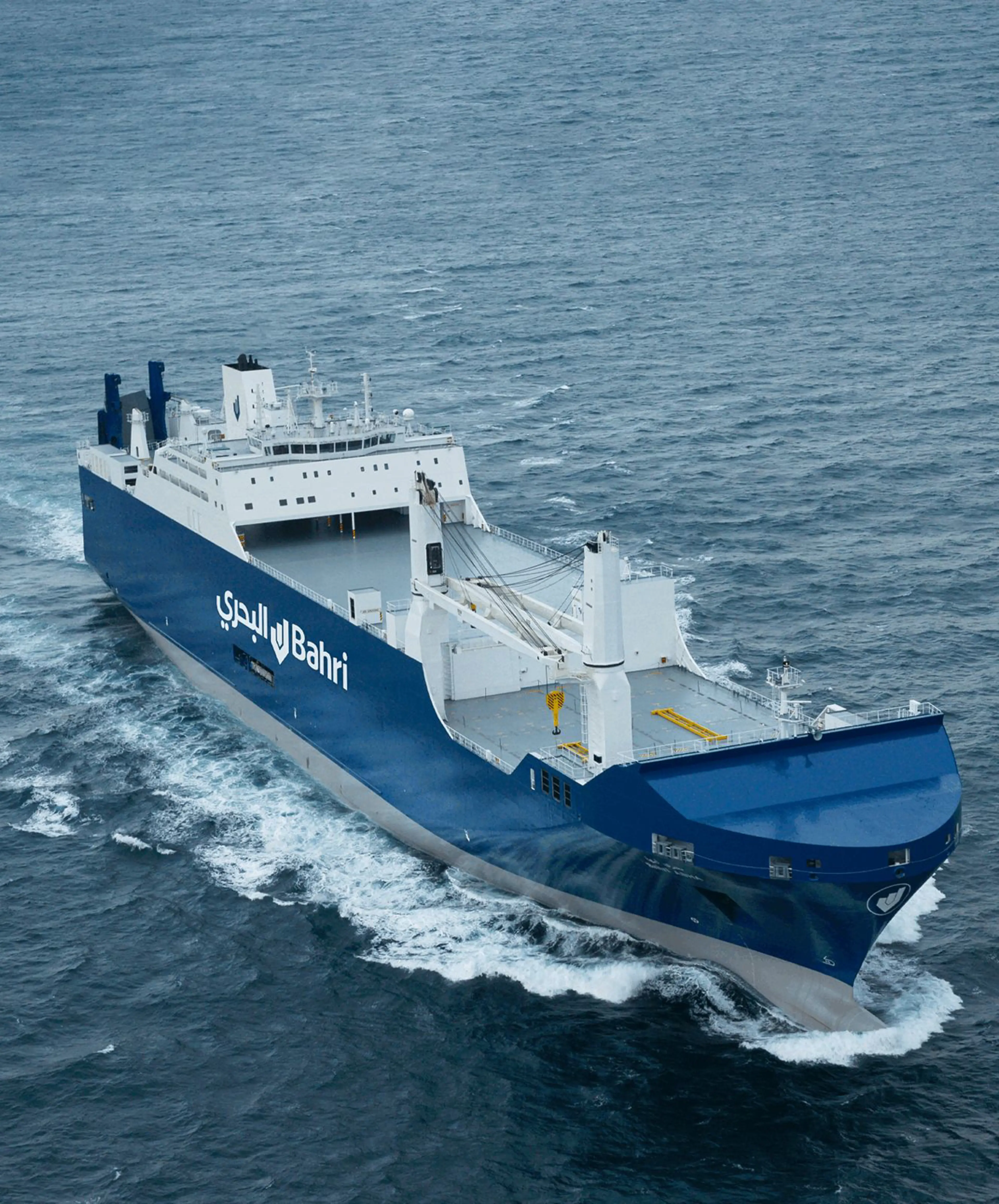
The response extended beyond crude flows. Saudi Arabia activated dedicated logistics corridors to reroute cargo between Gulf ports and Red Sea terminals, effectively reorganising how trade moves across the region rather than simply diverting it.
This was reinforced through a set of facilitation measures across GCC trade. Shipments linked to Gulf countries were granted storage fee exemptions for up to 60 days, alongside accelerated transit procedures and more flexible cross-border trucking. In practice, this allowed Saudi ports to function as regional transit and redistribution hubs.
Land transport activity reflects the scale of this shift. Since late February, more than 142,000 trucks have crossed Saudi borders — including approximately 60,000 to the UAE, 25,000 to Kuwait, 24,500 to Jordan, 17,000 to Qatar, 9,500 to Bahrain, and 6,000 to Iraq.
This is not a marginal adjustment. It represents a broader reconfiguration of how trade is being routed across the region.
This shift is also being supported by targeted infrastructure on the ground. In partnership with Mawani, the Roads General Authority, Elm, and ROSHN Group, Saudi Arabia announced the development of the Jeddah Islamic Port Trucks Park — a one million square meter facility with capacity for up to 40,000 trucks per day.
The project is designed to streamline truck movement, reduce congestion, and reinforce the reliability of supply chains at one of the Kingdom’s most critical trade gateways.
At the same time, Saudi Railway Company, the Kingdom's national railway company, has strengthened freight connectivity toward the northern border, supporting overland trade routes into Jordan and neighbouring markets.
Operationally, this system has been reinforced by digital infrastructure. Real-time vessel tracking and expected arrival data have improved visibility across ports, enabling more precise planning, better berth allocation, and reduced waiting times. Port operations have shifted from reactive handling to more anticipatory flow management.
Why This Was Possible
This level of continuity is not reactive. It reflects infrastructure designed to sustain flows under pressure.
The East–West Pipeline remains central to that system. By enabling crude to move directly to the Red Sea, it reduces reliance on traditional maritime routes and supports export continuity when those routes are constrained, and a number of Gulf states are said to be revisiting plans to replicate the pipeline.
From Energy Infrastructure to a Logistics System
This approach has extended beyond energy. Saudi Arabia has been expanding its logistics infrastructure across ports, rail, and inland logistics zones, positioning ports not only as export gateways, but as nodes within a broader regional distribution network.
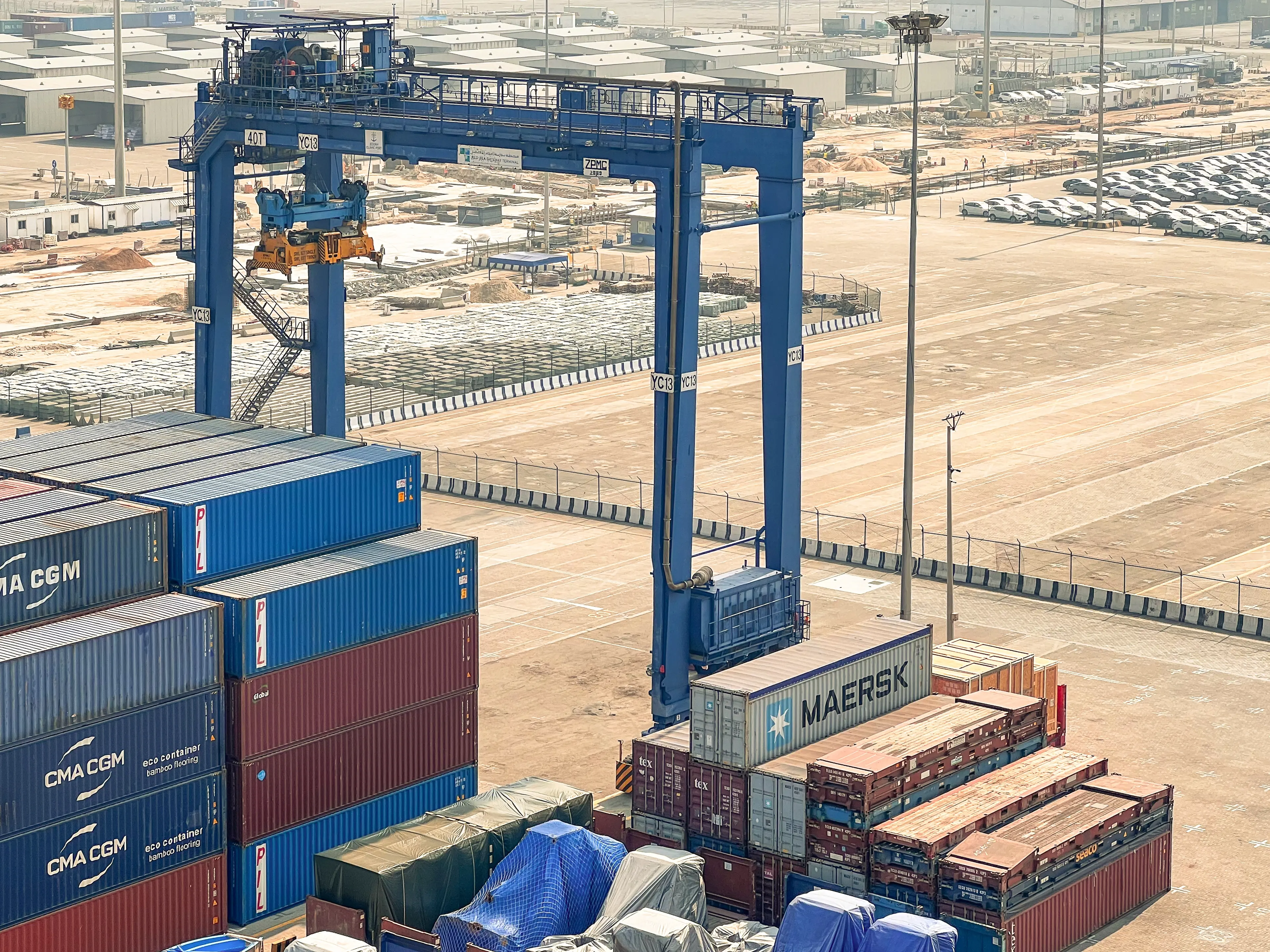
Plans are underway to increase the number of logistics zones from 22 to 59 by 2030, supported by investments exceeding SAR 10 billion ($2.7 billion), strengthening connections between ports, industrial cities, and transport corridors.
Not a Temporary Response
What is visible today is not a short-term adjustment, but the result of how the system has been built.
The ability to reroute flows, absorb pressure, and maintain continuity reflects infrastructure designed to operate under varying conditions, not just in stable environments.
In this context, logistics and port-related sectors are increasingly shaped by throughput, operational efficiency, and Saudi Arabia’s expanding role as a regional trade corridor.