Wednesday, 07 October, 2026
Leading Voices | Dr Christina Yan Zhang: Saudi Arabia’s Next Technology Chapter
In an exclusive interview with Inside Saudi, Dr Christina Yan Zhang, CEO of The Metaverse Institute, reflects on LEAP 2026, the growing importance of digital trust and AI, Saudi Arabia’s evolving role in the global technology landscape, and the opportunities for deeper international collaboration.
Inside Saudi
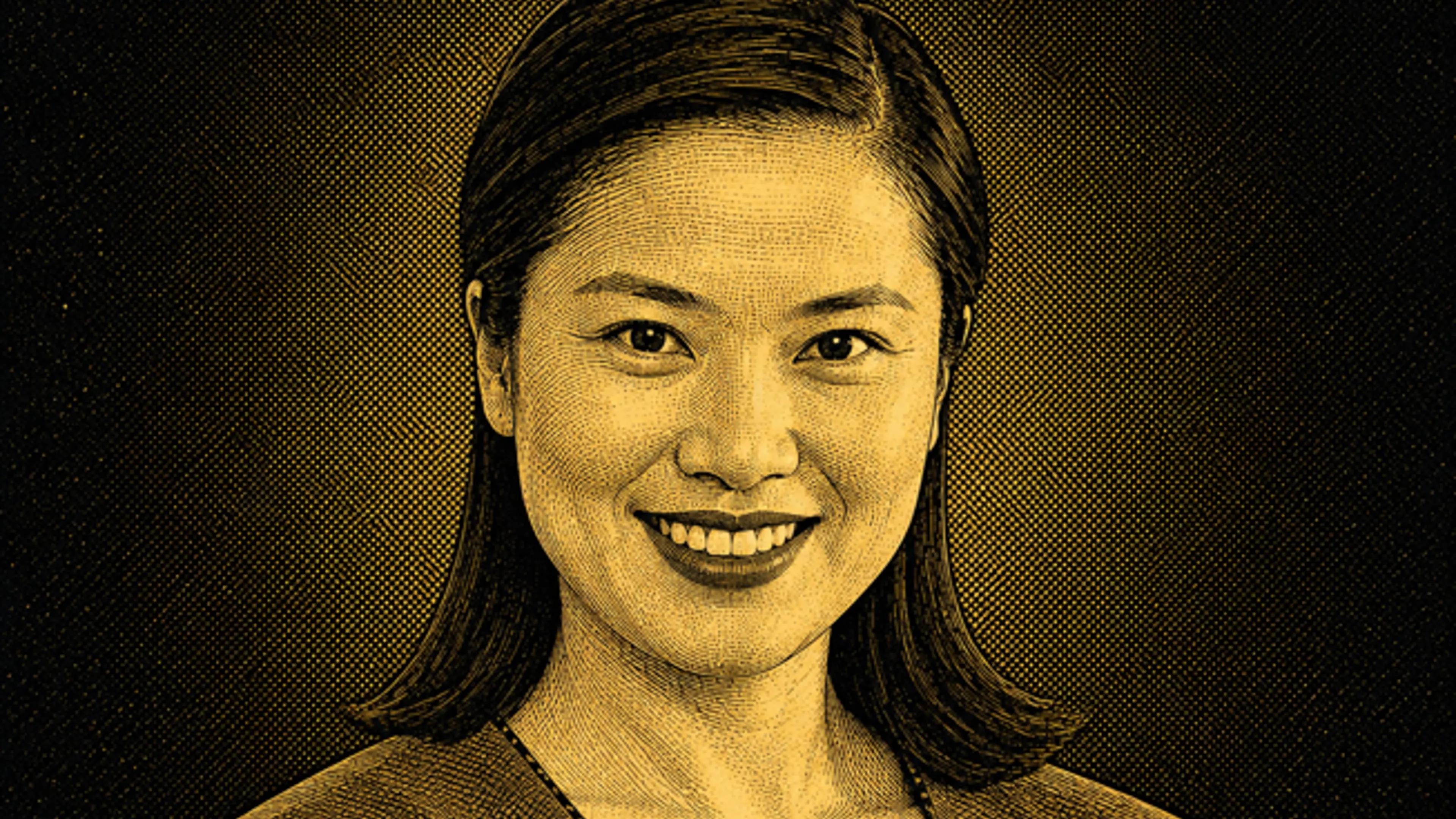
Dr Christina Yan Zhang, CEO of The Metaverse Institute
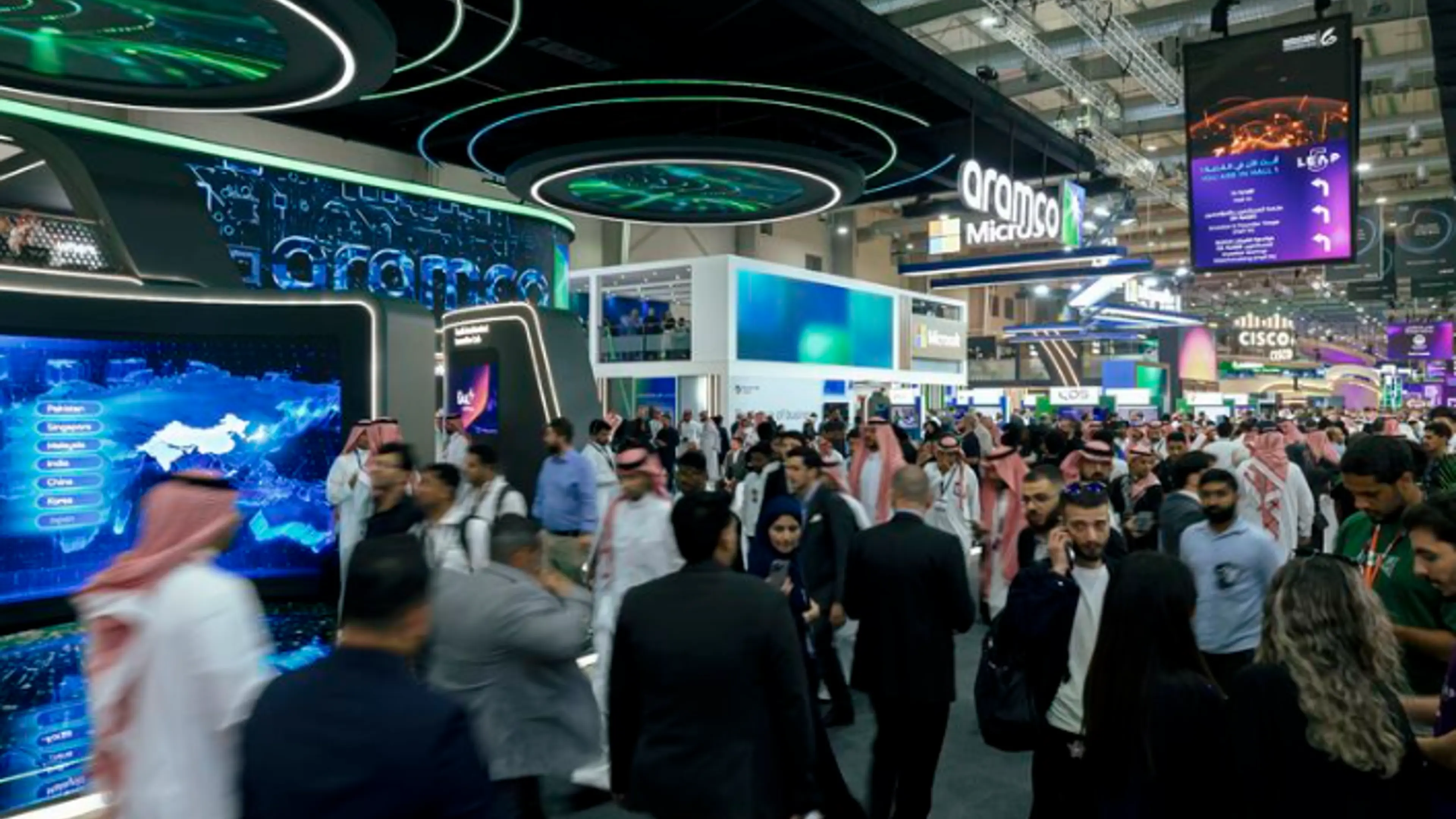
LEAP 2026 brought global technology leaders, investors and innovators to Riyadh for four days of discussions around artificial intelligence, investment, digital infrastructure and the technologies shaping the future.
Inside Saudi spoke with Dr Zhang following the event about the conversations that stood out in Riyadh, Saudi Arabia’s changing position in the global technology landscape and where she sees the greatest opportunities for collaboration between the Kingdom and international technology companies.
Inside Saudi: Having moderated four sessions at LEAP 2026, what were your biggest takeaways — and what stood out about the conversations in Riyadh?
Dr Christina Yan Zhang: I moderated four sessions at LEAP 2026. My sharpest takeaway: Riyadh has become the world’s trust-and-scale testbed for the next trillion-dollar tech corridor.
In the U.S.-KSA Tech Deals and Expansion Stories session I moderated, the scale was impossible to not get excited. Saudi Arabia’s ICT market is racing toward an $82.5 billion valuation by 2030, with tens of billions of dollars locked into landmark U.S.-Saudi agreements across AI, cloud and digital infrastructure.
Steve Lutes, Vice President for Middle East Affairs at the U.S. Chamber of Commerce, brought the American business perspective—and a memorable personal twist: a Hoosier by birth, he earned Saudi Premium Residency in the Kingdom last year. Ahmad Halabi, Managing Director of Resecurity Inc., recognized by the U.S. Department of Defense as the world’s No. 1 hacker, framed the issue at the heart of it all: trust must be technically proven, not just relationship built. We discussed how to turn the U.S.-KSA relationship into a trillion-dollar trade opportunity that benefits both countries—and the rest of the world.
But the human texture mattered just as much. Whether you are bridging Indiana cornfields and the Saudi desert, or moving from a hacker’s hoodie into executive boardrooms, scaling technology between the U.S. and the Kingdom comes down to one core ingredient: genuine trust. A few more cups of delicious Saudi coffee and dates certainly helps.
That is why the Riyadh conversations stood out. They connected execution speed with Saudi hospitality and human trust — making LEAP 2026 feel less like a conference and more like a defining celebration of how the next trillion-dollar tech corridor will be built: by the world’s best and brightest leaders across government, investment and the private sector — fast, trusted and transformative.
Inside Saudi: Your session on “Digital Trust as National Security” brought together government, AI and cybersecurity. What emerged about digital trust as countries accelerate AI and other emerging technologies?
Dr Christina Yan Zhang: The session on “Digital Trust as National Security” made one thing clear: as AI shifts from passive tool to active agent, digital trust is no longer a technical issue — it is a national security imperative.
Yuval Noah Harari writes in Nexus: “Knives and bombs do not themselves decide whom to kill. They are dumb tools... In contrast, AI can process information by itself and thereby replace humans in decision making. AI isn’t a tool — it’s an agent.” That raises the defining question: if AI is making autonomous decisions across finance, border security and cloud governance, who owns the trust gap? The consensus in Riyadh was blunt: agency without accountability cannot become the new normal in national security. Governments and the private sector must work together to build public trust and confidence in AI — especially as warnings grow about AI’s long-term existential risks led by Jacob Coxon, former Anthropic AI researcher.
Digital ID offered a powerful proof point. My UN colleague Dino Cataldo Dell’Accio, Deputy Chief Executive of the UN Joint Staff Pension Fund (UNJSPF), replaced a 70-year-old paper “proof-of-life” process with an ISO-certified, AI, biometric and blockchain-powered Digital Certificate of Entitlement.
It now reaches nearly 90,000 retirees across 190 countries — by prioritizing privacy, user choice and decentralized architecture. If a UN body can persuade beneficiaries in 190 jurisdictions to willingly adopt a cross-border biometric identity system, that architecture could become a viable model for Digital Public Infrastructure (DPI) globally, across both public and private sectors.
The stakes are civilizational. Elon Musk, speaking alongside Nvidia’s Jensen Huang at the U.S.-Saudi Investment Forum in Nov 2025, projected that within 10 to 20 years robotics and AI will make jobs optional and money irrelevant — and that society could live on universal basic income. Through Maslow’s hierarchy, AI is finally taking care of the baseline: survival, safety and operational needs. But the true promise of AI is not just efficiency. It is liberation. By automating the routine, AI can free humanity to transcend the bottom of the pyramid and accelerate toward higher purpose — building a new foundation of global digital trust rooted in unity, charity and shared human prosperity.
At this stage, though, we may have already cracked the short-term secret to digital security. If a nation wants digital infrastructure that is as close to unhackable as possible, fully sovereign and resilient under pressure, you don’t just need code. You need a high-powered racing engine in your network like Dr. Hassan Sawaf, CEO, aiXplain; strict cyber hygiene like Syed Abdul Qadir, Executive Director – IT & Cybersecurity Risk Assurance, PwC; protective, maternal instincts like Larisa Tseng, Regional General Manager (MENA & Türkiye), Vecow Ltd; and the controls handed to a mother of five earning a law PhD while helping run Estonia — HE Minister Liisa-Ly Pakosta, Minister for Justice and Digital Affairs – Republic of Estonia.
Abraham Lincoln said government “of the people, by the people, for the people, shall not perish from the earth.” in 1863 at Gettysburg, Pennsylvania, USA. In the digital age, if we build algorithms of the people, by the people and for the people, digital trust will not perish either. That is how we build a trusted digital future for all 8 billion people on Earth — starting today at LEAP in Saudi Arabia and across the globe.
Inside Saudi: Across your conversations, how did you see Saudi Arabia’s role evolving in the global technology landscape?
Dr Christina Yan Zhang: Saudi Arabia is undergoing a fundamental transformation—evolving from a technology consumer into a frontier-tech producer, exporter, and global standard-setter.
During our session on World-Class: Accelerating through Saudi Arabia's Vision 2030 with AI & Cloud Excellence, leaders like Yazeed Alghamdi, Chief Business Officer at TETCO—who returned to Saudi Arabia after a promising career at the IMF in Washington DC, USA—and Reem Alsuliman, Head of Public Sector at Google Cloud Saudi Arabia, demonstrated the incredible velocity of Vision 2030.
Through Saudi Arabia’s National Cloud framework agreement, public sector procurement times have been slashed from weeks to mere minutes. Having worked on setting global smart city standards with the International Telecommunication Union, I know firsthand that public procurement is often a major operational bottleneck for governments worldwide. Saudi Arabia has eliminated that barrier.
At the same time, homegrown platforms like TETCO’s Madares and Mosadaqa are actively exporting solutions across the GCC and verifying academic credentials in 190 countries. Drawing from my experience as QS World University Rankings' former China Director, where I witnessed rapid innovation reshape China’s global standing, I can confidently predict that over the next decade, 'Innovate in Saudi' will become the defining global technology brand, setting international benchmarks to better the life for a global community of 8 billion people.
Inside Saudi: You also explored talent, AI and the future of digital societies. What is most important for Vision 2030 to remain inclusive and create opportunities for the next generation?
Dr Christina Yan Zhang: To ensure Vision 2030 remains inclusive for the next generation, we must look beyond algorithms and robotics toward technology that enhances human agency.
During our panel on Inclusive by Design, Frederick Van Gysegem, Senior Partner at Roland Berger, brought a refreshingly grounded perspective—ironically capturing his most critical thoughts on digital societies in a classic paper notebook.
That blend of human intentionality and technology points to the true frontier. While figures like Elon Musk highlight Brain-Computer Interfaces (BCIs) as a defense against AI displacement, commercial applications from pioneers like Synchron and Emotiv are already delivering real-world impact. Non-invasive EEG headsets and neurofeedback systems are cutting surgeon and pilot training cycles by 30% to 50%, while empowering neurodivergent individuals and people with motor disabilities to control complex software via neural intent.
Globally, the BCI landscape is experiencing exponential momentum. Valued at over $2 billion today, the global BCI market is projected to reach nearly $6 to $7 billion by 2030, driven by non-invasive enterprise wearables and clinical neuro-restoration. China has emerged as a major powerhouse in this race, home to over 200 BCI companies and research ecosystem players. To accelerate commercialization, In 2025 China made BCI a national priority “future industry”across seven ministries. The last four times China did this (solar, EVs, semis, AI) they put their capital and effort where their words were. China has already approved pioneering national BCI industry standards (such as YY/T 1987-2025 for terminology and world-first AI-enabled EEG data quality benchmarks), while actively drafting a comprehensive suite of over 10 national standards to establish unified global benchmarks for neural signal decoding, safety, and commercial rollout.
Non-invasive BCIs will soon become as ubiquitous as smartphones—everyday wearables that transform how we access knowledge. The next generation need not fear losing white-collar jobs to AI or blue-collar roles to automation. Instead, AI and robotics will act as extended digital and physical senses, allowing us to build the world in ways previously unimaginable. The future is incredibly bright, provided we stay adaptable, keep human agency at the centre, and ensure our shared digital future benefits everyone—even if our handwritten notes remain blissfully unreadable to frontier models like Mistral, Anthropic, or OpenAI!
Inside Saudi: Where do you see the greatest opportunities for international collaboration with Saudi Arabia, and what should global technology companies pay attention to?
Dr Christina Yan Zhang: The greatest opportunity for international collaboration with Saudi Arabia lies in building two-way innovation bridges—moving beyond selling solutions into the Kingdom and actively empowering Saudi-based SMEs and tech entrepreneurs to scale globally.
I was “Made in China” and lived through the transformative momentum of Deng Xiaoping's 'Opening Up' policy, I recognized that exact same kind of energy, determination, and speed the very first day I stepped foot in Saudi Arabia in 2022. Through Vision 2030, the Kingdom isn't just modernizing—it is fundamentally transforming the lives of its people while creating a ripple effect that will elevate the global economy.
Saudi Arabia is no longer just an endpoint market; it is a launchpad. Under Vision 2030, the Kingdom aims to raise SME contribution to non-oil GDP from 20% to 35%, with Monsha'at overseeing an ecosystem of over 1.7 million registered SMEs. Saudi startups already capture over 56% of all venture capital funding in the MENA region, crossing the $1 billion annual threshold.
To capitalize on this, multinational tech firms must focus on three pillars:
• Co-Innovation Over Commoditization: Partner with local founders to build platforms tailored for emerging markets rather than importing rigid Western enterprise stacks.
• Export-Ready Enablement: Help Saudi entrepreneurs globalize homegrown IP—navigating cross-border compliance, regulatory, and multi-cloud environments.
• Localized R&D & IP Transfer: Establish genuine local research hubs to co-create IP designed for export around the world.
At The Metaverse Institute, we are actively developing financial infrastructure to standardize innovation-to-investment pipelines. Our goal is to collaborate with Saudi Arabia and international partners to build a high-growth trade, investment and innovation corridor connecting SMEs across the GCC and Africa.
Today, Africa represents 18% of the global population yet receives just 0.4% of global equity investment. This is a major global digital equity issue. Yet according to UN projections, Africa will house nearly 46% of the world's youth by 2100. Unlocking this corridor bridges the world's most dynamic capital hub with its largest future workforce and nearly 50% of global economic growth.
By connecting Saudi capital, SME, innovation, and infrastructure with the world’s largest emerging markets, Vision 2030 and Vision 2100 will usher in a new era of shared prosperity for the Kingdom, GCC, Africa, Global South and the world with historic impact.
That is how we LEAP together into the most exciting future for all 8 billion people on Earth, starting right here today in Riyadh, Saudi Arabia! Join us!