Wednesday, 25 November, 2026
Ahead of the curve — How Saudi Arabia built a connected health system
From the growth of Saudi Arabia’s virtual hospital network to millions of digital appointments, Inside Saudi unpacks the numbers that show how Vision 2030 is putting technology to work to bring care closer to patients.
Inside Saudi
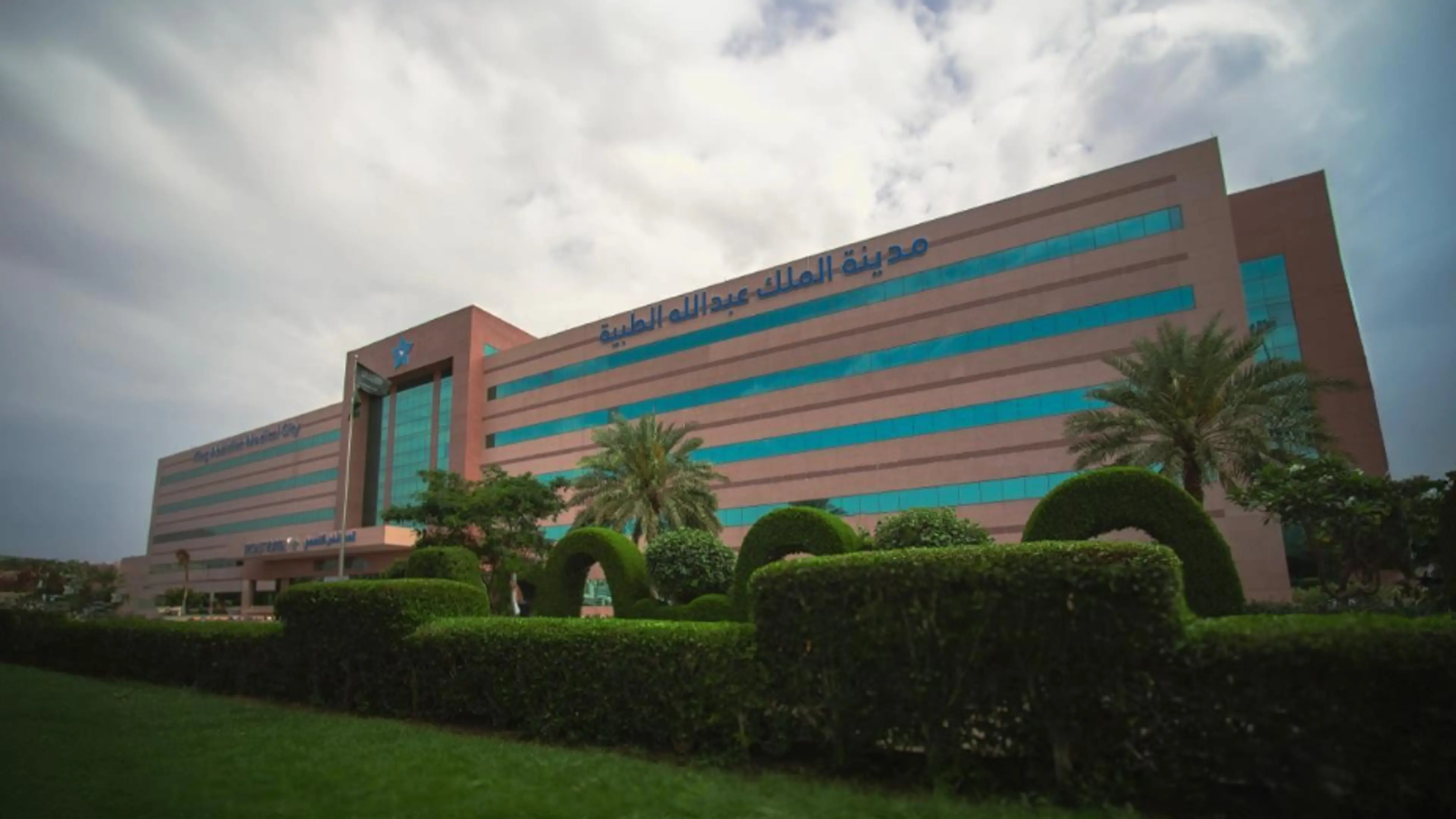
King Abdullah Medical City in Makkah
For a pilgrim recovering from a heart attack during Hajj, leaving hospital can mean a chance to return to worship. During the National and International Virtual Hospital Models session at Tahaluf’s Global Health Exhibition Digital Forum on 9 November, Dr Adel Abdulkader Tash, a practising cardiac surgeon and CEO of King Abdullah Medical City in Makkah, described how his team continues caring for patients after discharge. The referral hospital has its own cardiac intensive care unit.
Saudi Arabia welcomed 1.71 million people for Hajj in 2026, nearly 1.55 million from abroad. For selected patients, the hospital’s virtual care team can stay in touch during the pilgrimage. Connected devices send readings such as blood pressure back to the team, and the hospital provides a phone that patients can use to call directly. How often the team checks in depends on how the patient is doing.
Tash previously led the National Heart Center, which sets standards for cardiac care across Saudi Arabia, as well as the Kingdom’s programme for a major type of heart attack known as STEMI. In Makkah, he has seen remote care become part of the hospital’s routine. Virtual visits, he said, had risen from fewer than 10,000 to around 100,000 a year, accounting for up to a fifth of all visits. In the remote heart failure programme, nurses handle about 90% of patient interactions. Regular contact lets nurses spot a change and bring in a doctor when needed.
“If he’s admitted, then when he’s discharged, I want to make sure that he does not come back.” Dr Adel Abdulkader Tash, CEO of King Abdullah Medical City |
A consultation across a city can save a patient a trip back to hospital. Across a country roughly six times the size of Germany, the same technology can determine whether a specialist is within reach at all. That is why Vision 2030’s Health Sector Transformation Program puts such weight on secure digital records and remote care. Sehhaty gives patients a way to book appointments and consult clinicians. Seha Virtual Hospital connects local teams with specialists. When the Ministry of Health launched Seha in 2022, its network included 130 hospitals. By November 2026, the Ministry reported 241 hospitals and more than 1,400 health centres. Each new hospital connection gives another local team a route to specialist advice.
30 million+ Sehhaty appointments completed, per the Ministry of Health in November 2026. | 365,000+ Seha beneficiaries reached, per the Ministry in November 2026. | 100% Population with a unified digital medical record in 2024, up from 32.7% in 2019, per Vision 2030. |
At Al Noor Specialist Hospital in Makkah, an Indonesian pilgrim arrived in May 2026 unable to speak. A Seha consultant assessed her remotely, and the local team gave her clot-dissolving medicine. The Ministry reported that she regained movement in her lower limbs. The case illustrates what a local team can do with a specialist on the line. At participating emergency departments, a Seha neurologist can review brain scans with the clinicians at the bedside to distinguish a clot from bleeding, advise on treatment and help arrange an urgent transfer if the clot needs to be removed.
How quickly patients get that treatment depends on what happens at each step. A study of Seha’s telestroke service during the 2023 and 2024 Hajj seasons found that 23% of the patients assessed received clot-dissolving medicine in each season. Median time to treatment showed no statistically significant change between the two. That finding gives the network a clear measure to work on. A neurologist may be available by video, but the speed of treatment also depends on how quickly the local team can obtain a scan and act on the result.
459 | Patients assessed through Seha’s telestroke service in a published study of the 2023 and 2024 Hajj seasons. |
One of the study’s co-authors, Dr Abdulaziz Alhomod, Chief Health Information Officer at Saudi Arabia’s Ministry of Health, was Seha’s medical director when it opened. Asked how virtual care could work in specialties where minutes matter, the emergency physician and clinical informatician pointed to two decades of Saudi investment in digital public infrastructure. He said the health ministry was fortunate to have systems it could build on. He gave the example of a central online process for renewing a licence, an everyday public service that showed what was already in place. “We actually took advantage of the digital public infrastructure that was built over the last 20 years,” he said.
Dr Mohamed Mansour, the moderator and a renal consultant at University Hospitals of Leicester and founder and CEO of Digital Doctors, described virtual wards in the UK as “peripheral”, with services run locally within the NHS. Saudi Arabia has organised virtual care centrally through a national network. Alhomod recalled the NHS colleagues who helped Saudi Arabia early on and said Saudi experience was now informing the NHS’s own work.
“They were part of our journey at the beginning. And now we are becoming part of their journey.” Dr Abdulaziz Alhomod, on working with NHS colleagues |
In England, a virtual ward can bring acute care to a patient at home. In Saudi Arabia, Seha can bring specialist expertise into a local hospital. Both approaches make more sense when seen from the patient’s side, as Alhomod pointed out. A trip to a specialist centre can mean paying for transport and accommodation. Those costs belong in any calculation of what virtual care is worth to the people who use it.
With patients already using digital services at scale, Invest Saudi identifies digital health as an investment priority, and the Ministry of Health and National Infrastructure Fund have launched an initiative to finance private participation in healthcare. Dr Mohammed Alhamali has seen that demand from both sides. A Seha co-founder who formerly chaired the Ministry’s National Innovation and Regulatory Sandbox Committee, he is now Executive Director of Corporate Business Development at Dr Sulaiman Al Habib Medical Group. The group’s app recorded more than a billion interactions in 2025, he said. That gives a sense of how much activity can run through a single provider’s app. His test for a new tool was whether it improved care enough to earn a place in the clinic.
Dr Razan AlGhassab, a physician and Head of Clinical Advisory at Lean Business Services, described a test of her own. Before using AI to draft consultation notes, she would want to see how it performed with Saudi patients speaking different Arabic dialects. When she used such a tool herself, she found she had more time to look at the person she was talking to.
“We’re just saying yes to safe AI.” Dr Razan AlGhassab |
For Dr Alia Safi, Dexcom’s Head of Strategy and Marketing for the Middle East and Africa, the same attention to local evidence matters in diabetes care. Safi has worked in medical devices and pharmaceuticals for more than 16 years. She explained how continuous glucose monitoring gives patients and clinicians a view of what happens between visits, and said six of the roughly eight Gulf-focused studies she discussed were based in Saudi Arabia.
Tash came back to what a pilgrim recovering from a heart attack wants most. “He wants to go and worship.” Once the team is satisfied it is safe for him to leave, he can return to the rituals he travelled to Makkah for. The hospital can still check how he is doing. And if he needs them, he knows whom to call.