Wednesday, 10 December, 2025
A triumph!
Tahaluf leads the way with a new generation of content-rich events that are taking over the traditional trade show
Lord Ed Vaizey - Inside Saudi
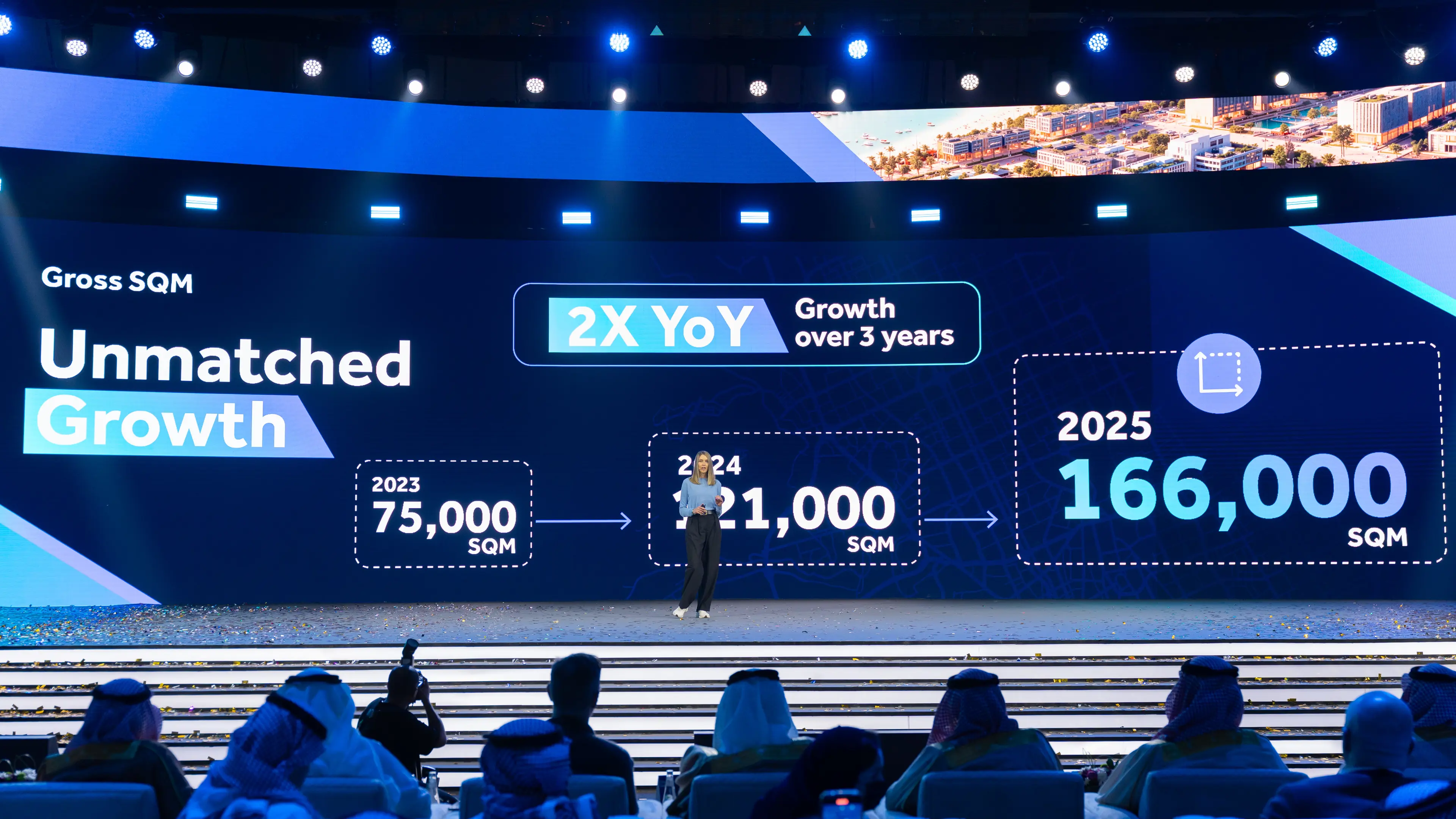
Over four days, Cityscape Global saw SAR 237B (over $63B) of deals, 577 exhibiting companies, and over 170,000 attendees. Pictured: Rachel Sturgess, Senior Vice President at Tahaluf
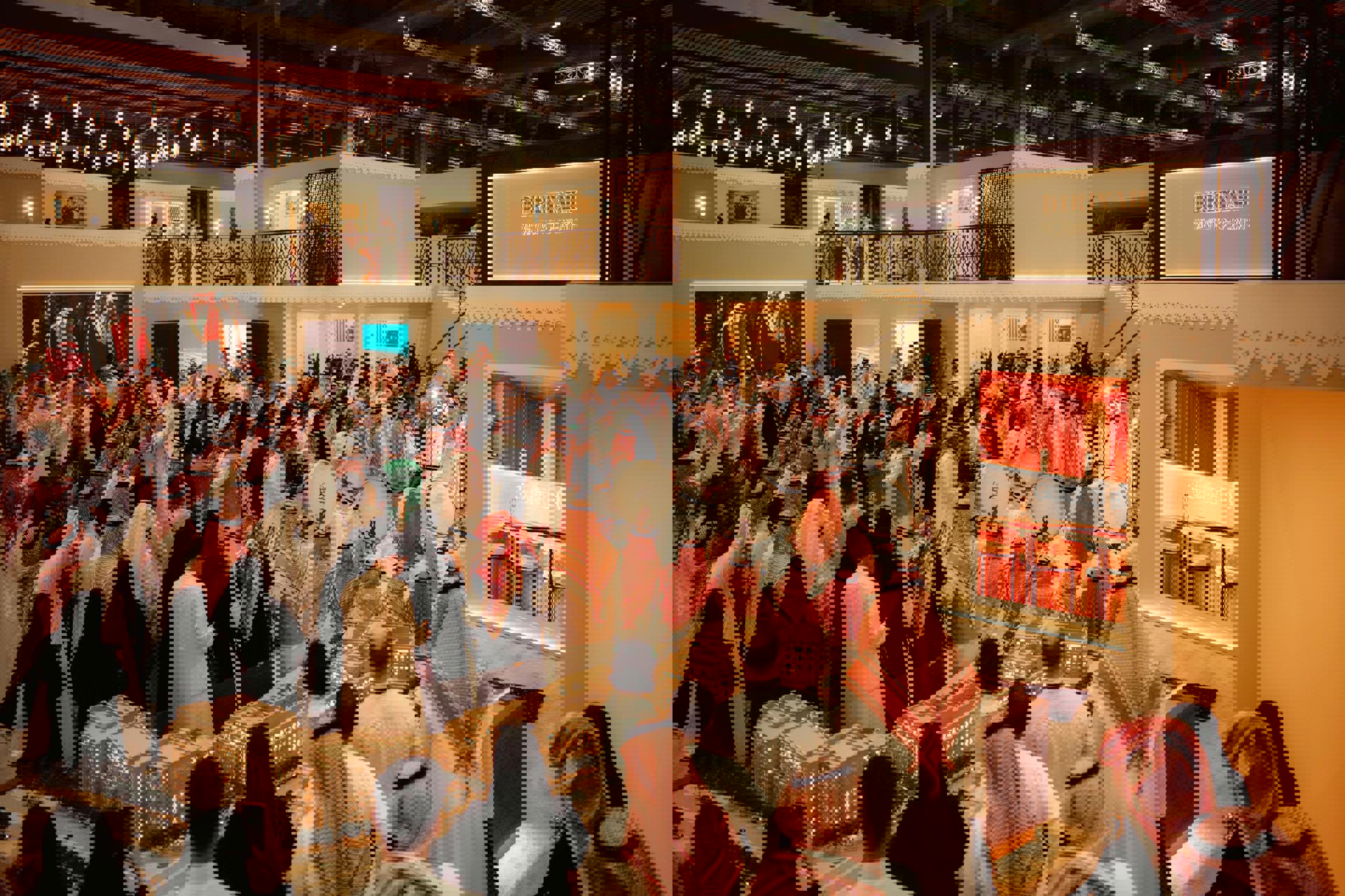
Recently, I was part of the Inside Saudi team that attended Cityscape Global, the real estate extravaganza held in Riyadh every year. It encapsulates many of the dynamic changes that are propelling Saudi Arabia (KSA) forward today.
As always, the numbers were mind-blowing: SAR 237B (over $63B) of deals, 577 exhibiting companies, and over 170,000 attendees over four days.
Strong year-on-year growth was recorded across key metrics. $6.1T of institutional investor AUM was represented – 85% growth – and international attendance and exhibitor participation rose by over 30% each. At 166,000 sqm, Cityscape Global now is twice the size of its 2023 inaugural edition.
Tahaluf, the organiser, is a groundbreaking joint venture between the British global events company Informa and the Saudi Federation of Cybersecurity, Programming and Drones (SAFCSP) and Events Investment Fund.
Like so much in KSA, it has emerged with breakneck speed. Just three years ago, with SAFCSP, Informa brought the cybersecurity conference Black Hat to the Kingdom. From there emerged the joint venture, which now has 21 world-class brands to its name, with five more being added next year.
Events like Black Hat and Cityscape Global form a central part of Saudi’s move to diversify its economy. In just three years, Tahaluf has become a global top 20 player in its field. Just three years. Think about that. In that time, it has contributed more than $17 billion to the Saudi economy – more than the economic contribution of the Qatar World Cup or the Paris Olympics to their respective countries.
So far, so impressive. But what always strikes me as most interesting about initiatives such as Tahaluf is what they can teach other countries around the world.
Innovation is Tahaluf’s hallmark, not just the scale. Cityscape was an established, if tired, brand before Tahaluf rejuvenated it in Riyadh. But LEAP is entirely new and from a standing start, Tahaluf has established it as the premier global technology event, whose edition this year welcomed over 200,000 visitors, 1,800 technology brands and a showcase of 680 start-ups.
All the Tahaluf brands – not just LEAP and Cityscape Global – are rewriting the events playbook. As Tahaluf CEO Mike Champion puts it in my upcoming podcast with him, conferences and exhibitions used to be the physical manifestation of a catalogue, where people felt they had to go – they were “hostage events”. Now, thanks to a concept known as “festivalisation”, these are being replaced by content-rich alternatives with compelling agendas and speakers that are for the many and not the few, and nurture an ecosystem that goes way beyond content.
Tahaluf events are the finest manifestation of this – they are gatherings to which your employees (and indeed speakers) beg to go, and it’s a form of endorsement just to be present.
From Saudi innovation comes a unique export opportunity. Next summer, LEAP East will open in Hong Kong, and no doubt many of the other Tahaluf brands will emerge as global events held in different geographies. In a crowded, mature marketplace, Saudi Arabia stands out for its ingenuity.
The focus on quality too, is crucial. As with so much in KSA, no corners are cut: Tahaluf events have to be the best of the best. The 5,000 speakers invited annually are looked after properly, and big investors receive bespoke, curated programmes. This has to be the right way to do things. And this approach pays for itself – Tahaluf’s operating profit has risen every year, increasing most recently by more than a third.
The next lesson is about the importance of joined-up thinking when it comes to economic development. Tahaluf is a fantastic example of coordination between the government and private sector, and Mike Champion makes no secret of the fact that what has been achieved could not have been done without this alignment. And I am not talking about financial subsidies here – Tahaluf more than pays for itself.
What moved the dial is that from the beginning, Tahaluf, led by Mike and inspirational figures with strong business backgrounds such as Co-Chairman Faisal Al Khamisi, was aligned with the goals of Vision 2030. Its events are focused on sectors such as fintech and technology that will make a real difference to the Saudi economy and where there is the infrastructure to support growth.
In other countries, such as the UK, the events industry is more mature and driven by the private sector. But that means that there are missed opportunities. How many British politicians have worked out that events like Tahaluf’s not only contribute significantly to your economy, but bring the leadership and elites of a particular sector to your cities? They are unique – and annual – opportunities to do some serious business.
Minister of Municipalities and Housing HE Majed Al-Hogail, who opened Cityscape Global (and was later interviewed by my colleague Sir Martyn Lewis for Inside Saudi), Minister of Tourism HE Ahmed Al-Khateeb, and their counterparts at the Ministries of Culture, Investment and Economy & Planning, HH Prince Badr bin Abdullah Al Saud, HE Khalid Al-Falih and HE Faisal Alibrahim respectively, clearly understand this.
When I was a British Minister, I would occasionally get invited to industry events, but these tended to be random invites, with no strategic follow-up. The only occasion when the British government got serious was during the London Olympics, when we did indeed have a Business Embassy. But every event has the potential to be one – and in this respect, KSA leads the way.
Finally – and perhaps most importantly – are people. Tahaluf now employs 300 people, and that number will rise to 430 next year. It takes its responsibilities seriously – which is perhaps why it has a 96% retention rate. Tahaluf Training Academy, the company’s graduate scheme, has taken on the status of an elite business school, with more than 20,000 people applying each year for just 20 places – and no wonder, given the opportunities it brings. Mike Champion says he looks for one quality above all others: kindness. He employs on merit, and more than half his team are female.
Kindness is important. This is, after all, about bringing people together. Artificial intelligence is making its mark – the job of researching speakers and topics has become much faster and easier. But Tahaluf at its heart remains a human-centred concierge service to ensure major investors get treated properly, make the right contacts, and that collaboration and investment moments follow.
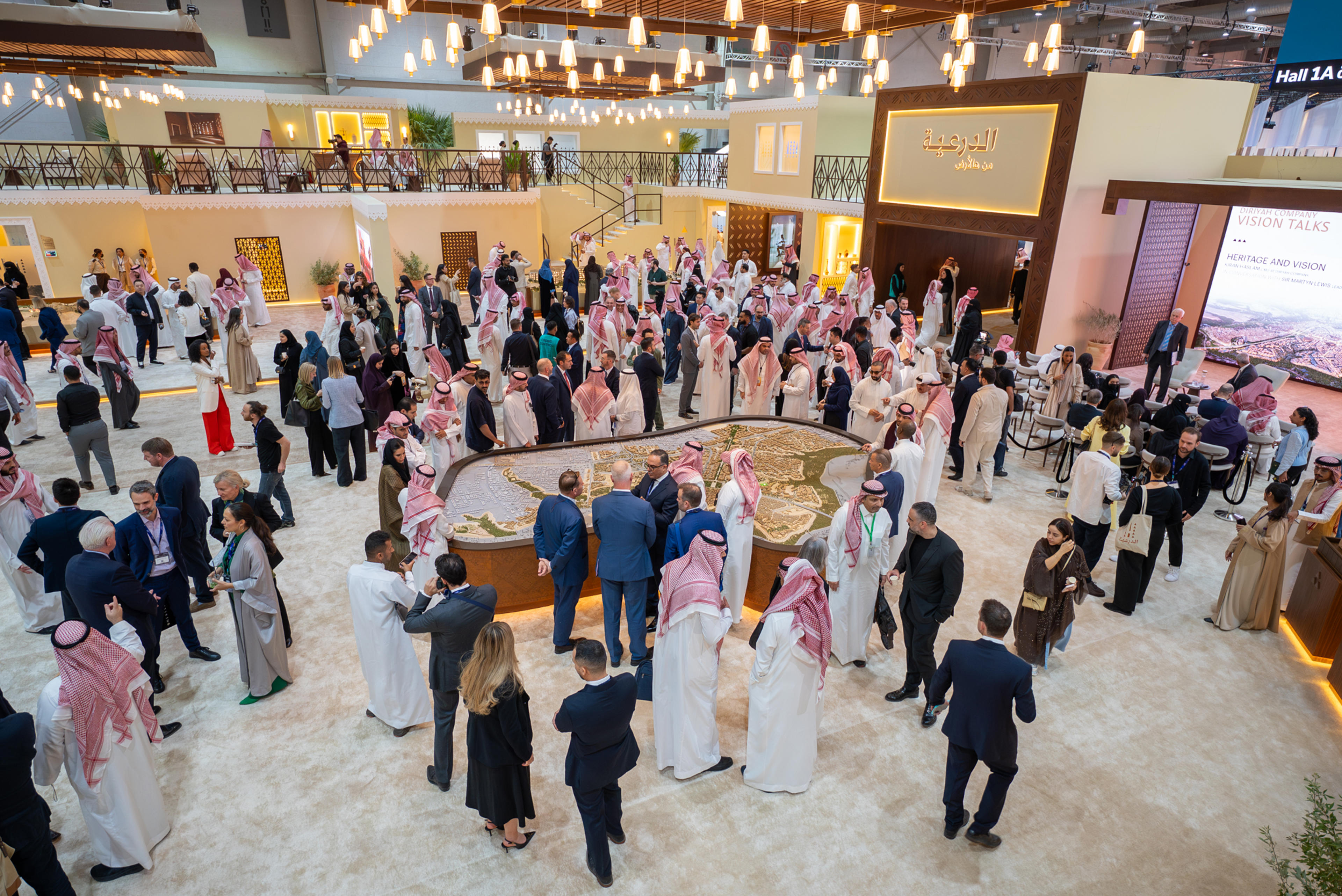
One of the biggest exhibitors at Cityscape Global was Diriyah Company, the master developer behind Diriyah, The City of Earth.
Diriyah was the first settled agricultural society in the Arabian Peninsula, dating back to 400 AD, and is the home of the UNESCO World Heritage Site of At-Turaif, the birthplace of the House of Al Saud, and the Kingdom’s first capital, dating back to 1727. As such, Diriyah stands as a place that encapsulates Saudi identity.
The City of Earth is the over $63B, 14 sq km development being built around this – six times bigger than Monaco and bigger than Beverly Hills. As the home to a heritage site, the challenges of executing this at Diriyah complete with all the amenities someone would expect in the 21st century are huge.
In my upcoming podcast with Kiran Haslam, Diriyah Company’s CMO, he called the process “past forward”, a phrase I love: the combination of preservation and development. As a former minister for heritage, I know how important history is in giving a sense of place and in building a community. The team at Diriyah Company understand this well.
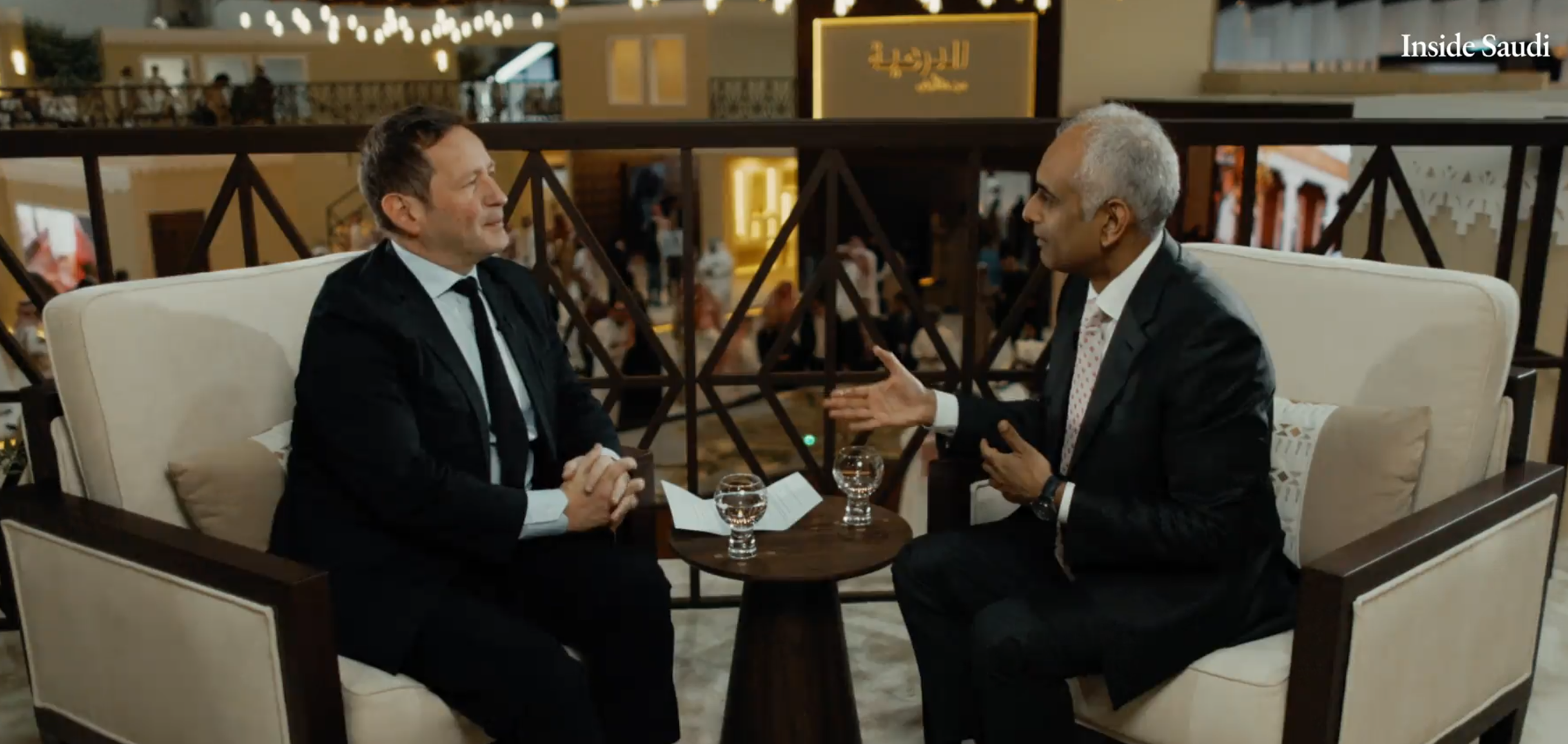
Kiran started his journey by immersing himself in Diriyah’s history, a five month process surrounded by books – his office looked like a chaotic library. This meant understanding the flora and fauna, the rhythm of the area. It even led to the registering of a specific colour for Diriyah: the Diriyah tan.
Right from the get-go, the decision was made to build using traditional adobe mud brick methods. The outward appearance of the new buildings are suitably respectful to the heritage buildings they sit alongside; however, there is more room for modern expression such as glass walls and courtyards within the walls.
The action takes place elsewhere. The real marvel is that huge excavation done without blasting that has taken place over three years means that all the essential amenities can be hidden below the surface, including four new metro stations and car parks.
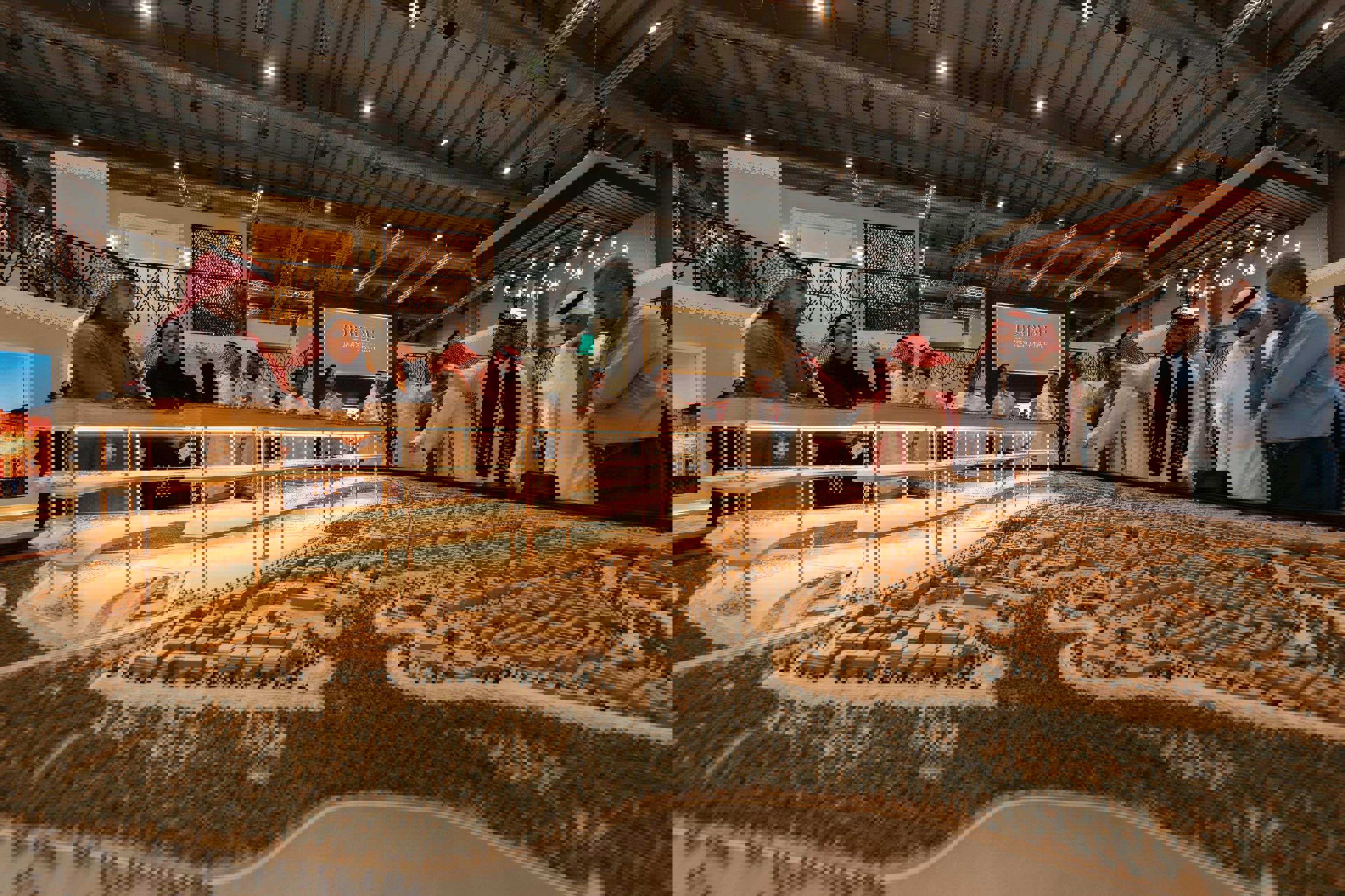
For Diriyah will be a city of pedestrians – more than half the site will be walking only, human-sized and full of green space.
A project like this has never been undertaken before, and there are important lessons for other cities. Diriyah has embraced the concept of the smart city, in its traditional sense, but has taken it further. Smart homes have been incorporated into the system, so that elderly relatives can be monitored at home, for example. Culture remains central to development, with more than 40 museums and cultural spaces being built.
With residents moving in next year, The City of Earth will get into its stride by 2030 – in time for the Expo Riyadh, just 11 minutes away by train. The development expects to create 180,000 jobs, and attract 50 million tourists, contributing some $18 billion to the Saudi economy. Most importantly, again at breakneck speed, huge investment and focus has ensured that a global heritage site will play a central role in the world’s most ambitious market.
Diriyah has worked hard to ensure it is not an aloof, elite place – but somewhere anyone can go, and work and live. In the eighteenth century, it was the place where citizens could meet royalty – it was both modest and magnificent, and will be again.
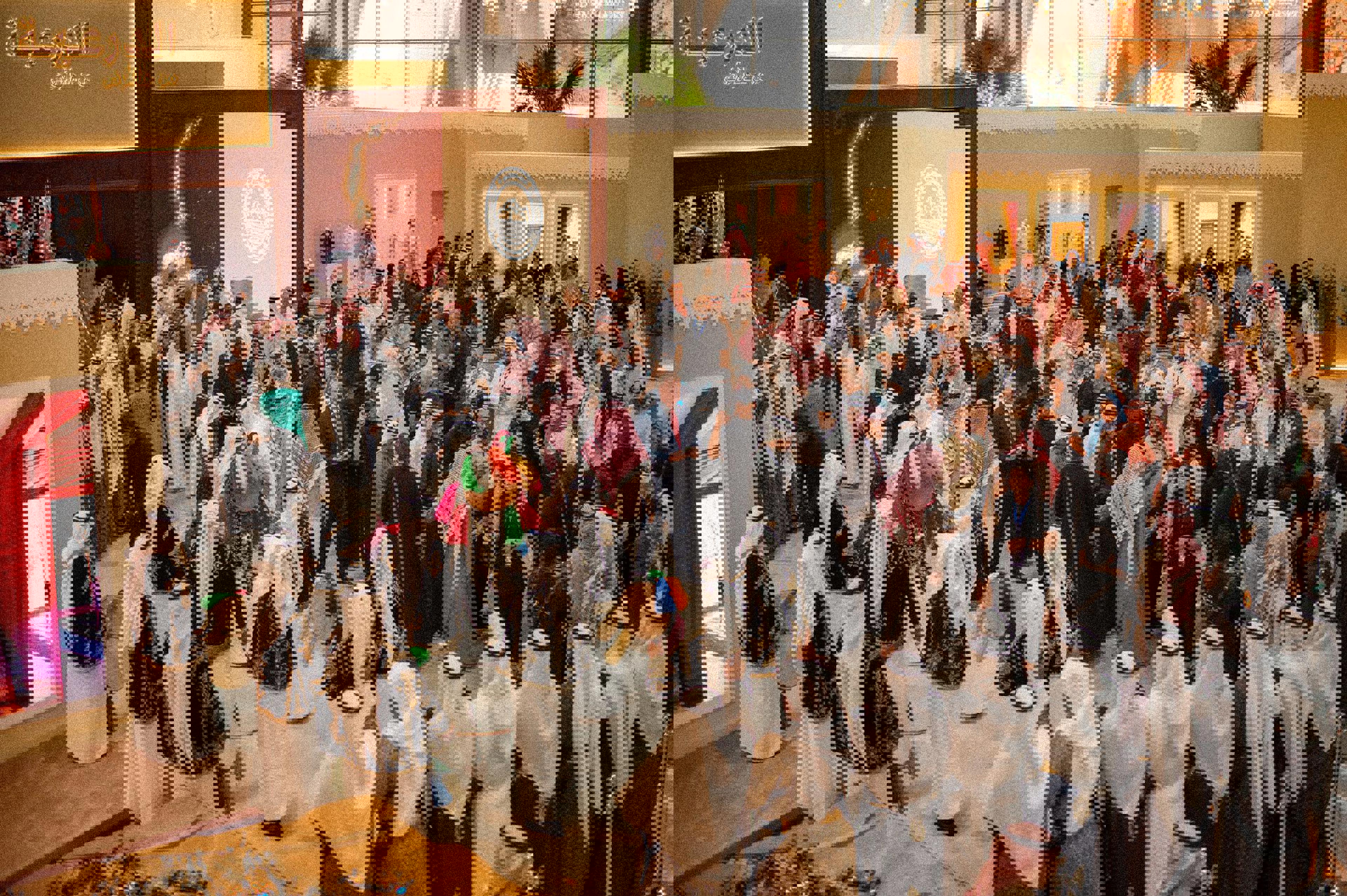
Stay tuned for more Cityscape Global content and the launch of Inside Saudi’s Ed Vaizey Show, our pioneering Saudi business, technology and culture podcast.