Thursday, 23 April, 2026
Building the backbone of trade
How are infrastructure investments reinforcing Saudi Arabia's position within the global trade landscape?
Rahaf H.Q., Digital Editor at Inside Saudi
The global trade map is being reshaped at an accelerated pace, as supply chains shift toward more flexible, multi-route models. In this environment, the movement of goods no longer relies on a single, linear path between production and consumption. Instead, it is increasingly structured around interconnected networks that allow companies to adapt to change and reduce exposure to concentrated risk.
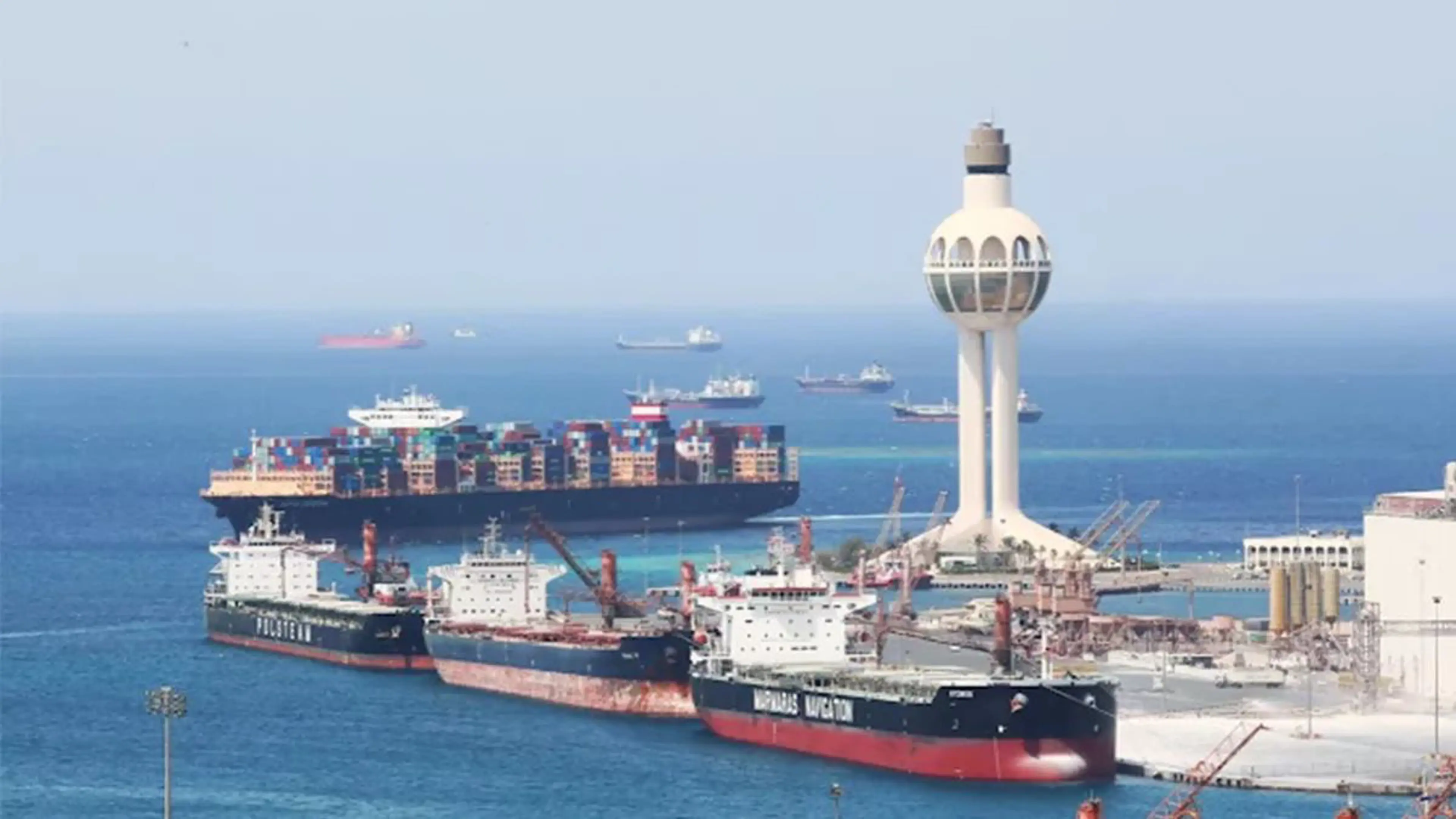
The Red Sea corridor stands out as a central element in this evolving landscape. Handling approximately 30% of global container traffic and facilitating over $1 trillion in annual merchandise trade, it plays a critical role in connecting Asia, Africa, and Europe. Any disruption within this corridor has immediate implications for shipping timelines and costs, often extending transit periods by weeks and significantly increasing expenses when vessels are rerouted.
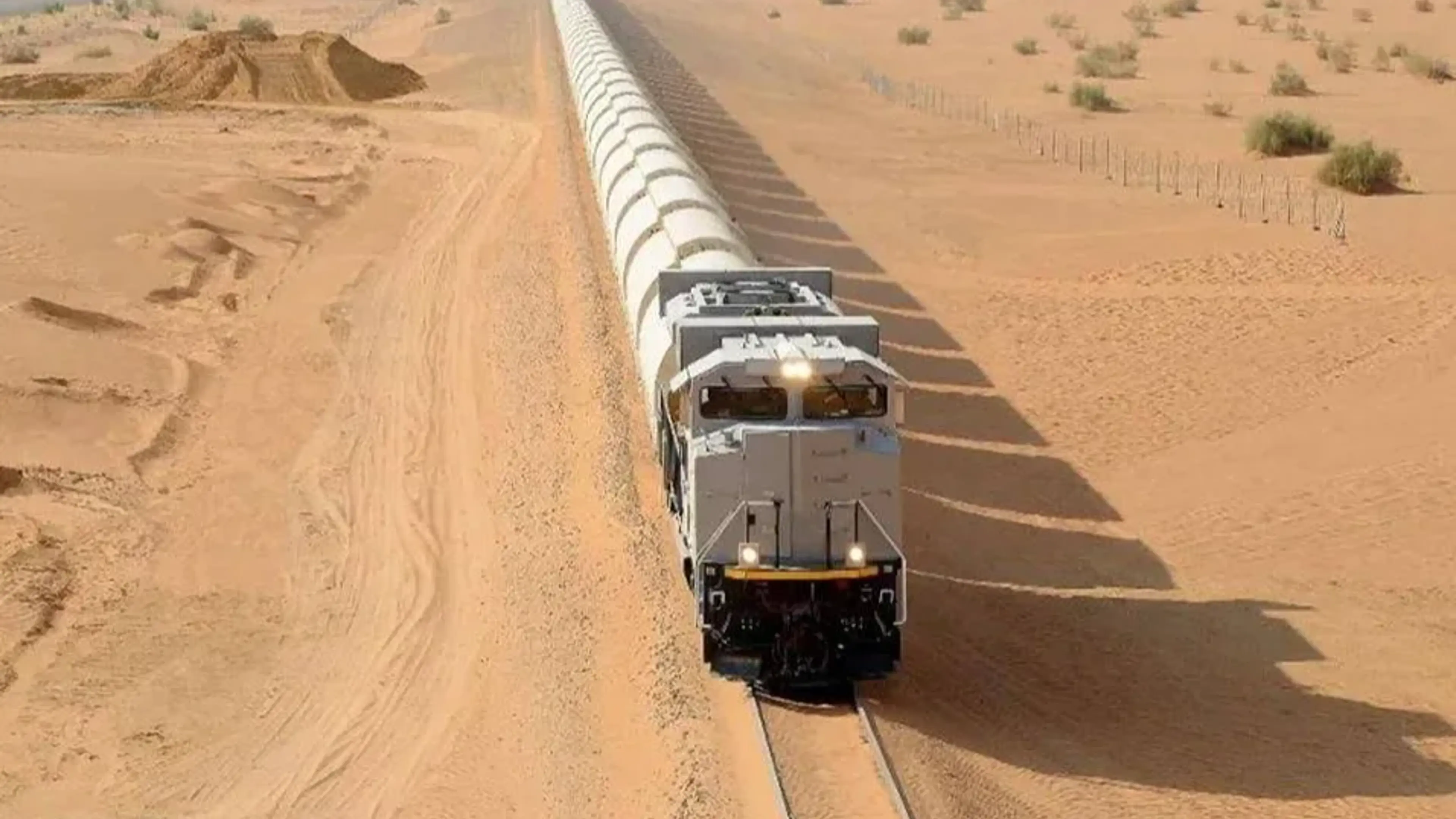
Within this shifting context, Saudi Arabia is advancing a coordinated approach to managing trade flows by integrating land, maritime, and energy infrastructure into a unified system designed to enhance efficiency and resilience. At the center of this approach is the Saudi Landbridge project, a railway network extending over 1,500 kilometers, linking King Abdulaziz Port in Dammam to Red Sea ports, including Jeddah and King Abdullah Port, via Riyadh as a central logistics hub. This connection establishes a direct inland corridor between the Kingdom’s eastern and western coasts, enabling more flexible and time-efficient cargo movement.
This direction is further supported by significant expansion in energy infrastructure. According to the project announcement, a $11.5 billion power purchase agreement, structured over 31 years, will develop approximately 2,300 megawatts of generation capacity in the Makkah region, alongside transmission network expansion reaching 380 kilovolts. These investments reflect the scale of demand required to sustain industrial activity and logistics operations over the long term.
At the same time, the shipping sector is undergoing structural changes, with increasing reliance on regional networks and shorter trade routes that enable smaller shipments and faster response to demand fluctuations. This shift enhances the adaptability of supply chains in a more volatile operating environment. In parallel, advanced technologies—including real-time tracking systems, data analytics, and artificial intelligence-driven route optimization—are playing an expanding role in improving operational efficiency and enabling more informed decision-making.
Taken together, these developments point to the emergence of an integrated system through which goods can move more efficiently between inland production centers, ports, and global markets. This system reduces exposure to external disruptions while strengthening the Kingdom’s ability to manage trade flows with greater precision and reliability.
Through this approach, Saudi Arabia is reinforcing its position within the global trade landscape as a central economic actor with the capacity to influence how trade moves, supported by a connected and scalable infrastructure framework aligned with evolving global dynamics.

