Thursday, 23 April, 2026
Compute at scale
What Saudi Arabia's Hexagon Data Center signals for the business landscape
Rahaf H.Q., Digital Editor at Inside Saudi
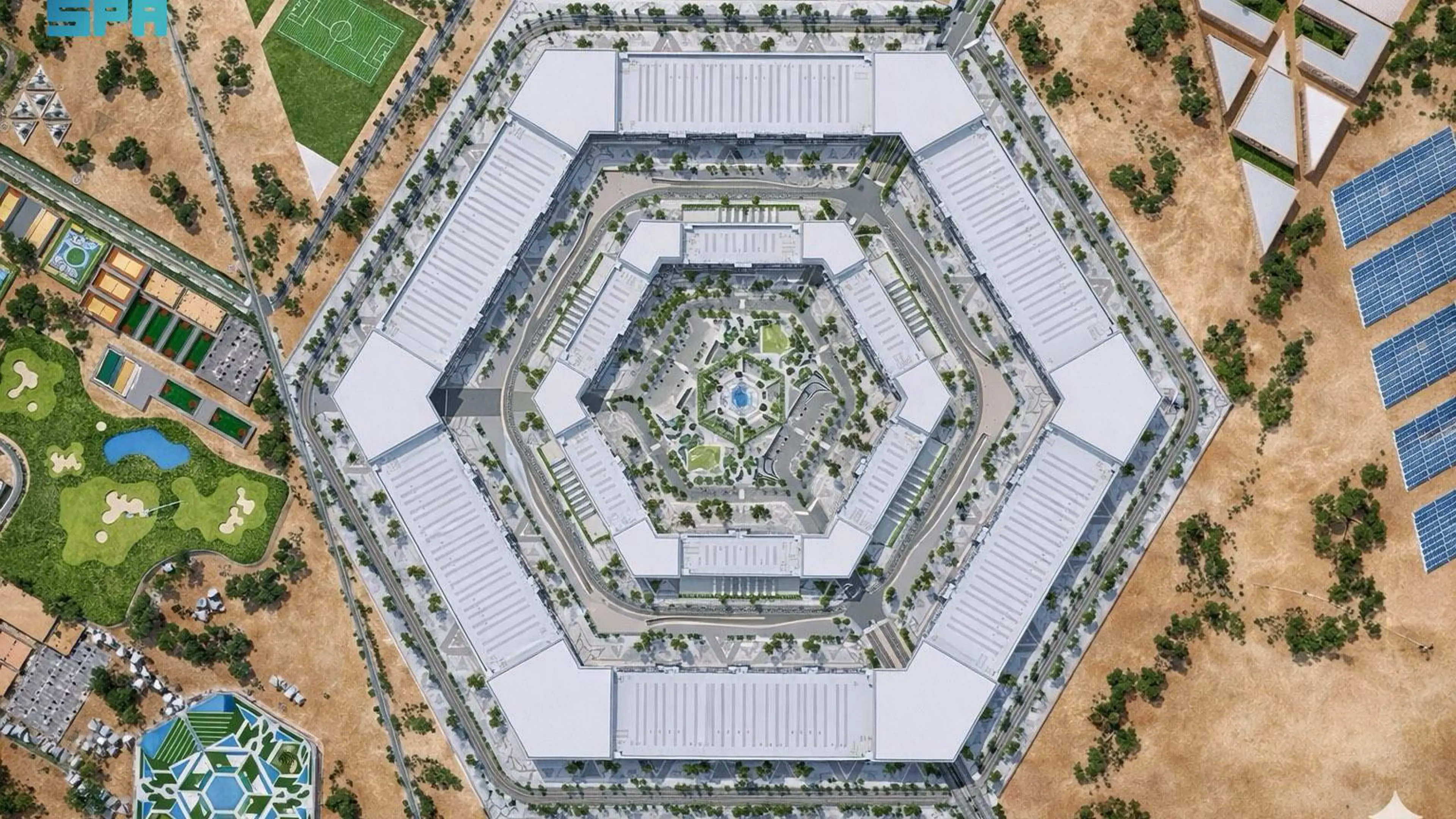
The launch of the Hexagon Data Center in Riyadh reflects a clear shift in how Saudi Arabia is positioning itself within the global digital infrastructure landscape.
In terms of scale, the project is significant: designed with a capacity of 480MW, spanning over 30 million square feet, and classified as Tier IV with 99.995% availability. These specifications place it among the largest and most advanced government-led digital infrastructure projects globally, aligned with the requirements of high-performance computing, cloud services, and artificial intelligence applications.
The significance of the project lies in what it signals. Infrastructure at this scale is typically developed in response to anticipated growth in digital demand. As government platforms expand, enterprise systems evolve, and AI-driven applications become more integrated into operations, compute requirements in the Kingdom are expected to increase meaningfully over the coming years.
This direction becomes more evident with the positioning of Hexagon as part of a broader national data infrastructure strategy, rather than a standalone development. It reflects a long-term approach to capacity building, indicating that Saudi Arabia is systematically developing the foundational layer required to support digital and AI-driven economic activity.
Economic projections linked to the initiative point to a cumulative impact exceeding SAR 10 billion, alongside annual savings of more than SAR 1.8 billion. While these figures are indicative, they highlight the potential scale of activity that may emerge as digital adoption continues to expand across sectors.
These developments also align with the broader objectives of Saudi Vision 2030, which emphasizes economic diversification, the growth of non-oil sectors, and investment in digital infrastructure as a key enabler of a knowledge-based economy. In this context, projects such as the Hexagon Data Center are part of a wider effort to build long-term capabilities in data and artificial intelligence, supporting the readiness of multiple sectors for continued digital transformation.

From a business perspective, the implications extend beyond the data center itself.
At the infrastructure level, projects of this scale require reliable energy supply, advanced cooling systems, and specialized construction, creating demand across these sectors.
At the platform level, the availability of domestic compute capacity may support the expansion of cloud providers, AI companies, and enterprise technology platforms, enabling localized operations and potential partnerships.
At the ecosystem level, digital infrastructure often acts as an enabler of broader economic activity. Sectors such as financial services, healthcare, logistics, and smart systems are likely to benefit from increased access to high-performance computing, supporting further digital integration over time.
The presence of a state-backed, Tier IV facility developed in line with international standards (including TIA-942 and LEED Gold) also contributes to a more structured and reliable operating environment, enhancing clarity for entities operating within this space.
As a result, the impact extends beyond data centers to adjacent segments such as:
Energy supply and optimization
Cooling and thermal management solutions
Cloud infrastructure and managed services
AI deployment and applications
Connectivity and fiber networks
In this context, the relevance of such infrastructure lies in its role in shaping how different sectors evolve and operate within an increasingly data-driven environment.
As this shift continues, the impact of such developments is measured by their ability to reshape how markets function. With access to high-capacity compute infrastructure, digital expansion becomes less constrained by technical limitations and more defined by execution speed and strategic clarity. In this environment, Saudi Arabia is increasingly building a framework where data and compute capacity play a central role in enabling growth—reshaping the nature of opportunities across sectors in the years ahead.