Thursday, 09 July, 2026
From market reform to global integration
Saudi Exchange CEO Mohammed Al-Rumaih reflects on a decade of transformation at the Inside Saudi Club London Summit
Inside Saudi
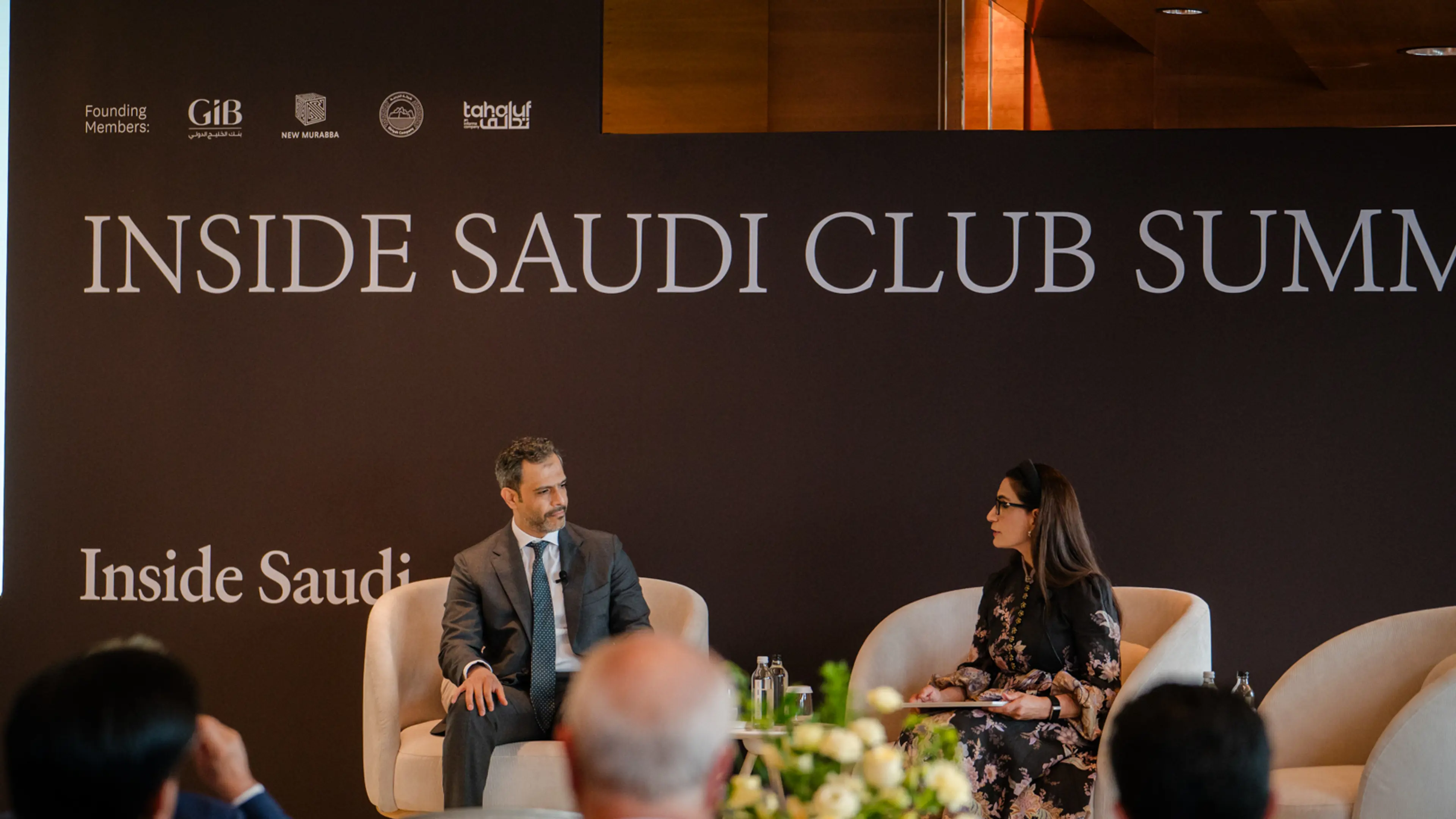
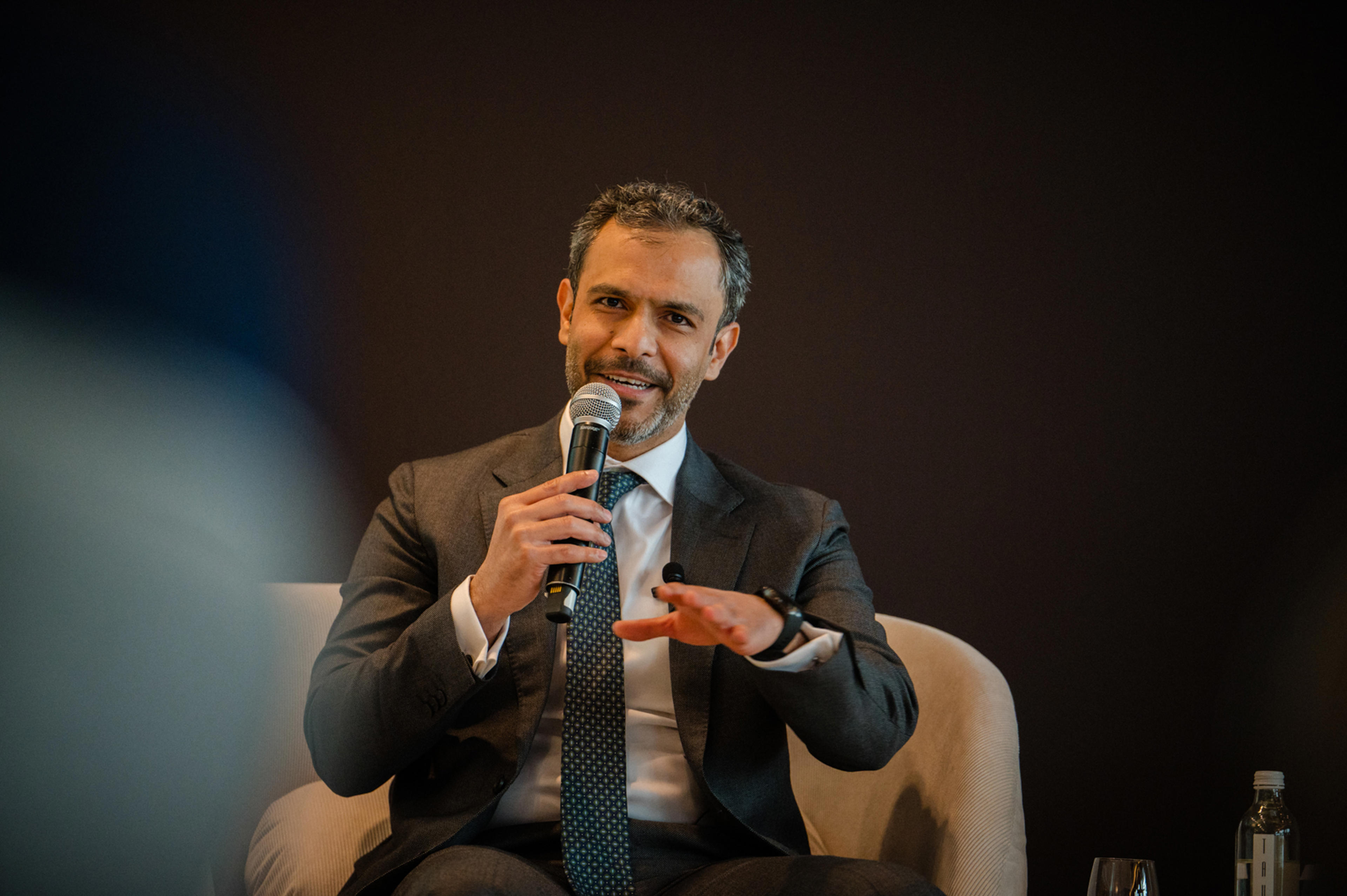
Mohammed Al-Rumaih in conversation with Rima Bhatia, Group Economic Advisor at Gulf International Bank, at the Summit
A decade ago, meeting a fund manager in London or New York and suggesting Saudi Arabia as an investable market would, in Mohammed Al-Rumaih's telling, elicit a polite smile and a swift change of subject.
More recently, those same managers were engaging with the Saudi Exchange, known as Tadawul, on the continued opening of the Saudi capital market to international investors.
From less than USD 10 billion invested by foreign investors, Tadawul now has more than USD 120 billion. Al-Rumaih, who has been CEO of the Saudi Exchange since 2021, and prior to that, the bourse’s Chief of Markets and Chief of Sales and Marketing, has had a key role in one of the more striking transformations in global capital markets.
Since Saudi Vision 2030 was unveiled in 2016, the Saudi Exchange has undergone a significant transformation, with market capitalization now exceeding USD 2.6 trillion, the number of listed companies more than doubling, and the Exchange becoming a constituent of the MSCI, FTSE Russell and S&P Dow Jones Emerging Market indices.
Moreover, in February of this year, the Saudi regulator, the Capital Market Authority (CMA) opened the Saudi equity market to all categories of foreign investors. As a result, both foreign institutional and individual investors can invest directly in shares listed on Tadawul’s Main Market without needing to meet qualification thresholds or obtain special regulatory status.
Al-Rumaih is at pains to distribute credit widely. “I feel lucky to have been part of the exchange during these years, during Vision 2030,” he says. Good fortune, of course, is not the whole story.
Three inflection points
For Al-Rumaih, three experiences over the past decade stand out. The first was the digital overhaul of 2015. Before that, he says, Tadawul "acted as a utility company", a phrase he borrows from the then-Chairman of the CMA. A new state-of-the-art trading system helped change the Exchange’s ambitions – it was as if Tadawul had been handed “the best car out there to race,” says Al-Rumaih, and this new sense of what was possible was quickly expanded when Vision 2030 arrived months later.
The second milestone was the index inclusions in 2019. To be admitted to the major emerging-market equity benchmarks, Tadawul had to overhaul much of its market infrastructure — moving from same-day to T+2 settlement, introducing bilingual disclosure requirements, reforming stock-borrowing and lending rules, and mandating listed companies to meet the governance standards that large institutional investors demand. Brokers rebuilt their businesses around servicing institutional clients rather than retail ones.
All this required canvassing fund managers globally, many of whom knew relatively little about the Saudi market, Al-Rumaih recalls. Now, he notes, “everyone knows – and they are voting with their money”.
Saudi Arabia was among the fastest market to progress from watch list to full index inclusion, and the inflows that followed were significant. Foreign investor participation increased substantially following index inclusion, reinforcing Saudi Arabia’s growing integration into global capital markets.
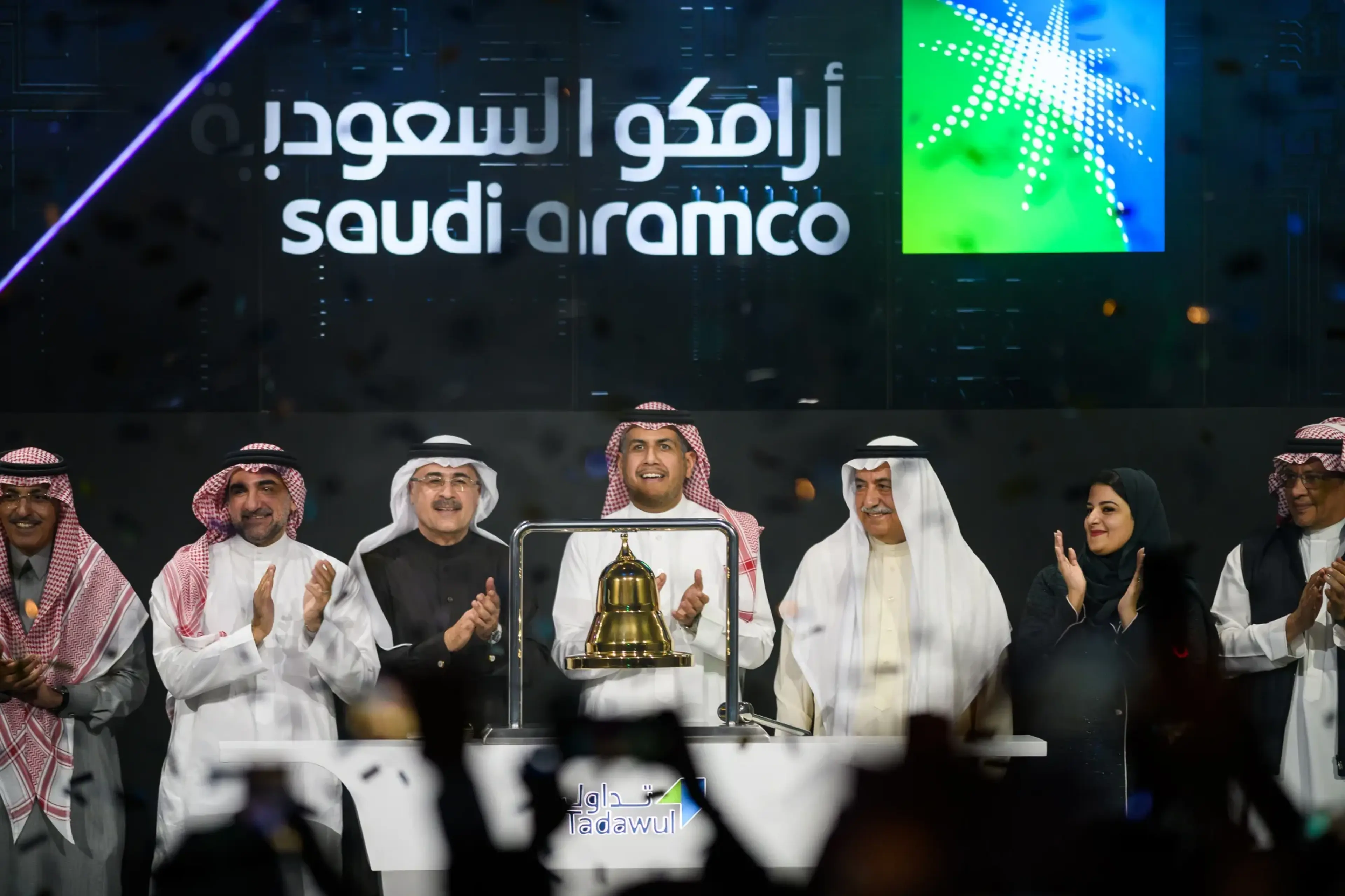
The third inflection point was the listing on Tadawul of Saudi Aramco in December 2019. At the time, this was the largest IPO in history, raising almost USD 26 billion and valuing the company at USD 1.7 trillion.
Sceptics had argued that a domestic exchange could not handle such a transaction; several of the world's largest bourses had stumbled on smaller ones. The listing proceeded without mishap and “put us on the map,” Al-Rumaih observes.
Growth and expanded capital market access
Much of the subsequent growth in the number of listed companies has come not from mega-caps, but from across a broader and increasingly diversified range of sectors and companies.
In 2017, the Saudi Exchange launched Nomu (Arabic for growth), its parallel market for small- and medium-sized enterprises (SMEs). Vision 2030 is targeting an SME contribution to GDP of 35% by 2030 compared to 20% in 2016, and Nomu, with its lighter listing requirements that make it easier for SMEs to list and access the capital needed to support their growth, is playing a significant role in supporting this ambition.
Globally, growth markets of this kind fail more often than not, Al-Rumaih notes. Saudi Arabia's version has defied that pattern. Before the regional conflict, the number of listed companies had been growing by between 10 – 15% each year, among the fastest rates by that measure, or between 40 – 50 companies annually. Since 2016, Tadawul has roughly doubled its listed-company count to over 395 companies (270 listed on the Main Market and over 126 on Nomu).
The Main Market’s index inclusion explains part of this success – the resulting liquidity and visibility helped make Nomu attractive to smaller companies that previously had no obvious path to the public markets.
Educating debutants was essential, too. Many prospective issuers arrived with misconceptions, believing that a royal decree was required, or that companies in certain sectors could not list.
Moreover, the government added a range of incentives across multiple government entities to encourage listings, and some barriers required legal reform rather than persuasion or education.
Now, Al-Rumaih says, every successful IPO brings competitors through the door asking how they too can go public.
Confidence amidst conflict
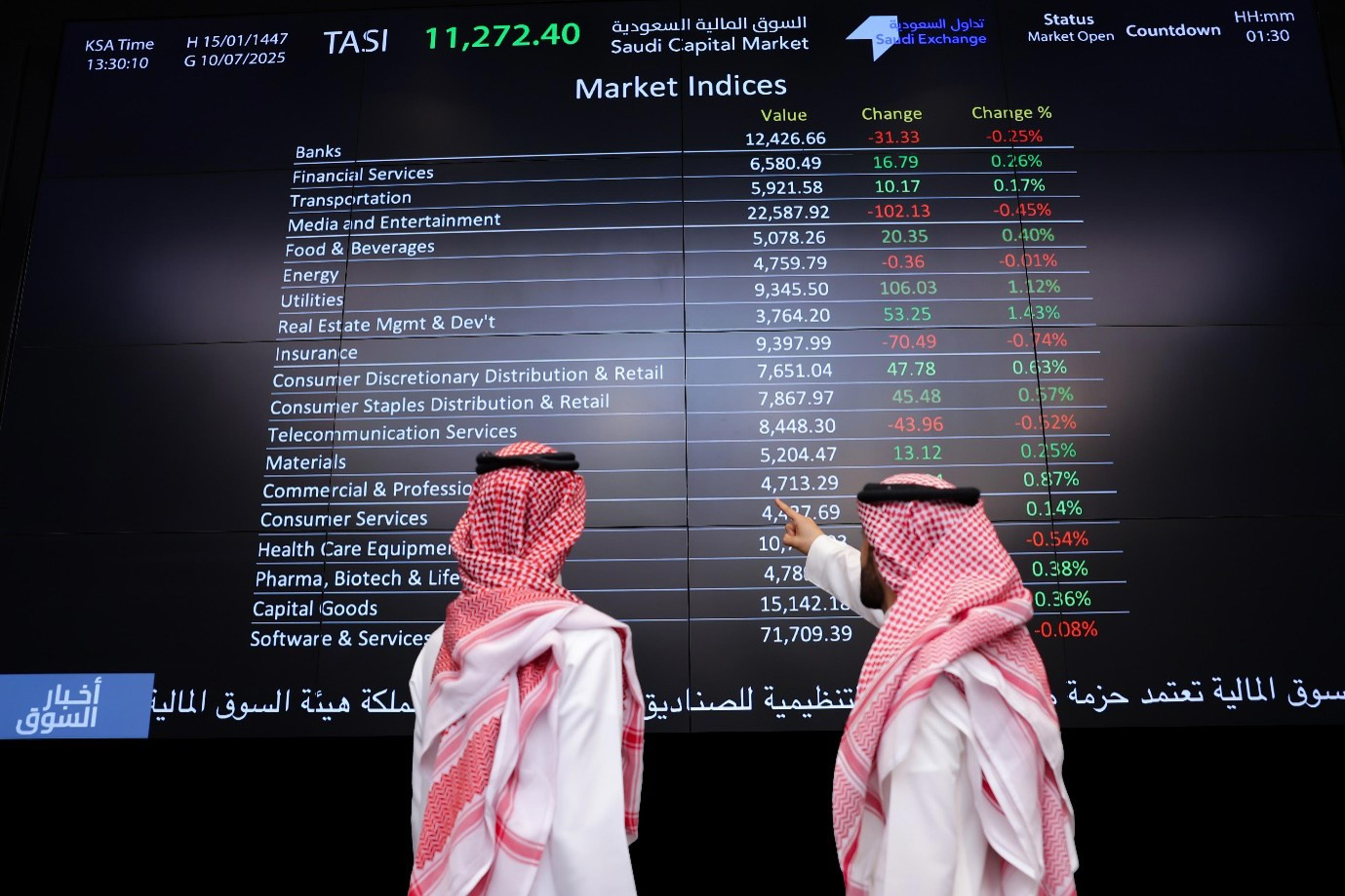
What may surprise investors outside the Kingdom is the Saudi capital market’s resilient performance throughout the regional conflict. The Exchange never closed or suspended trading, roadshows have continued (a Saudi Exchange delegation had been in London the week before the Summit), and non-Saudi investors have continued to be net buyers.
“If anyone has been to Saudi Arabia during the war,” Al-Rumaih says, “they will not feel any change. Everyone is doing their normal business."
He offers this as evidence not of insouciance, but of institutional maturity and the resilience of the Kingdom’s capital markets, built on years of consistent market development, robust infrastructure, and strong economic fundamentals.
Those fundamentals continue to underpin the Kingdom’s investment proposition: a young, growing and increasingly skilled population; a US dollar-pegged currency; relatively low inflation; a strategic geographic location; continued infrastructure investment; and, above all, the consistent implementation of Vision 2030.
As with any international market, geopolitical developments can influence investor sentiment and the timing of transactions in the short term. However, Al-Rumaih notes that they have not altered the long-term investment case for Saudi Arabia, which continues to be supported by ongoing economic diversification, market development, and increasing international participation.
The next frontiers
Al-Rumaih is careful not to view the Saudi Exchange’s progress as a reason for complacency. The IPO pipeline for 2026, he acknowledges, has been affected by broader market uncertainty. Some companies have chosen to postpone planned listings despite strong investor demand, reflecting decisions around timing rather than underlying market fundamentals.
He frames this as evidence of a maturing market, where issuers increasingly recognise that valuation, preparedness and market conditions all play an important role in a successful listing.
"It's either you do it right or don't do it," he observes.
The Exchange, which once struggled to attract a few listings a year, now actively works with advisory firms to track dozens of prospective issuers. At the same time, the Capital Market Authority has continued to evolve its regulatory framework, supporting the ongoing development of the Saudi capital market and enhancing its competitiveness.
Whereas the sectoral mix of new listings in recent years has skewed toward materials, healthcare and food and beverages, Al-Rumaih expects greater representation from sectors such as technology, software, services, logistics and real estate as Saudi Arabia’s economic diversification continues.
In addition, the Exchange is continuing to develop its derivatives market as part of broader efforts to expand the range of products available to investors and support more sophisticated risk management capabilities.
International partnerships with other exchanges also remain an important area of focus. Al-Rumaih declines to name those under discussion, citing the Exchange's status as a listed company, but says the emphasis remains on strengthening international connectivity, supporting cross-border investment opportunities and sharing market expertise.
Another important area of focus is the continued development of Saudi Arabia's debt capital market. Saudi government sukuk were recently approved for inclusion from early 2027 in J.P. Morgan's Government Bond Index - Emerging Markets (GBI-EM) and Bloomberg's Emerging Market Local Currency Government Index, two of the world's leading fixed income benchmarks.
The Exchange is pursuing the debt market with the same discipline that supported the development of its equity market: engaging closely with investors, understanding their requirements, strengthening market infrastructure, and improving accessibility. Recent regulatory developments, including the introduction of new securitisation regulations, are expected to support the continued expansion of the market.
"It's a well-oiled machine, but you need to keep developing things,” Al-Rumaih says. “Other markets continue to evolve, and so must we. There are many things we need to do – as we always say, stay tuned.”
Mohammed Al-Rumaih is CEO of the Saudi Exchange (Tadawul). He has played a leading role in the development of Saudi Arabia’s capital markets of the past two decades, having previously served as the Exchange’s Chief of Markets and Chief of Sales and Marketing.
This article is based on remarks delivered during a fireside chat hosted by Rima Bhatia, Group Economic Advisor at Gulf International Bank, at our Inside Saudi Club’s 2026 Summit in London.