Thursday, 09 July, 2026
“The scale, speed, and holistic nature of Vision 2030 are globally unprecedented”
In conversation with Rima Bhatia, Group Economic Advisor at Gulf International Bank, about the transformative reality of Saudi Vision 2030
Inside Saudi
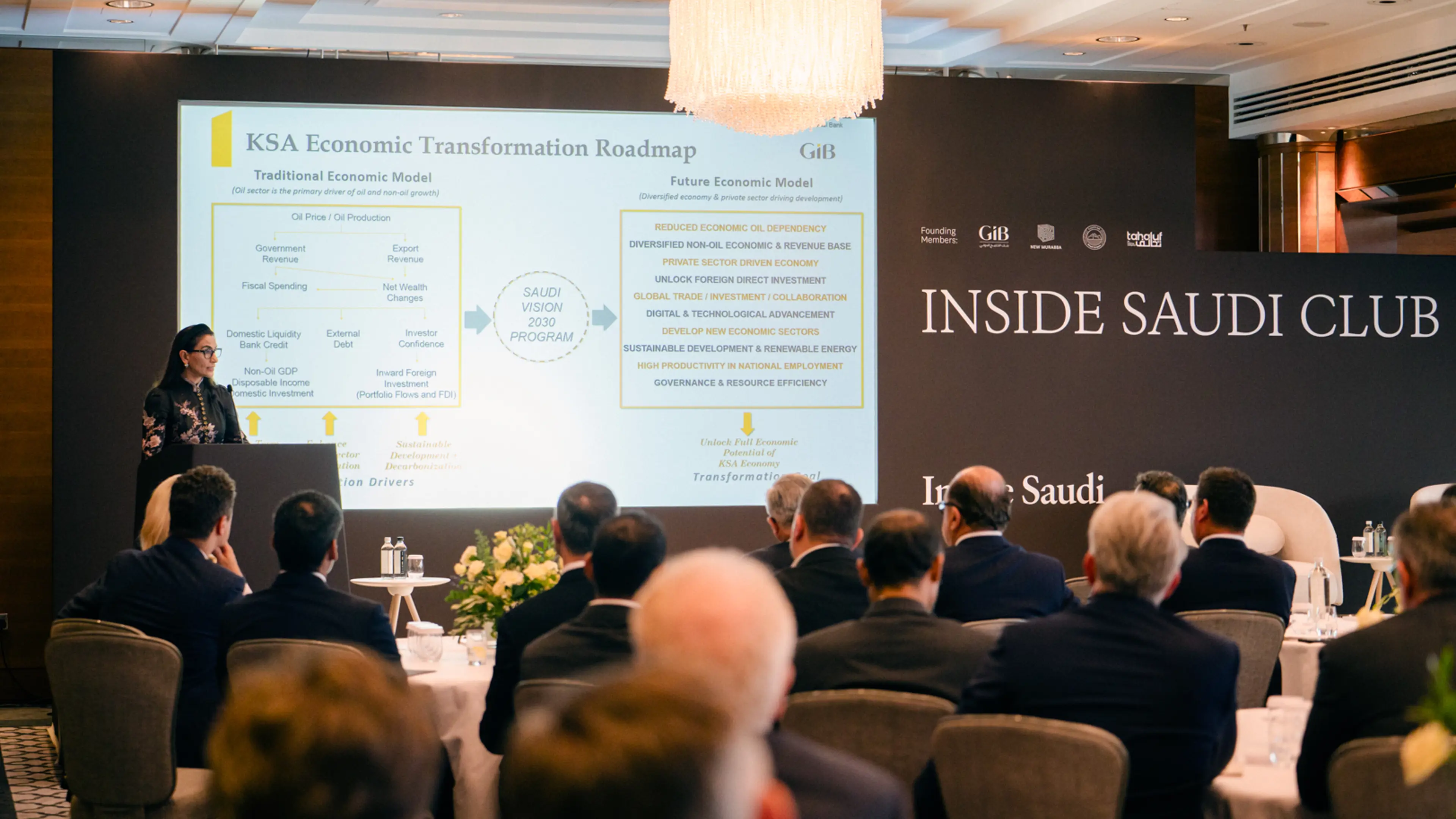
Rima Bhatia delivering her keynote at the Summit
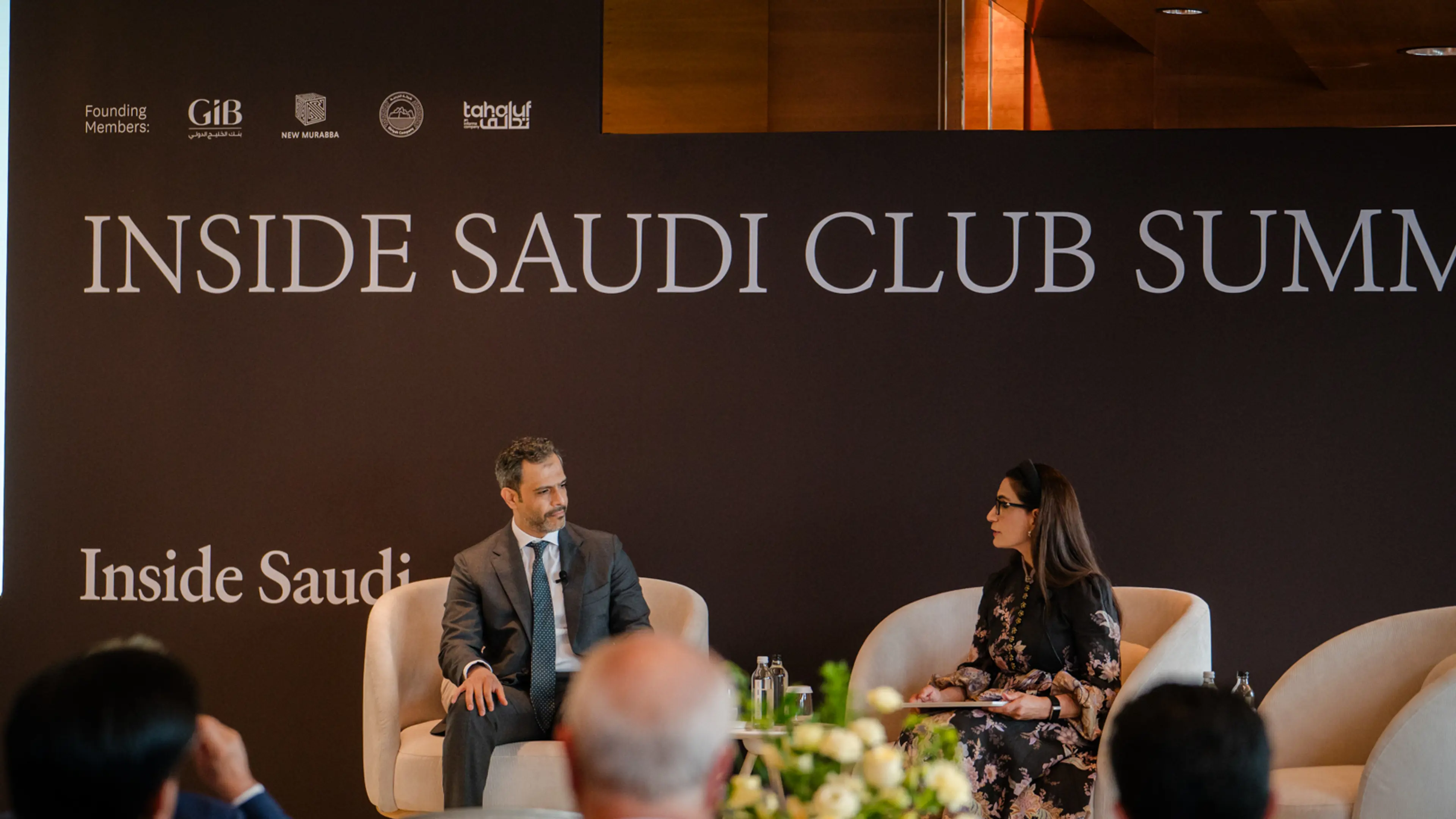
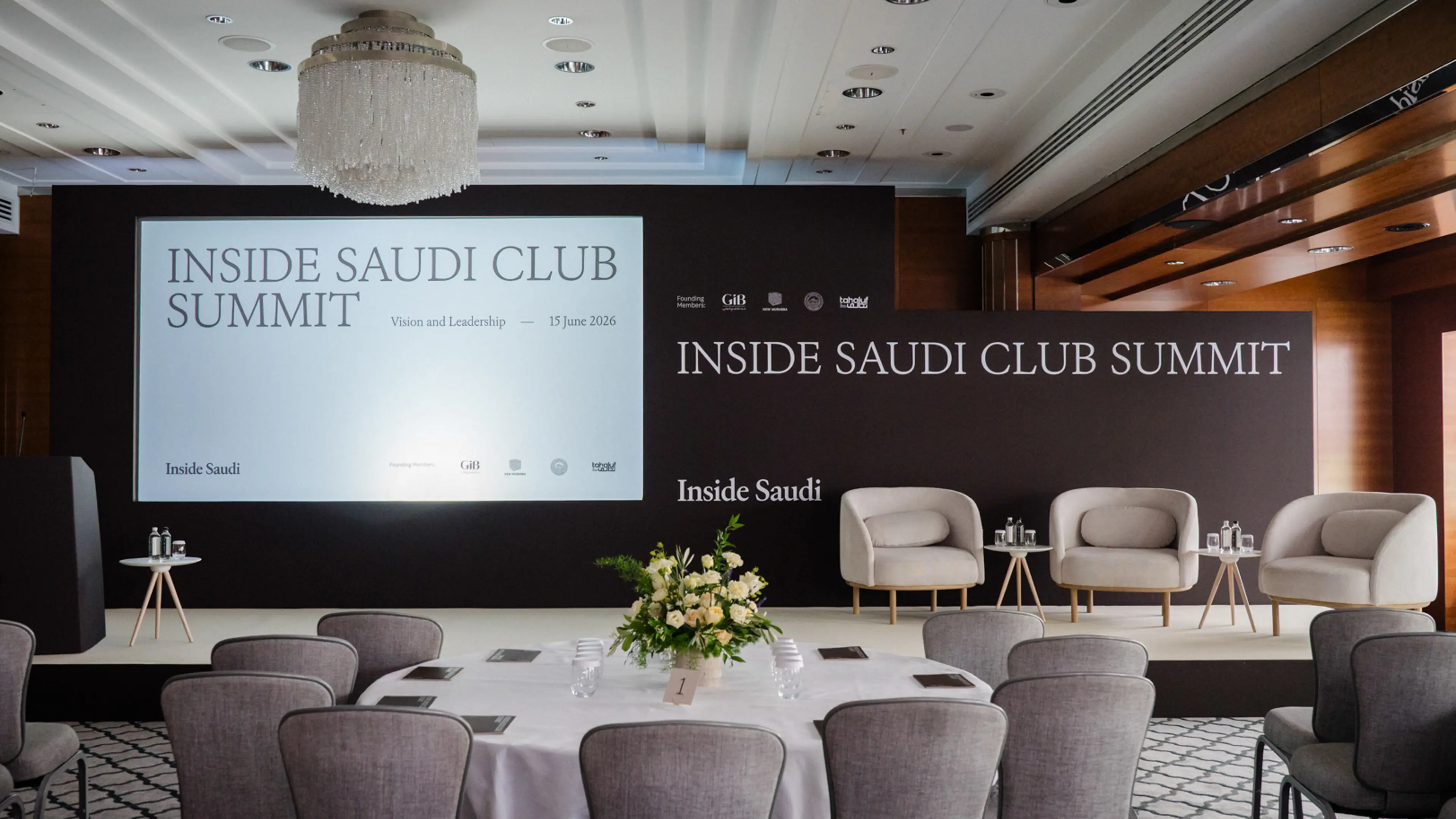
The last of the guests at our Inside Saudi Club’s 2026 Summit have just left as we sit down with Rima Bhatia, Group Economic Advisor at Gulf International Bank. Over two days of focused conversations, the Summit brought together leading voices across business, finance, real estate, hospitality, technology, and investment, exploring the trends, partnerships and capital shaping the future of Saudi Arabia and its leading role in the global economy.
As Group Economic Advisor at Gulf International Bank, Bhatia has spent years helping clients, colleagues and peers understand these seismic shifts reshaping the Kingdom.
Fresh from delivering the previous evening’s keynote and moderating a fireside chat with the Saudi Exchange’s CEO, and then this morning, a panel on commodities and the current geopolitical scene with senior representatives from Trafigura and its Galena Asset Management investment arm, Bhatia is still visibly energised – the kind of energy that comes not from caffeine, but genuine conviction.
“Saudi Vision 2030 really is a remarkable story,” she says, “and I think its sheer expanse is often overlooked and sometimes simply lost in the headlines.”
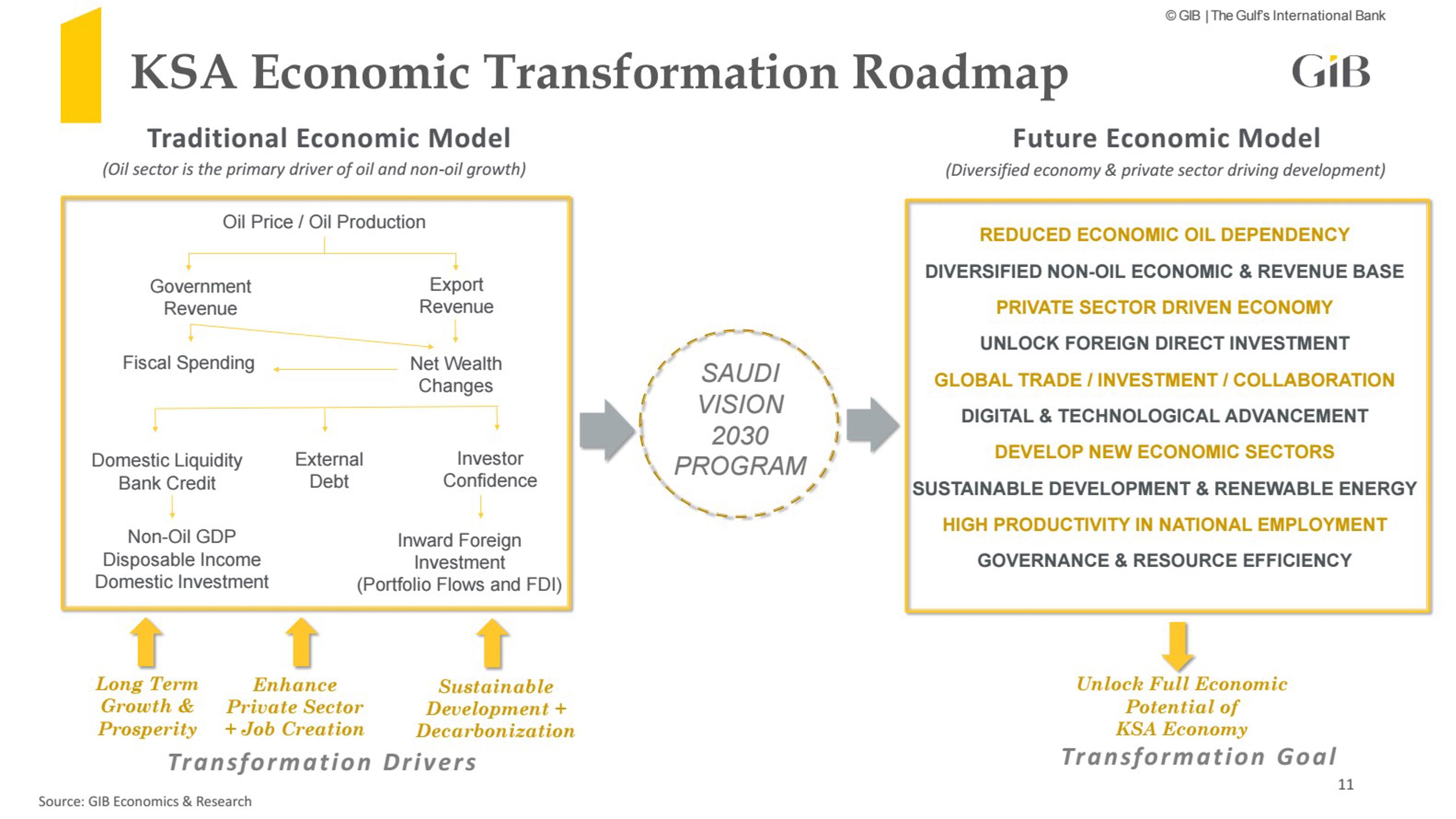
Saudi Vision 2030 at 10
Since it came into being in 2016, Saudi Vision 2030 has progressed through two distinct phases. Between 2016 – 2020, the focus was on establishing foundations: the institutional architecture, flagship programmes, and reforms around regulatory systems and fiscal setups. What followed between 2021 – 2025 was a period of transformation, acceleration and diversification. And now, onwards to 2030, the Vision is in its delivery and value realisation phase.
Bhatia believes it is short-sighted to think of Vision 2030 as merely an economic diversification programme.
“Indeed, it is a re-engineering of society, infrastructure, and government frameworks. The total economic, societal and cultural overhaul being undertaken has allowed for tourism and the hosting of prestigious global events, while the PIF-led giga-projects are creating a platform for a diverse non-oil economic base. Over and above this is the digitally savvy government where Saudi Arabia ranks among the best in the world in terms of tech maturity and digital readiness.”
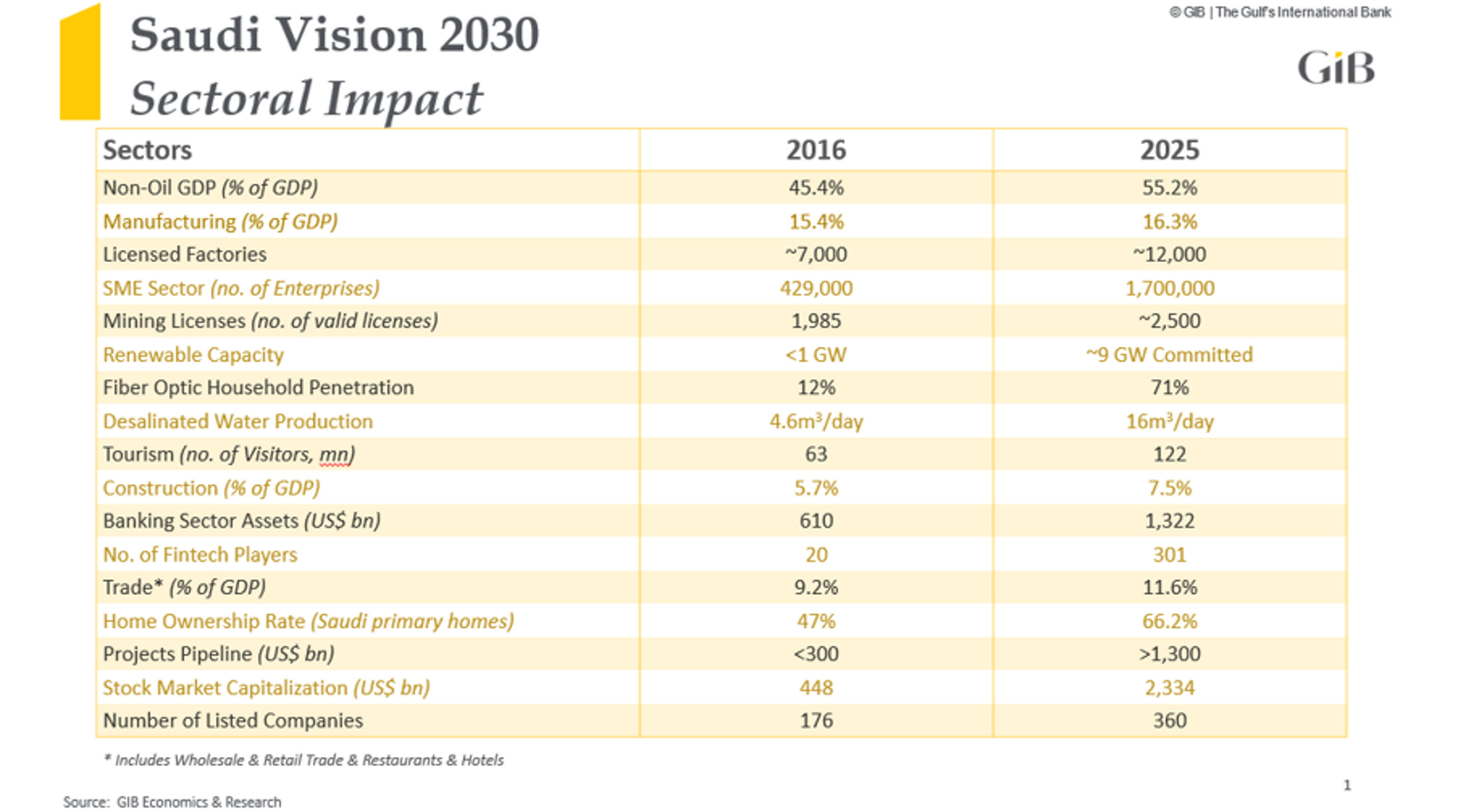
She lists some of the key achievements: non-oil activities growing from under 50% of real GDP in 2016 to over 55% in 2025; the female labour force participation rate doubling from 17% to 35% in the same period; the quadrupling of small and medium-sized enterprises to 1.7 million; the expansion of tourist numbers from 63 million to over 120 million; and the more than doubling of banking assets to $1.3T.
“And, of course,” she continues, “the growth in the stock market capitalisation and progress on the regional headquarters programme.”
In the ten years to the end of 2025, stock market capitalisation quintupled to $2.3T (equivalent to around 185% of GDP). Moreover, drawn by economic fundamentals and the scale of the Saudi opportunity, as well as tax, visa and operational incentives, over 700 multinational companies have established their regional headquarters in Saudi Arabia, surpassing the government’s original target of 500 by 2030.
At the heart of Vision 2030 is home ownership, which the development economics playbook identifies as a fundamental cornerstone of prosperity, a pillar of long-term wealth accumulation, and an anchor of local consumer spending. Whereas less than half of Saudi households owned their homes in 2016, that proportion is now almost two-thirds, with a Vision target of 70% by 2030.
“It really is quite amazing to see how much has been achieved,” says Bhatia. “Before 2016, to have planned and seen that all this would come to fruition so quickly, I think was impossible to imagine.”
Embedded resilience
The progress on Vision 2030 has provided critical insulation for the Saudi economy following the outbreak of the recent regional conflict. While the economy faced many challenges, it has been able to weather the shocks and enabled economic momentum to continue.
For Bhatia, the Kingdom’s ability to access the Red Sea as a credible alternative to the chokepoint of Hormuz is not just an accident of geography, but the result of a deliberate shifting of economic geography conceived in 2016 and which is now proving to be a driver of growth.
In addition, the continual refining of Vision 2030’s direction – a process which started pre-conflict – has embedded a resilience in the Saudi economy and allowed the wider programme to continue uninterrupted. For example, when international flights were suspended, the tourism sector quickly refocused on domestic tourists, who comprised the larger proportion of total trips pre-conflict, and maximising yield per customer.
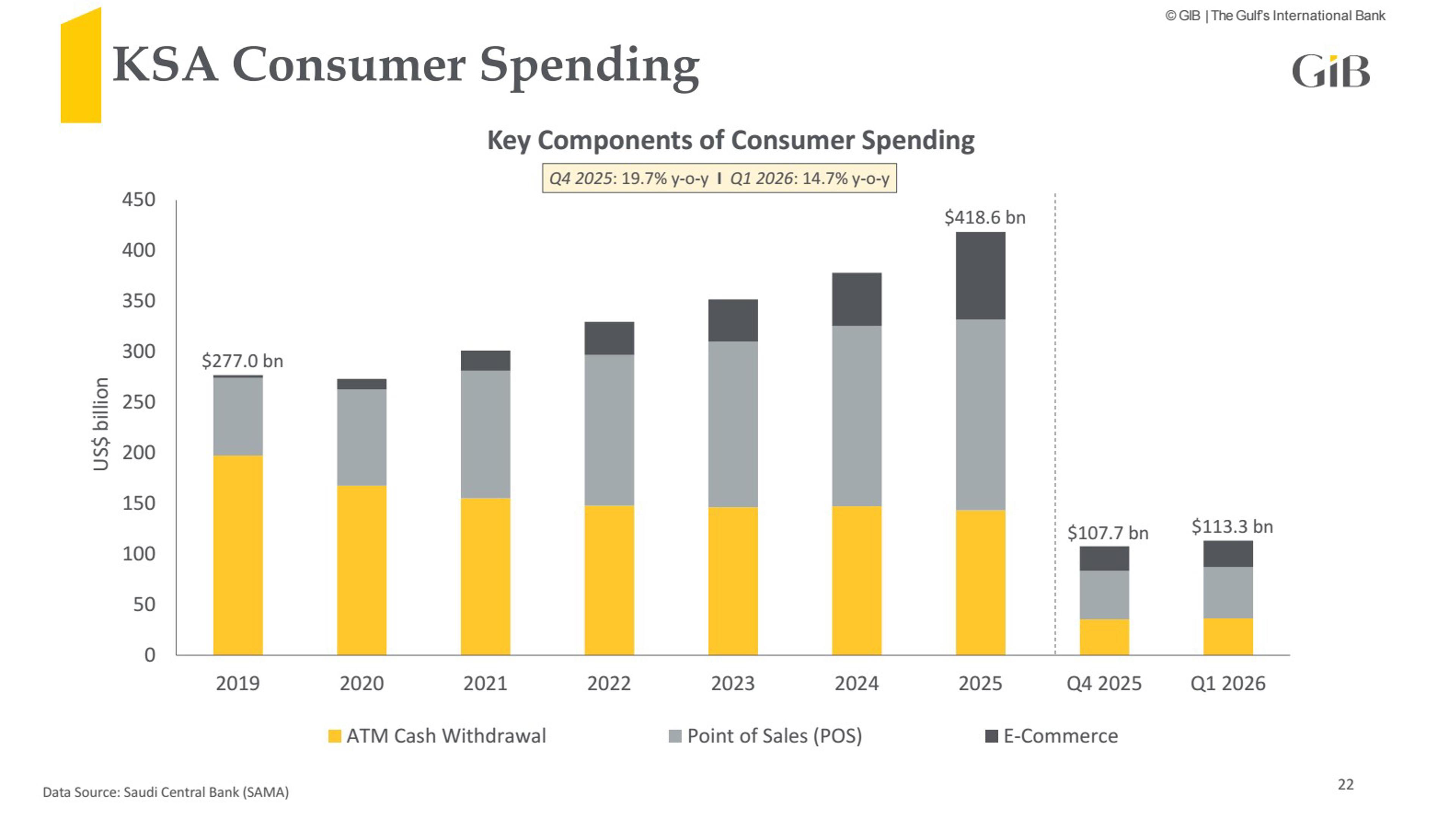
Real GDP growth in Q1 2026 was positive at 3.0%, but for Bhatia, it is domestic consumer confidence that has really been noteworthy. Consumer spending grew from almost $108B in Q4 2025 to $113B in Q1 2026.
“So, we go back to housing being at the centre of Vision 2030. Here's the proof: robust job security, business opportunities – all of this has provided a continued momentum that means Vision 2030 is a programme to stay. It's got strong resilience, and the consumer is showing that.”
Sustained foreign inflows
If domestic confidence has remained strong, international confidence is not far behind.
Over the past decade, the Saudi Exchange (Tadawul) has transitioned from a domestically restricted market to one of the largest, most dynamic and rapidly growing stock exchanges. Saudi Arabia has been a component of the marquee MSCI, FTSE Russell and S&P Dow Jones emerging markets equity indices since 2019, and Saudi government sukuk have now been approved for inclusion in the J.P. Morgan Emerging Markets Government Bond Index and the Bloomberg Emerging Market Local Currency Government Index, the most widely followed of their type.
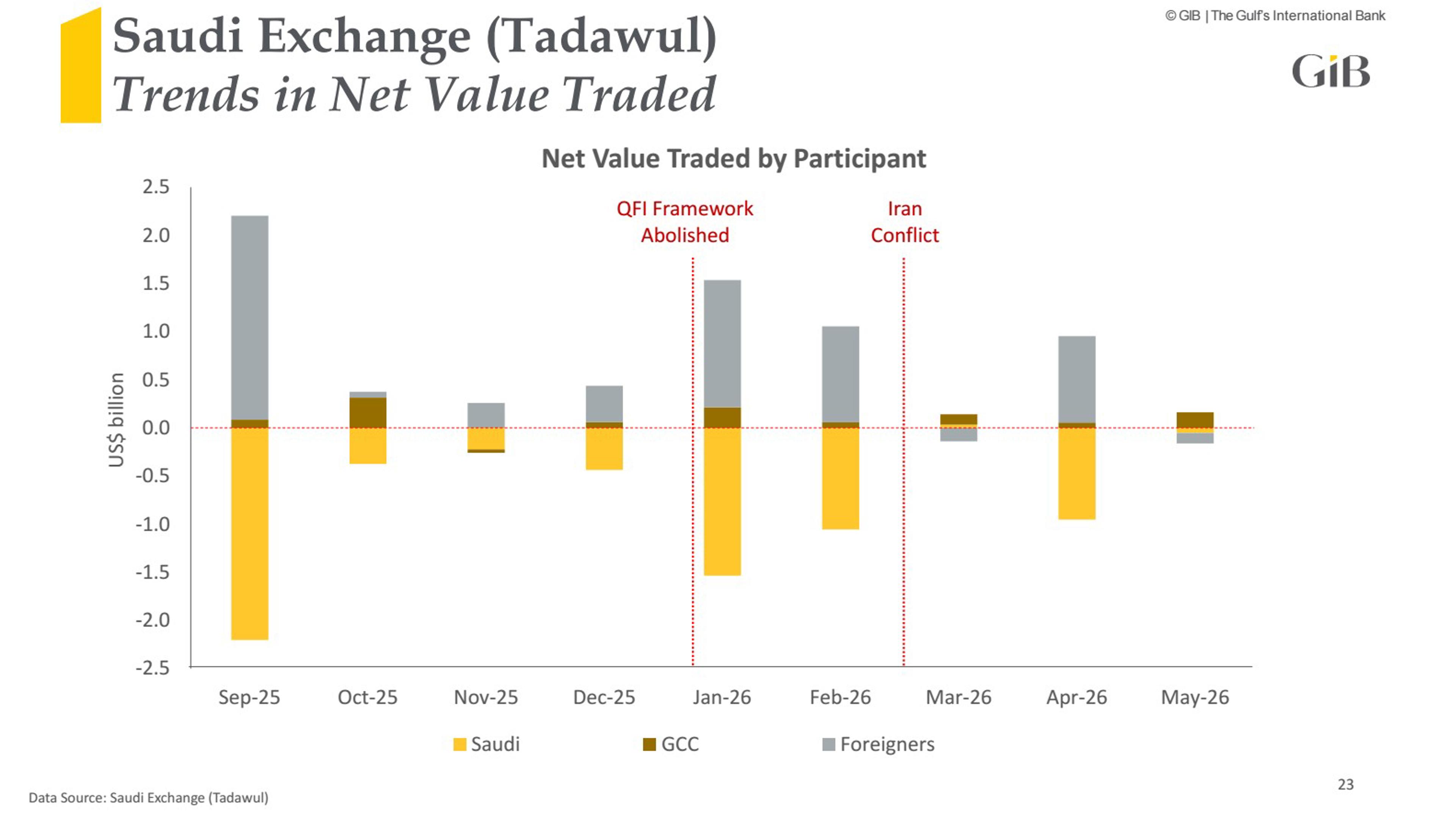
Bhatia notes that non-Saudi investors have continued to be net buyers on the Tadawul throughout the regional conflict, and that this follows major regulatory reforms introduced pre-conflict which have further opened the market to international investment. From $2.3T in December 2025, total market capitalisation had grown to over $2.6T by the end of May.
From concrete to compute
Ten years ago, when Vision 2030 was announced, there was a level of certainty and predictability to the global economic system. However, the onset of the pandemic in 2020 has chipped away this system, fundamentally transformed both professional and personal lives, and propelled ground-breaking technological leaps. New growth frontiers have emerged in response, while emerging markets have come to realize the opportunities these shifts present towards forging their future development paths.
As a result, Vision 2030 is being continually fine-tuned under each fiscal budget reflecting a pragmatic stance to adapt the program and execution to an evolving world. Saudi Arabia’s 2026 budget is the latest iteration of calibration, prioritising AI infrastructure, high-tech sectors, projects delivering immediate returns, commercial infrastructure and housing, and preparing for landmark events such as the 2030 Riyadh Expo and the FIFA World Cup in 2034.
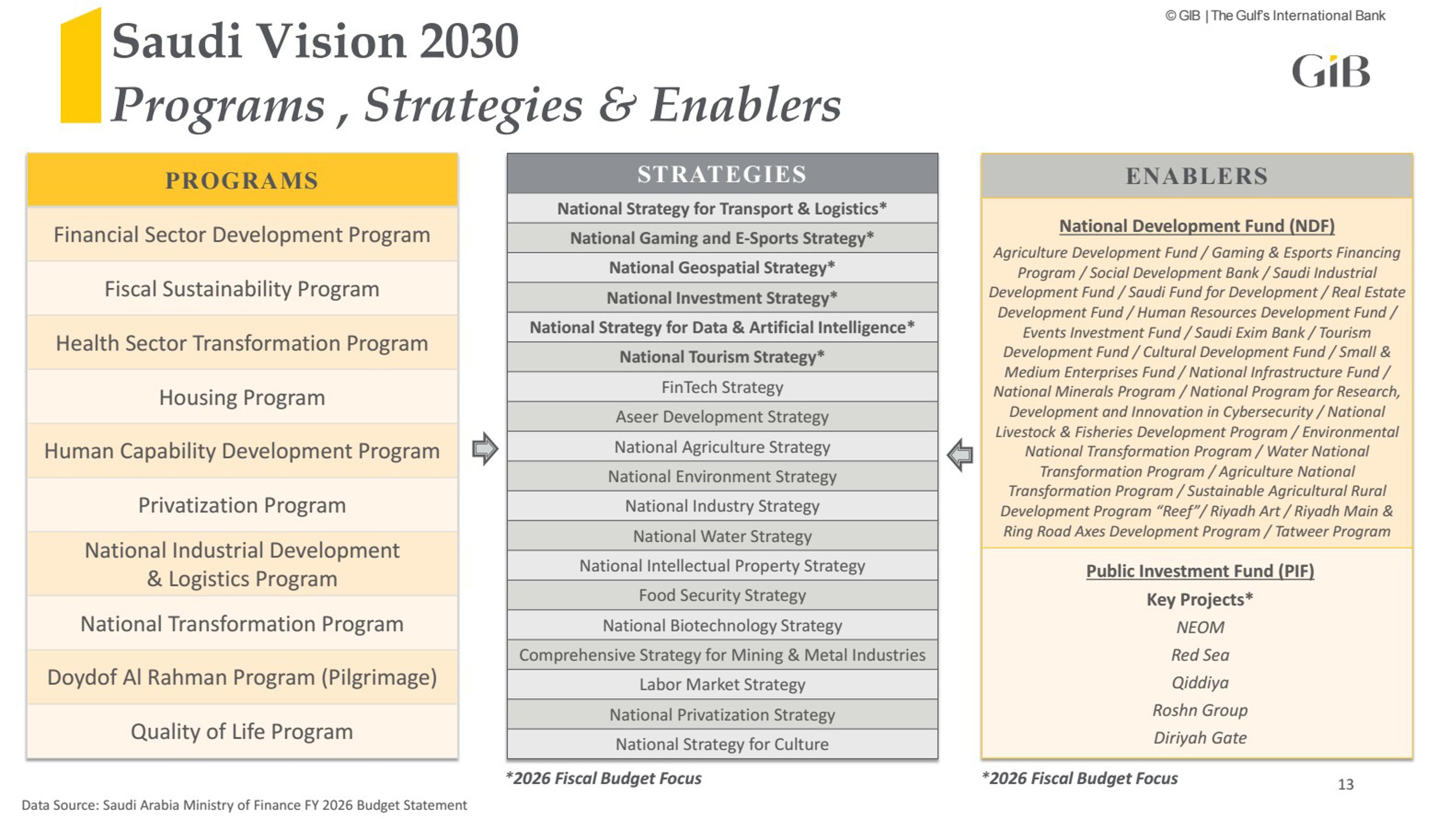
“The pivot we are seeing,” observes Bhatia, “is from concrete to compute, because that’s the direction in which the world is heading and where massive growth opportunities lie.” In other words, the Vision 2030 program is broadening its horizon beyond infrastructure-led development towards also incorporating technology, AI, data centers, and digital innovation.”
Bhatia is keen, however, to emphasise that if anything, the regional conflict is accelerating courses paved prior to the outbreak, such as expanding the Red Sea’s economic geography. Sustainability and the carbon transition too, are critical concepts, she says, and still at the heart of what Vision 2030 is planning to be.
For example, the Red Sea region is increasingly viewed as a key pillar of Saudi Arabia’s mineral sector development towards unlocking the estimated $2.5T in untapped mineral wealth. This development plan encompasses critical minerals and transition metals essential to the renewables’ infrastructure, digital economy and advanced manufacturing being built under Vision 2030.
The most prominent institution driving these initiatives is of course the PIF, which acts as the domestic and international investment engine in spearheading new strategic sectors, giga-projects, and localised business ecosystems. Also critical is the National Development Fund, acting as an umbrella development finance institutions to ensure the private sector has access to the funding support required to implement Vision 2030 ambitions.
One Unstoppable Vision
The evening before our Inside Saudi Club’s 2026 Summit began, the dynamic post-pandemic world shifted yet again, with the news of a peace agreement on the horizon between the United States and Iran. Bhatia is hopeful but believes this will not change fundamentals.
“Whether we get the agreement sooner or later, and we’re keeping our fingers crossed that it happens, the fact is that the Vision 2030 programme will continue its strong momentum, and recalibration and fine-tuning remains at the heart of its success. “
“Whilst the world now awaits the details of the agreement, certainly the reopening of vital shipping lanes, the return of international travellers back into the Gulf, the stabilising of global energy markets – all of this is going to add to Saudi Arabia's already unstoppable Vision.”
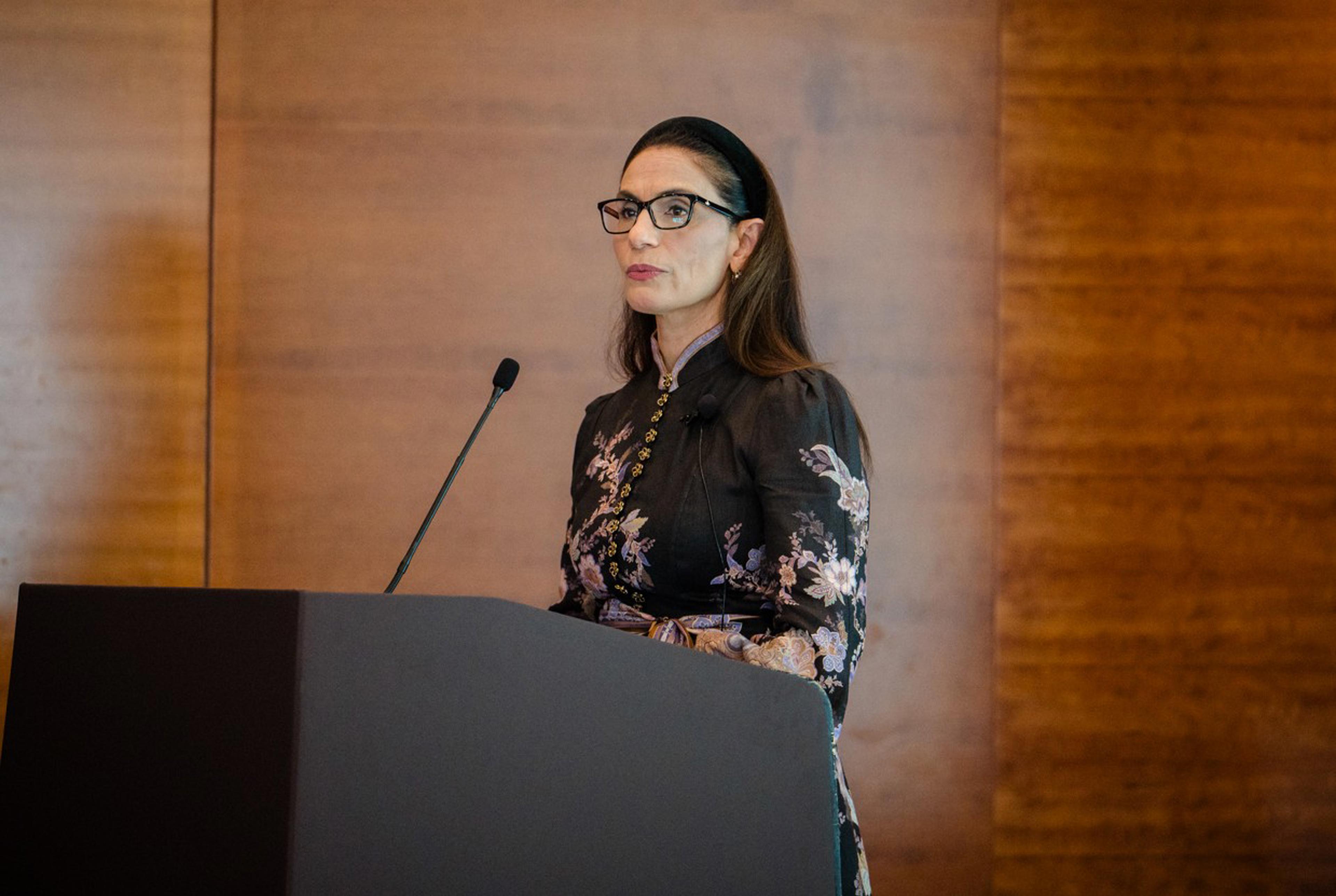
Rima Bhatia is Group Economic Advisor at Gulf International Bank (GIB). She has almost 30 years’ experience of delivering forward-looking analysis on economic and financial developments and previously served as GIB’s Group Chief Economist and Head of Strategy.
Slides reproduced with permission from GIB.