Thursday, 13 August, 2026
Creating Experiences the World Will Remember
At the Inside Saudi Club London Summit, Barbara Muckermann, CEO of Kempinski, Anant Sharma, Founder and CEO of Matter of Form, and Heather Blundell, UK CEO of Grayling, explored how culture, experience and human connection can shape the next chapter of Saudi Arabia’s hospitality and tourism sector
Inside Saudi
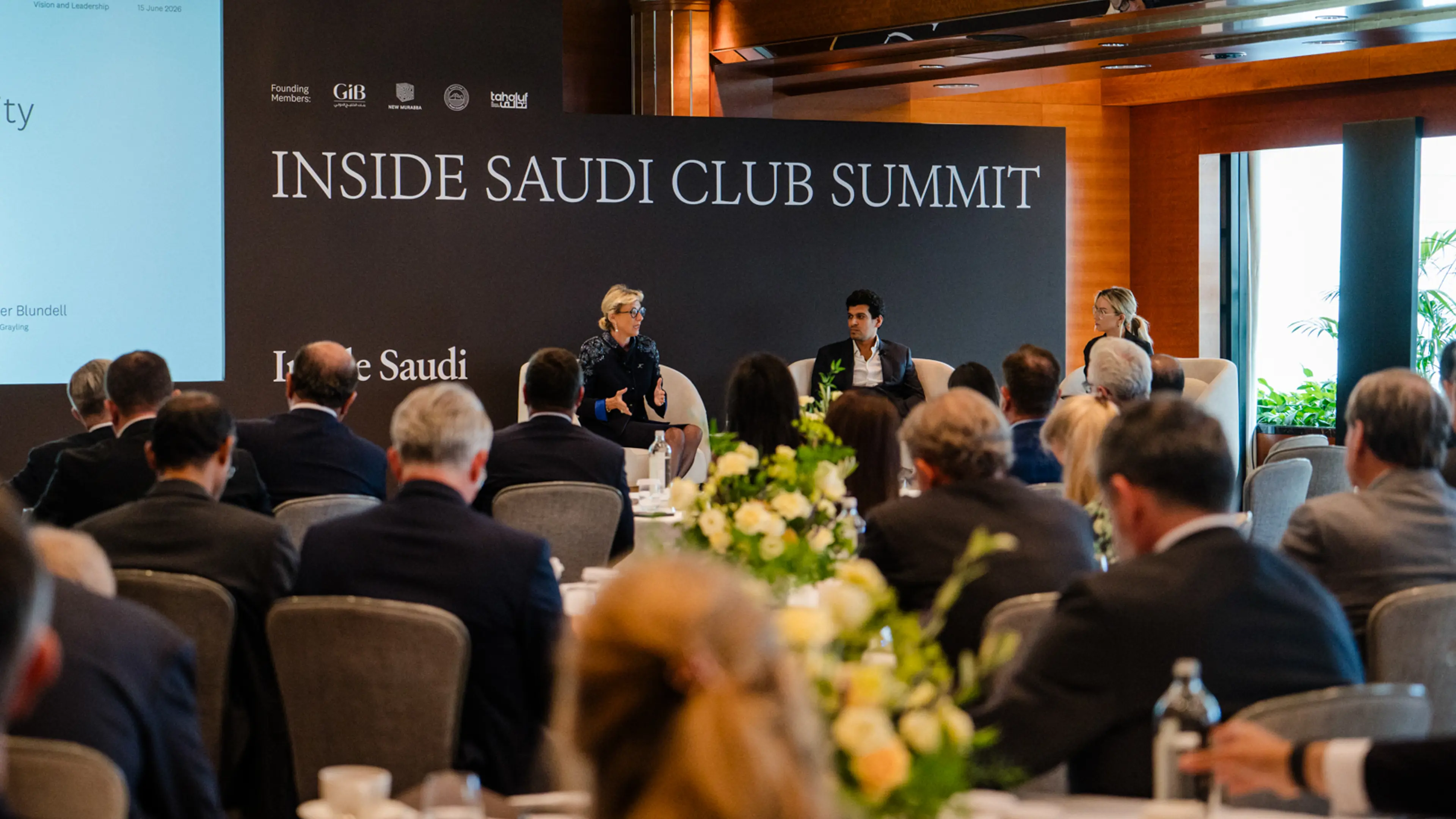
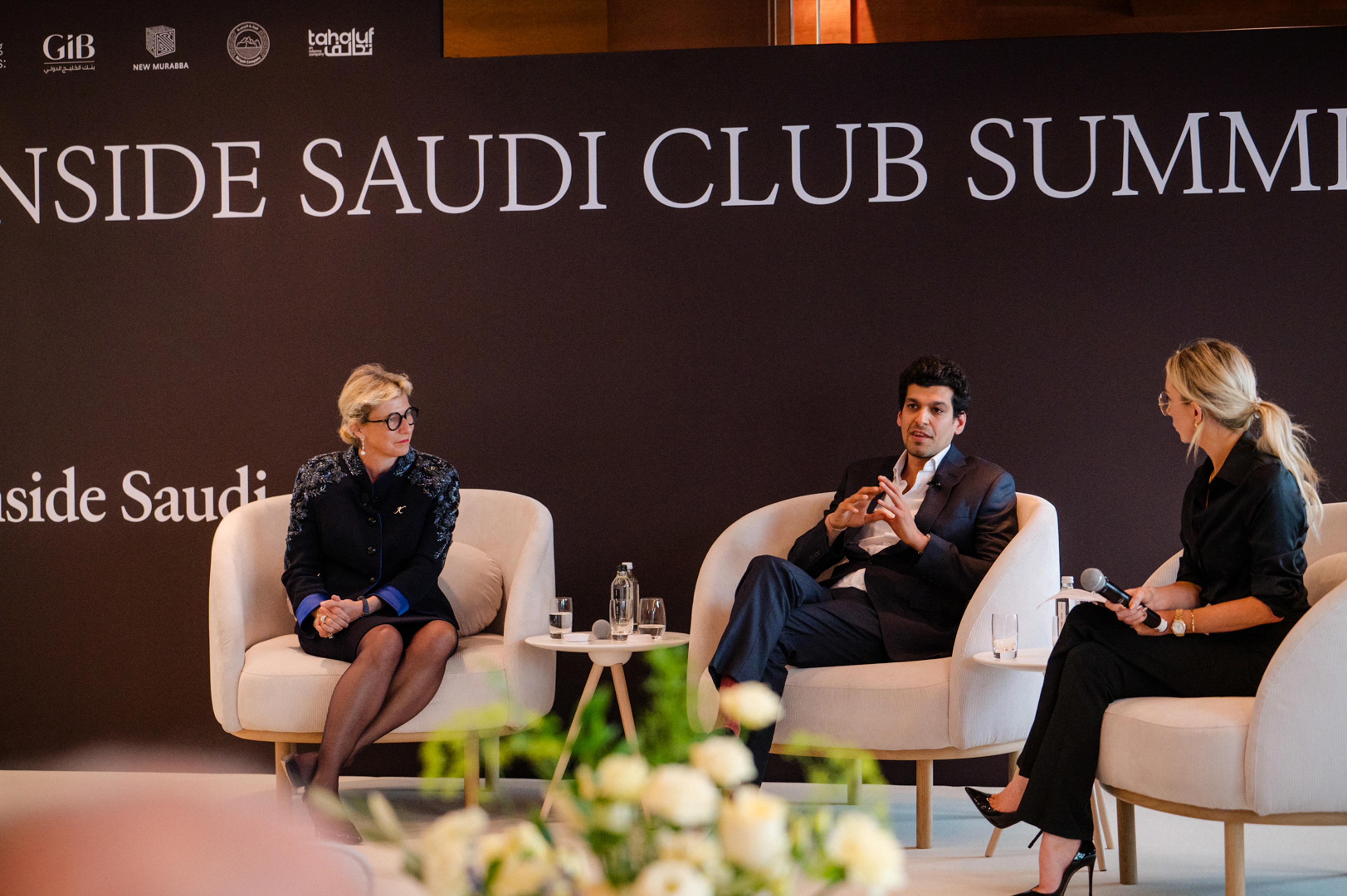
Barbara Muckermann, CEO of Kempinski, and Anant Sharma, Founder and CEO of Matter of Form, in conversation with Heather Blundell, UK CEO of Grayling, at the Inside Saudi Club London Summit
Over the last decade, global hospitality and tourism have undergone a profound shift. Success is no longer defined by physical assets alone. Increasingly, destinations are competing on experiences, emotions and memories — and on their ability to give visitors a compelling reason not only to arrive, but to return.
For Saudi Arabia, that shift presents an extraordinary opportunity. Through Vision 2030, the Kingdom is developing an interconnected tourism ecosystem spanning hospitality, culture, sport, entertainment, infrastructure and technology, creating a proposition that is increasingly distinct on the global stage.
This opportunity took centre stage at the Inside Saudi Club London Summit, where Barbara Muckermann, Chief Executive Officer of Kempinski, and Anant Sharma, Founder and CEO of Matter of Form, joined Heather Blundell, UK CEO of Grayling, for a conversation exploring what will define the next generation of Saudi tourism and hospitality.
An Unmatched Tourism Opportunity
For Barbara Muckermann, the scale of Saudi Arabia’s tourism opportunity lies not only in its growth, but in the structural advantages supporting it.
She highlighted the Kingdom’s proximity to some of the world’s largest outbound tourism markets, with countries such as Germany and the UK within approximately five to six hours by air. Combined with infrastructure investment, favourable weather for much of the year and the extraordinary diversity of destinations within the Kingdom, she argued that Saudi Arabia has the foundations for sustained tourism growth.
From the Red Sea and AlUla to the desert, cultural destinations and the Eastern Province, Saudi Arabia offers visitors the possibility of experiencing very different environments within a single country.
That diversity is particularly significant because it allows the tourism industry to create itineraries that encourage visitors to remain in the Kingdom for longer rather than experiencing Saudi Arabia as a single-destination trip.
As Barbara Muckermann put it, these advantages are structural: “Nobody can take it away.”
From Products to Experiences
Heather Blundell then turned the discussion towards one of the defining changes reshaping global luxury: the shift from products towards experiences.
Anant Sharma argued that the luxury market has undergone a significant inversion over the past decade, moving from a market dominated by products towards one increasingly driven by experiences.
Travel has consequently become part of the way consumers express identity, aspiration and status. Hospitality, in his view, provides a stage through which people can connect with others, experience history, educate themselves and explore the world.
For hospitality businesses, this requires thinking beyond the physical product.
While hotels can compete through design, materials and amenities, Anant Sharma argued that the psychology behind an experience is equally important. The real value lies in understanding the entire customer journey — the sequence of interactions before, during and after a stay — and carefully choreographing those moments to influence how an experience is perceived.
By designing these interactions intelligently, hospitality businesses can increase perceived value without necessarily changing the underlying physical product.
Building Global Brands with Saudi Identity
For international hospitality brands entering Saudi Arabia, rapid development also raises an important question: how can global standards coexist with local identity?
Barbara Muckermann drew a distinction between a recognisable logo and a genuine brand. A true brand, she argued, stands for something and creates an emotional connection with its customers that extends beyond the physical product.
That becomes particularly important in a market developing at Saudi Arabia’s pace.
Rather than simply replicating an international hotel concept, Kempinski’s approach is to consider what its philosophy of the “good life” means within each individual destination. In Saudi Arabia, that means placing greater emphasis on local food, culture and the distinctive characteristics of Saudi hospitality, allowing both international and domestic guests to discover something authentic about the Kingdom through their stay.
Turning Major Events into Lasting Tourism
Saudi Arabia’s growing calendar of international sporting, entertainment and business events provides another powerful gateway into the Kingdom.
But Anant Sharma cautioned that attracting someone for a major event is only the beginning.
The real challenge is transforming a visitor who travelled to Riyadh for a particular event into someone who identifies as a regular visitor to Riyadh and Saudi Arabia more broadly.
That requires thoughtful programming before and after major events, supported by partnerships and communication that expose visitors to the wider destination.
With Saudi Arabia having begun issuing tourism visas only in 2019, major events provide an important opportunity to introduce international audiences to everything else the Kingdom has to offer. Without that wider strategy, Anant Sharma warned, large events risk becoming an expensive way of generating short-term attention rather than lasting tourism value.
Barbara Muckermann similarly emphasised the importance of converting an initial visit into loyalty.
Saudi Arabia’s increasingly interconnected ecosystem of tourism, hospitality, infrastructure, sport, culture and entertainment gives operators an opportunity to understand why a visitor has arrived and immediately introduce them to their next potential experience.
The objective is not simply to bring people to Saudi Arabia once, but to create reasons for them to return.
Technology with a Human Purpose
Technology and artificial intelligence are already beginning to reshape the visitor journey, but Anant Sharma argued that their greatest value may ultimately come from making technology less visible rather than more prominent.
He cautioned against adding technology to experiences simply to generate attention. Instead, he pointed to practical applications such as supply-chain management, reducing waste and delivering more meaningful forms of personalisation.
For Saudi Arabia in particular, he identified education as one of the most interesting possibilities.
Technology can provide visitors with contextual information that gives them a deeper understanding of Saudi history and culture, telling the story of a destination in ways that are more imaginative and engaging while complementing — rather than distracting from — the experience itself.
The Human Side of Hospitality
Heather Blundell also brought the conversation to the growing participation of women and young people in Saudi Arabia and the role this transformation could play in supporting the Kingdom’s tourism ambitions.
For Barbara Muckermann, human capital will be fundamental.
She highlighted the growing participation of women as a significant change for the the tourism industry. In hospitality, she argues, emotional intelligence can be more valuable than technical skills alone because technical processes can be taught, while the ability to form genuine human connections is much harder to replicate.
As hospitality becomes increasingly sophisticated and technology becomes more embedded in the guest journey, that human connection may become even more valuable.
Culture as Saudi Arabia’s Competitive Advantage
Closing the discussion, Heather Blundell asked both panellists to look beyond Saudi Arabia’s megaprojects and consider what might ultimately define the success of its tourism story.
For Anant Sharma, the answer lies in staying true to the Kingdom’s roots.
Saudi Arabia has an opportunity to build hospitality experiences designed for both international and domestic visitors without simply importing Western models. Its tourism sector can instead become a window into Saudi culture, protecting the characteristics that make the Kingdom distinctive while translating them into compelling contemporary experiences.
“It’s a window into Saudi culture,” he said, describing the opportunity to create a distinctly Saudi interpretation of hospitality rather than contributing to the homogenisation seen in many global destinations.
Barbara Muckermann agreed that culture is the anchor but argued that Saudi Arabia’s advantage is strengthened by the sheer diversity surrounding it: history, archaeology, culture, the Red Sea and a growing infrastructure network capable of connecting those experiences.
Together, those elements have the potential to create what she described as “a unique destination in the world.”
A Distinctly Saudi Tourism Story
Saudi Arabia’s hospitality opportunity is therefore about considerably more than building hotels or attracting greater numbers of visitors.
The discussion at the Inside Saudi Club London Summit highlighted a more ambitious proposition: creating a tourism ecosystem capable of turning first visits into lasting relationships, global brands into locally relevant experiences and the Kingdom’s extraordinary cultural and geographic diversity into a destination proposition that cannot easily be replicated elsewhere.
As Vision 2030 continues to reshape the sector, the defining opportunity may be Saudi Arabia’s ability to combine global standards with something unmistakably its own — a hospitality experience rooted in culture, strengthened by human connection and designed to give visitors a reason to return.