Sunday, 11 October, 2026
The 25th WPC Energy Congress opens in the capital this week
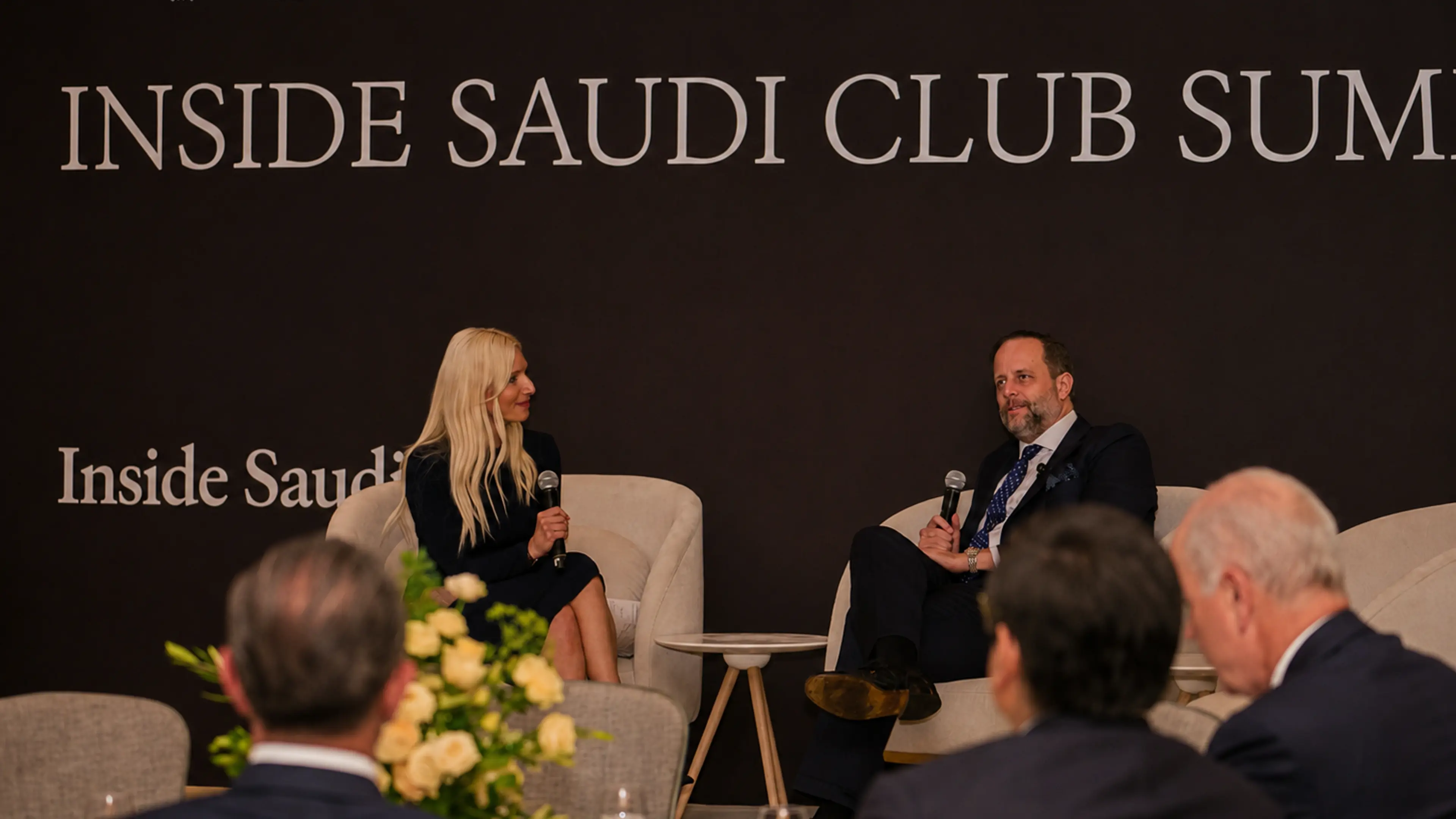
Its president tells Inside Saudi the Kingdom is hosting not as the world's largest producer, but as a technology and renewables counterparty.
Inside Saudi
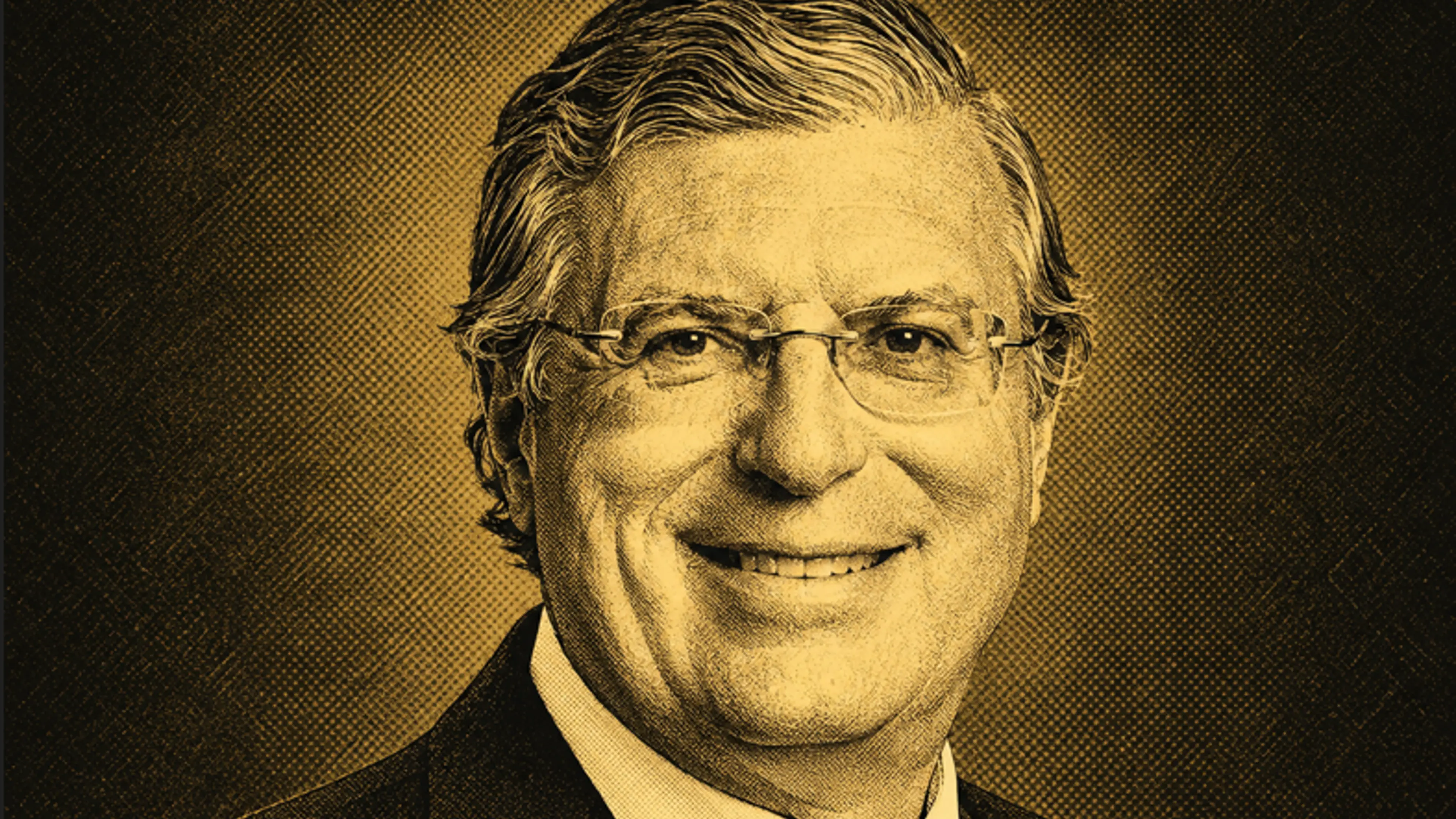
Pedro Miras, President of WPC Energy.
Around 700 million people on this planet have no access to modern energy. That figure, cited by WPC Energy president Pedro Miras in an interview with Inside Saudi days before he flew into the Kingdom, is the organising fact of the week now beginning in Riyadh. It is not a humanitarian footnote to a trade fair. It is the demand curve that will shape capital allocation in the energy industry for a generation, and from 11 to 15 October it is being argued out at the Riyadh Front Exhibition and Conference Centre in front of more delegates than the Congress has ever assembled.
The scale is worth stating plainly, because it determines who an incoming business can reasonably expect to meet. The Congress is being held in Saudi Arabia for the first time in an institutional history that runs back to 1933 — more than nine decades of gatherings, none of them until now in the Kingdom — and is expected to attract more than 25,000 delegates, including around 100 energy ministers, 500 chief executives and 800 speakers, with representatives of roughly 1,000 companies spread across more than 50,000 square metres of exhibition floor. Representation is expected from more than 100 countries. For a company still writing its Kingdom strategy, that is not a conference. That is the entire counterparty map of an industry, in one building, for five days.
Why Riyadh, and why now?
Ask why the world's largest oil producer has never hosted the sector's premier gathering and the answer is more interesting than the question implies. Miras does not pretend the Kingdom lacked the credentials. He says the Congress was pursued for Riyadh for years. What changed, in his telling, is the composition of what the Kingdom brings to the table.
"Now it's the perfect timing," he told Inside Saudi. "It's not only because they are huge producers of oil, but because they are leaders in other kind of energies. They are leaders in technology, in renewables and others."
Read that carefully and it is a reclassification, not a compliment. The barrels were always there; the barrels were never the qualification. What qualified Riyadh in 2026 was a portfolio broad enough that a global convening body could put its flagship event there without the event being read as a producers' summit. The hosting contract was signed at the 24th Congress in Calgary in September 2023 by HRH Prince Abdulaziz bin Salman Al-Saud, Minister of Energy — a little over three years from signature to opening ceremony, spent building a week that reframes how the industry files the Kingdom.
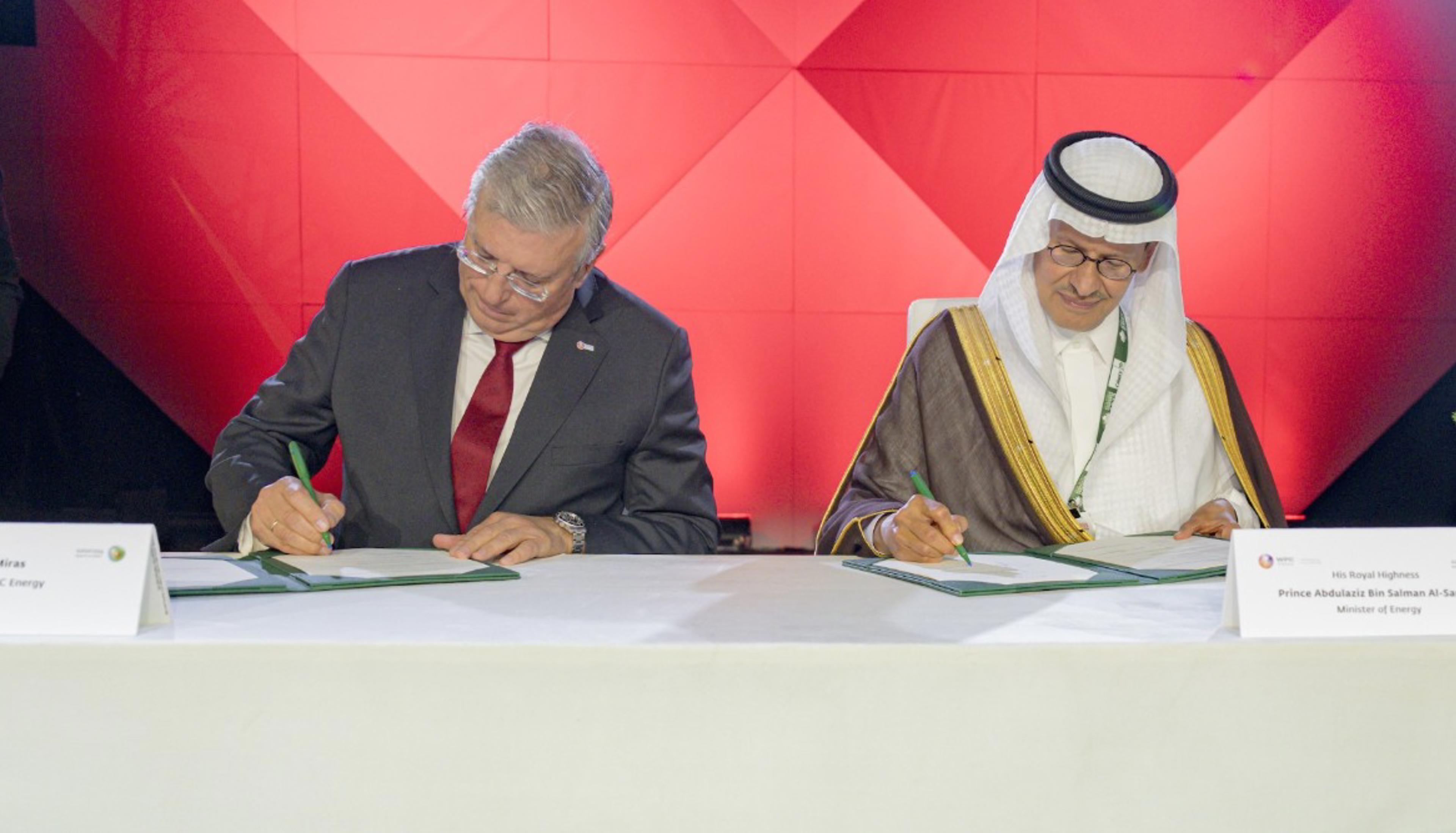
Three years ago, Riyadh won the right to host. This week it exercises it as an energy economy, not a resource base.
A convening body with no commercial interest of its own
Most of the platforms an international business encounters in a new market have a seller somewhere in the structure. WPC Energy, Miras is careful to establish, does not. "We are a charity. We are not a company," he said. The organisation runs the largest congresses in the sector worldwide, having moved from a triennial to a biennial cycle, and its stated purpose is the dialogue itself rather than a return on it. "Everyone is welcome. All the opinions are good," he said. "We are totally, totally open for everyone."
That distinction has a commercial value that is easy to underestimate. A neutral floor with no gatekeeper means a mid-size technology firm from Aberdeen, Houston or Singapore can approach a national oil company, a ministry delegation and a sovereign-backed developer inside the same week without paying an intermediary for the introduction or accepting a partner's framing of its own proposition. Participation spans Saudi Aramco, CNPC, Petrobras, Pertamina and QatarEnergy LNG among others, with Siemens Energy president and chief executive Christian Bruch, SLB's Olivier Le Peuch and Arabian Drilling chief executive Fahad Albani on the speaker list. For a first-time entrant, the access economics of that week are difficult to replicate by any other means.
The Congress in numbers
|
Figure
|
Dates
|
11–15 October 2026, Riyadh Front Exhibition and Conference Centre
|
Delegates expected
|
25,000+
|
Energy ministers
|
~100
|
Chief executives
|
~500
|
Speakers
|
800
|
Companies represented
|
~1,000
|
Exhibition floor
|
50,000 m²
|
Countries represented
|
100+
|
Theme
|
Pathways to an Energy Future for All
|
The programme runs to more than 30 plenary, strategic and ministerial sessions covering energy security, oil and gas markets, artificial intelligence, investment, critical minerals, carbon management, natural gas, safety and the changing energy mix — and it does not stand alone. The Congress anchors Riyadh Energy Week, which also carries IEF17, CEM17/MI-11 and OAPEC-led sessions, with dedicated initiatives on women in energy, young professionals, social responsibility, AI and digitalisation before the handover ceremony on 15 October. Four multilateral convenings in one city in one week is a deliberate piece of scheduling. It compresses a year of travel into five days, and it tells you what Riyadh intends the capital to become on the energy calendar.
From oil country to energy country
Asked where the partnership openings sit, Miras refused the narrow answer. Saudi Arabia was a key partner in oil, he said, and remains one — but the country is now "creating a huge hub for all kind of technologies", and that is what makes the collaboration case interesting. Then the line that should travel furthest with an international board: "We have to take out of our minds that Saudi Arabia was only an oil country. Saudi Arabia is an energy country."
For a foreign business, that is a practical instruction about where to point a market-entry model. An oil country buys equipment, services and engineering hours against a production plan. An energy country buys software, grid capability, carbon management, renewables integration, critical-minerals processing and the people who can run all of it — and it buys them on a multi-decade horizon rather than a drilling cycle. Investment, critical mineral supply chains, carbon capture and storage, carbon markets and renewable energy all feature prominently in the Riyadh programme, which is as close to a published shopping list as the sector ever produces. Three pillars, held in balance
"Saudi Arabia is an energy country." Six words that redraw which companies belong in the Kingdom's supplier base.
Three pillars, held in balance
Miras is unsentimental about what the industry got wrong. Global energy consumption is rising year on year, he notes, while the share of oil and gas in the mix is broadly where it stood half a century ago. Against that, he sets the trilemma: security of supply, affordability and sustainability. "The three pillars are exactly as important," he said. In the past, he argues, the industry and its regulators concentrated on one at the expense of the others.
The corollary is the phrase he returned to repeatedly: not one size fits all. "What is good for Riyadh or for New York can be bad or not possible for other cities in the world." For investors, that is an argument against single-technology bets and in favour of portfolios that can be configured by geography - exactly the posture the Kingdom has adopted in building out both hydrocarbons and renewables rather than choosing between them. It also carries a direct ask to governments. Industry cannot deliver, Miras says, without regulation that is transparent, easy to follow and open to investment.
Artificial intelligence is rewriting the hiring brief
Asked which development will reshape the sector over the coming decade, Miras declined the timeframe. "Artificial intelligence is going to change everything in the next years, but not in the next years. In the next months."
The sharper point is what that does to talent. WPC Energy runs a Young Professionals Committee as a governing body. Its members help design the congresses and run their own biennial forum under the Congress banner, Pathways to an Energy Future for All. Miras stresses that the model is deliberately broad rather than a hand-picked leadership cadre: "We want to have all the young professionals working together." And AI, he says, is already altering both how the industry hires and what it demands from entrants to the profession.
For an international business building a Saudi workforce, that is the most actionable line in the interview. The Kingdom's young population is the hiring pool; the job specification is being rewritten in real time; and the firms that arrive with AI-literate graduate programmes rather than legacy technical ladders will be recruiting against a far weaker field. The same logic runs through the Congress honours. The Excellence Awards recognise technology and project delivery, while the Dewhurst Award marks an individual who has changed the sector's perception of itself, Aramco's Amin Nasser took the last one, and Vicki Hollub takes the next. A woman at the top of an American oil major receiving the industry's highest personal honour in Riyadh is a moment that will resonate across the Kingdom's own talent pipeline.
What delegates are meant to carry onto their home?
Miras knows precisely what he wants 25,000 people to take home. Responsibility, he says, the responsibility to energise the world in a way people can afford, and the planet can carry, flexibly, according to the reality of each market, with policymakers supplying regulation that invites capital rather than deterring it. He is, by his own account, expecting the discussions to be the best the Congress has staged.
The current is already flowing. Ministers are in the capital, the exhibition halls are wired, and for five days the entire switchboard of the global energy industry sits inside one Riyadh building with the plugs facing outwards. Companies that walk that floor this week will leave with names, mandates and meeting dates; those watching the livestream will be reading about the deals in a month. The connections being made in Riyadh this week will be carrying load for the next decade.