Energy Security in a Changing World: Industry Leaders Set Out the Priorities at WPC Energy
From Saudi Arabia’s expanding energy infrastructure to Japan’s diversification strategy, industry leaders examined how investment, technology and international cooperation are shaping global energy security at the 25th WPC Energy Congress in Riyadh.
Inside Saudi
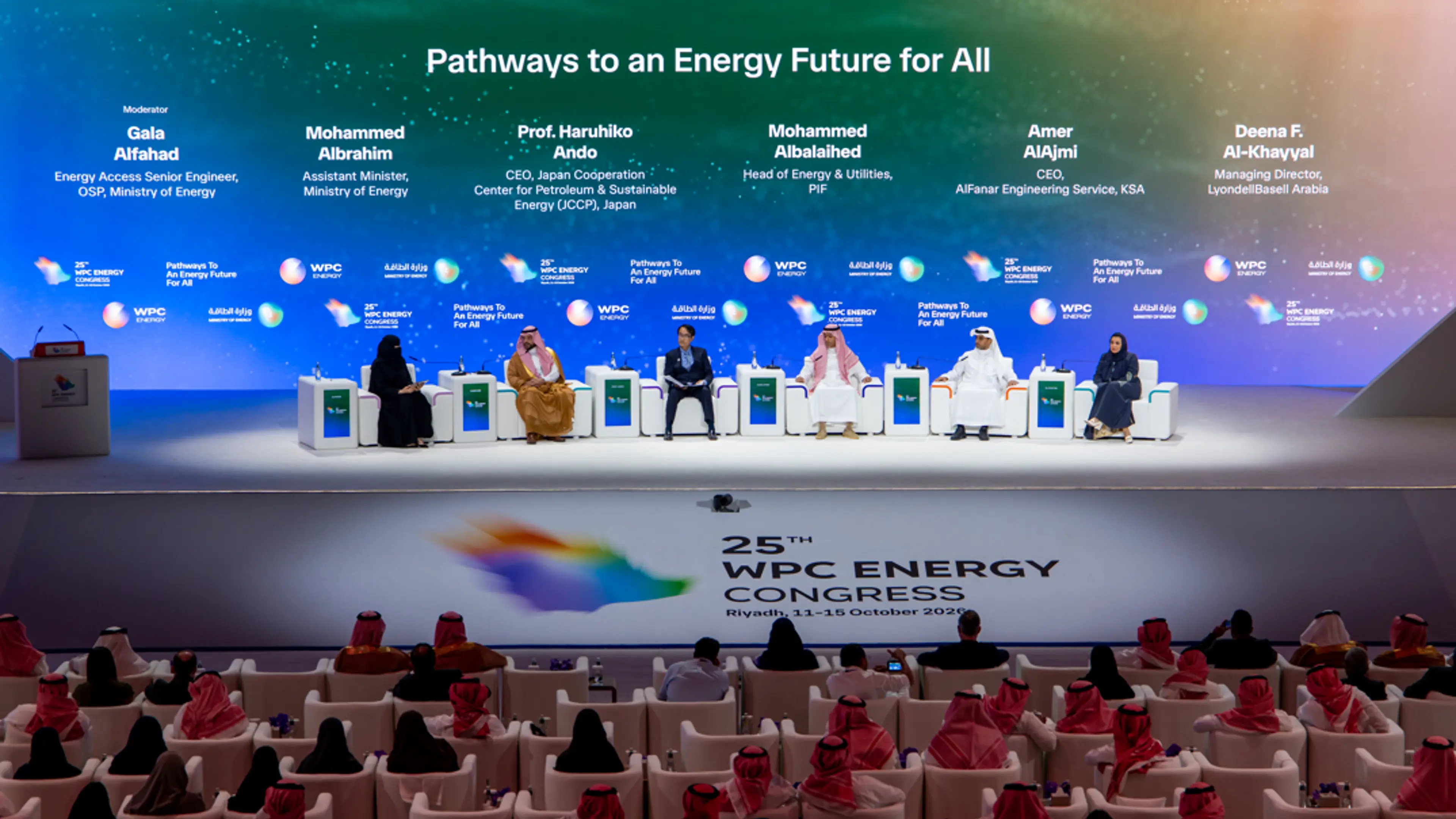
“Pathways to an Energy Future for All” plenary session at the 25th WPC Energy Congress in Riyadh, bringing together senior government and industry leaders to discuss energy diversification, investment and the future of global energy security.
As global energy demand continues to rise, governments and investors face an increasingly complex challenge: securing reliable and affordable energy supplies while expanding the technologies and infrastructure required to support future growth.
At the 25th WPC Energy Congress in Riyadh, the plenary session “Pathways to an Energy Future for All” brought together senior government and industry representatives to examine the investment decisions, industrial capabilities and international partnerships shaping the global energy landscape.
The discussion revealed a common priority across energy-producing and importing economies: diversification, supported by long-term capital investment and technological development.
“The real question isn't which pathway wins. It's how we make them all work together without losing reliability or affordability,” observed moderator Gala Al-Fahad, Energy Access Senior Engineer at Saudi Arabia’s Ministry of Energy.
Saudi Arabia’s Expanding Energy Capabilities
Saudi Arabia provided a particularly relevant case study, with its energy strategy combining established hydrocarbon production capabilities, expanding natural gas infrastructure, large-scale renewable energy development and investment in hydrogen.
H.E. Mohammed Albrahim, Assistant Minister of Energy for Oil and Gas at the Ministry of Energy, explained that national energy strategies must reflect available resources and economic priorities while maintaining supply reliability and sustainability.
“Our pathway includes all of the above,” he said, quoting HRH Prince Abdulaziz bin Salman, Saudi Arabia’s Minister of Energy, and outlining the Kingdom’s approach to oil, natural gas, renewable energy and hydrogen, alongside the potential contribution of synthetic fuels.
The scale of the programmes under way illustrates the breadth of this approach.
AIbrahim outlined plans to eliminate the direct burning of one million barrels of crude oil and fuel oil by 2028, supported by the expansion of the Kingdom’s Master Gas System. He also highlighted a renewable energy programme encompassing approximately 78 gigawatts, with nearly a third already completed and connected to the national grid, together with the green hydrogen project under construction in NEOM.
For a country occupying a central position in international energy markets, domestic diversification also sits alongside a broader commitment to maintaining dependable global supplies.
“Our responsibility here is to be a reliable supplier,” Albrahim said, distinguishing Saudi Arabia’s role as an energy exporter from the collective responsibility for international energy security.
He pointed to sustained infrastructure investment, including the East-West Pipeline, as essential to strengthening supply resilience during potential disruptions.
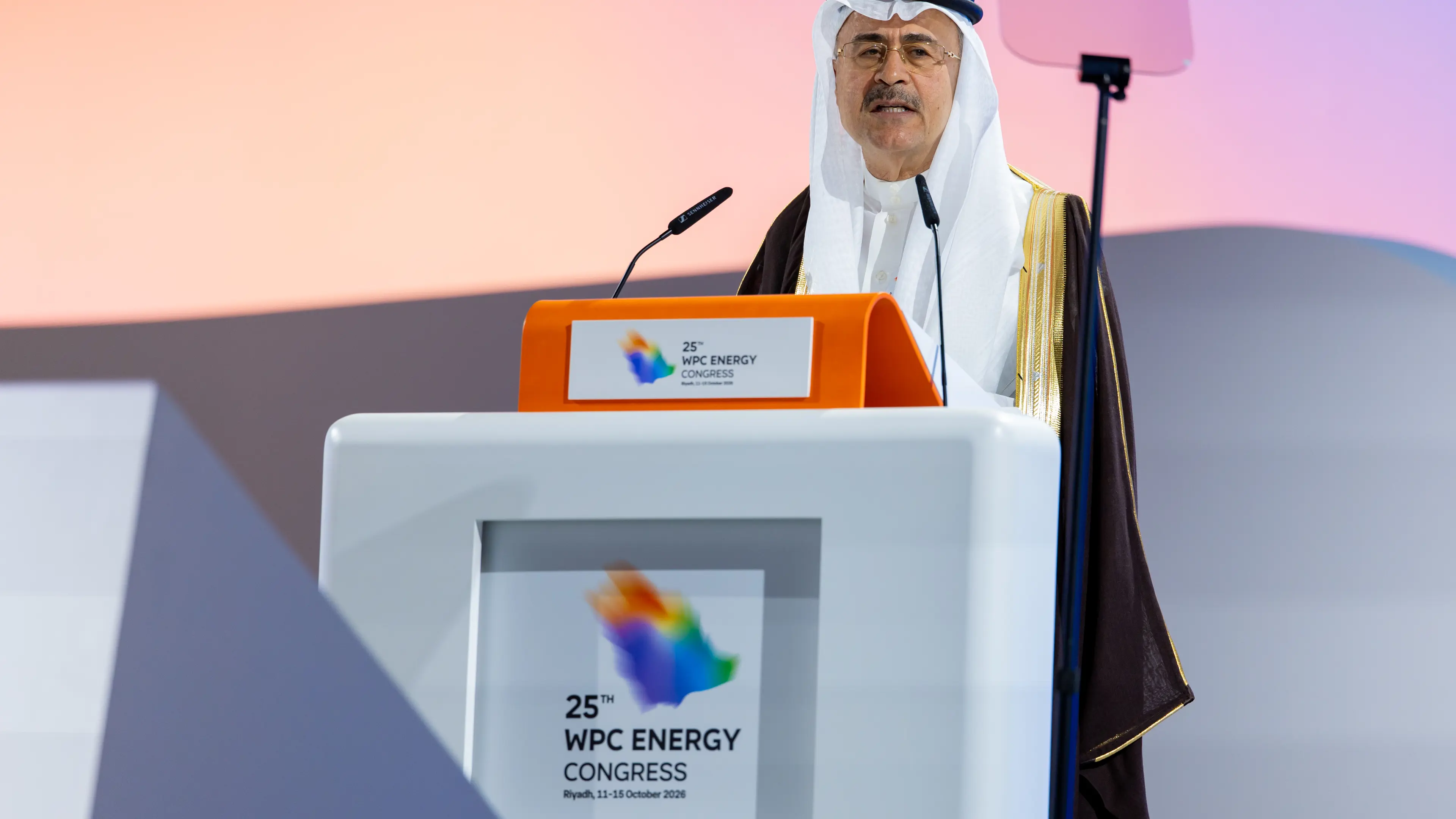
H.E. Mohammed Albrahim, Assistant Minister of Energy for Oil and Gas at Saudi Arabia’s Ministry of Energy, speaking during the “Pathways to an Energy Future for All” plenary session at the 25th WPC Energy Congress in Riyadh.
The Investment Equation: Scale, Affordability and Returns
The financial requirements of increasingly diversified energy systems formed another important dimension of the discussion.
Mohammed Albalaihed, Head of Energy and Utilities at the Public Investment Fund (PIF), provided an investment perspective on Saudi Arabia’s rapidly expanding renewable energy sector.
PIF and its portfolio companies have more than 30 gigawatts of renewable energy projects operating or under construction, alongside recently signed agreements covering a further 15 gigawatts of solar and wind capacity.
These investments form part of an integrated strategy encompassing power generation, infrastructure, storage and energy efficiency.
For investors, the relationship between development costs, financial returns and energy affordability remains fundamental.
“Affordable energy and return on investment are not necessarily competing objectives,” Albalaihed explained.
He identified Saudi Arabia’s regulatory frameworks, competitive procurement processes and long-term contractual arrangements as important mechanisms for attracting investment while supporting affordable energy supply.
His remarks highlighted the importance of providing an investment environment capable of mobilising capital for large-scale energy infrastructure while maintaining commercially sustainable returns.
Diversification Through an International Lens
The importance of maintaining multiple energy pathways extends well beyond producing economies.
Professor Haruhiko Ando, CEO of the Japan Cooperation Center for Petroleum and Sustainable Energy, offered the perspective of Japan, where energy security depends heavily on access to international supplies, technological innovation and sustained cooperation with resource-producing nations.
“No single renewable technology can save the world,” he said, emphasising the importance of developing emerging technologies and strengthening research capabilities.
His remarks reinforced the value of long-term partnerships between countries with different resource endowments, industrial capabilities and technological expertise.
Ando also acknowledged the scale of Saudi Arabia’s economic and industrial development.
“As a resource-rich leader, Saudi Arabia is executing a rapid, sustained transformation of its industrial base, spearheaded by the Public Investment Fund, PIF, represented by Mohammed,” he said.
His assessment reflected the growing significance of Saudi Arabia’s manufacturing, infrastructure and technological capabilities within its wider energy strategy.
Infrastructure and Industrial Capabilities Take Centre Stage
Achieving energy diversification at scale also requires extensive investment in the physical infrastructure that connects generation, transmission, storage and end users.
Amer AlAjmi, CEO of AlFanar Engineering Service, drew attention to Saudi Arabia’s expanding electricity infrastructure, energy storage developments and domestic manufacturing capabilities.
“The greatest cost savings come when all of us work together,” he said, highlighting efficiency, standardisation and localisation as priorities for improving project delivery and reducing development costs.
His contribution brought an important operational dimension to the debate: the effectiveness of energy investment ultimately depends on the ability of industrial supply chains, engineering companies and infrastructure developers to deliver complex projects efficiently.
The relationship between energy supply and broader industrial development was also addressed by Deena F. Al-Khayyal, representing LyondellBasell.
She highlighted the continuing importance of petrochemicals in supporting urbanisation, electrification and infrastructure development, drawing attention to the complementary roles of oil and gas, refining and petrochemical production.
“One cannot replace the other,” she observed.
Her remarks placed the discussion within the wider context of industrial demand, where energy resources also provide essential inputs for materials, manufacturing and infrastructure.
An Energy Future Built on Investment and Resilience
Across the different perspectives represented on the panel, a consistent set of priorities emerged: energy security requires diversified supply capabilities, commercially viable investment, reliable infrastructure and continued technological innovation.
The discussion also demonstrated the importance of cooperation between producing countries, importing economies, investors and industrial companies in addressing the demands of an increasingly complex global energy system.
Saudi Arabia’s contribution offered a tangible illustration of these priorities. Its established position as a major energy supplier is being complemented by substantial investments in renewable generation, natural gas infrastructure, hydrogen, electricity networks and domestic industrial capabilities.
Together, these developments highlighted the central message of the session: the future of energy security will be shaped by the capacity of countries and industries to develop multiple pathways, mobilise investment and deliver reliable energy at scale.